An unrequited love
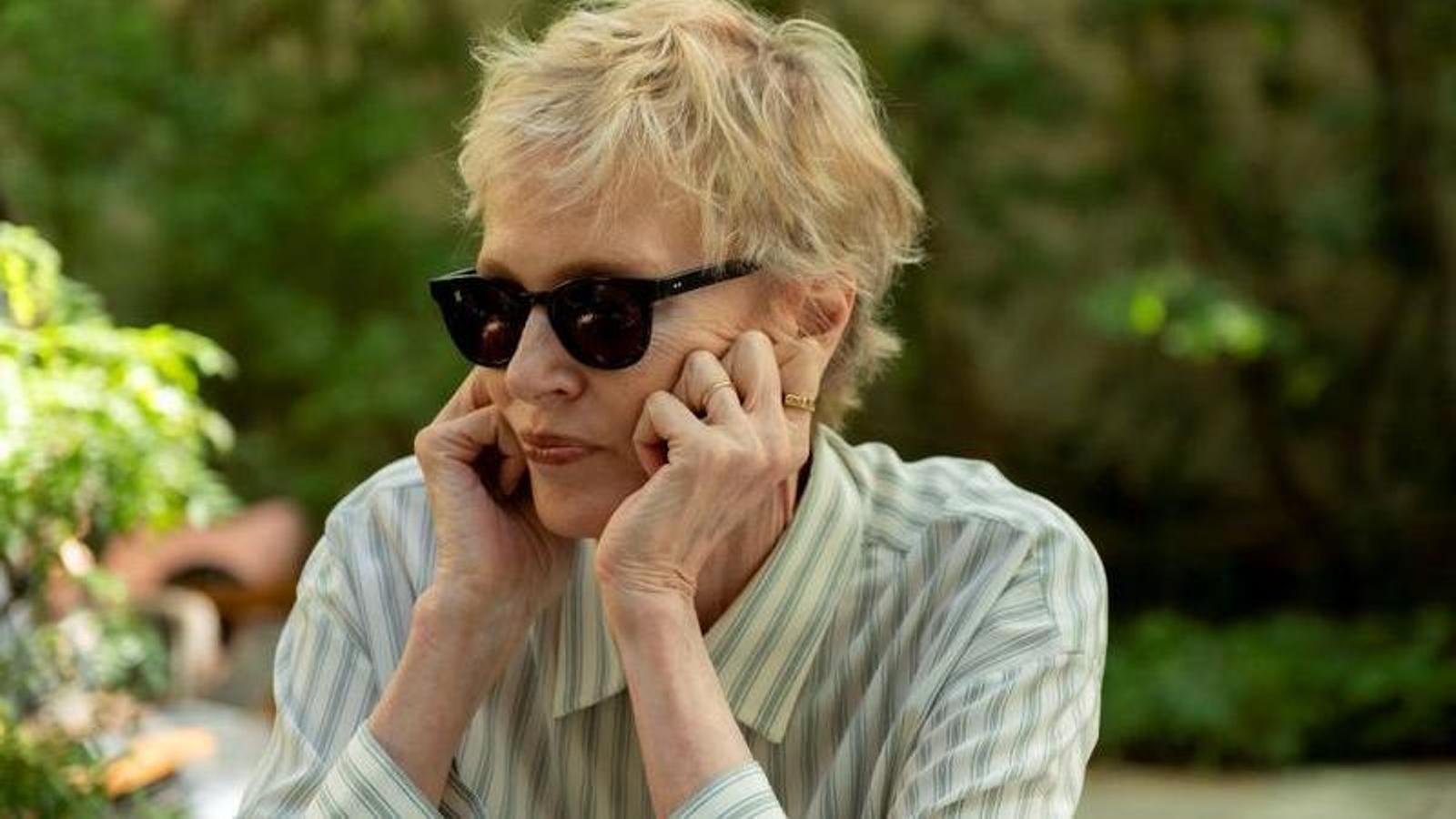

Siri Hustvedt's faithful followers filled L’Auditori and, as if we were at mass – in concentrated silence – followed the conversation the writer had with Anna Guitart.
Her presence on stage was ethereal – she is tall and thin – and striking – black and red – much like her speech – tender when talking about grief, combative when talking about politics – always passionate.
Many years ago, I wrote about this great American writer, regretting that not a single review or interview failed to remind us that she was Paul Auster's wife. This time, however, it was justified and inevitable, because the book Hustvedt has published is written to process the grief of her husband's death. It is titled Ghost Stories and has been published by Edicions 62, translated by Jordi Martín Lloret.
It is a very hard and moving book, I would say especially for readers who have experienced cancer up close (that is, most of us). I really liked that the author defended grief literature now that literature that speaks of feelings as intimate as grief is so questioned. Her Ghost Stories is added, with honors, to the list of essential grief books, topped by A Grief Observed by C. S. Lewis, which is the bible everyone rereads when writing about grief. Grief is unrequited love, says Siri Hustvedt.
Hustvedt and Paul Auster's love story is at the center of the book. For this reason, the author says she is grieving not only for her husband, but for the us that the two of them formed and which has also disappeared. In fact, in the conversation at L’Auditori, she recalled the two letters she wrote to Auster when they were just starting their love story and he had left her to return to his wife. “If I hadn’t written them, perhaps I wouldn’t have won him back,” she says. And she adds, with a broken voice: “This book is also a desperate attempt to win him back, but I know no one will return him to me.” The nevermore of death falls on the stage like a block of stone.
Siri Hustvedt gets emotional and laughs remembering how hyperbolic Paul Auster was, praising the people he loved; she gets fired up when talking about politics and the unmentionable no. 47; she calmly recounts the “terrible things” that Auster and she experienced with the death of their granddaughter and the overdose death of his son.
In the book, Hustvedt vindicates her own work without any resentment (aside from being “Paul Auster’s wife”). She says she has finally understood why she was so often underestimated, always considered an author in the shadow of a great author: “The articles were not about me or Paul, but about ensuring that women maintained their place in the order of things”.
The conversation at L'Auditori allowed us to see Siri Hustvedt reflective, emotional, passionate, indignant, and cheerful, fully immersed in the conversation empathetically guided by Anna Guitart. The audience, in full communion with the writer, learned that, in their home in Brooklyn, where she and Paul lived and worked, the smell of tobacco can still be detected from time to time.
