Crosswords, sex and sensitivity

-
CAT -
CAST
Crossword puzzles are a pastime with a long tradition in the press because they allow the reader to write in the newspaper, even with the physical imprint of their stroke and the ink. It has always seemed beautiful to me, ever since I saw my grandfather reading from head to toe the couple of newspapers he was subscribed to and, after lunch, with coffee on the table, he used to do the "crosswords" when they were still called that, which was when cava was called champagne.I am aware that many readers do the puzzles of Mr. Ventura, and congratulate him for the ingenuity required to invent definitions every day in the colloquial register. But now I have received a complaint that speaks of sexism and, whether it is the flower that does not make summer or not, for its qualitative value I have decided to echo it and make it public. Marta Bausells writes (03/25/2026):“Good afternoon. I do Mr. Ventura's crosswords daily. For days now I have been seeing some definitions that I find in very bad taste, for being sexist and very unfortunate. I'll give you some examples:«From this one you can expect some bullshit»: vagina (26-03-26)«Figs and potatoes»: vulvas (22-03-26)It truly surprises me a lot to see these things nowadays. Perhaps a more careful review of the words would be necessary before publishing them (I also found some spelling mistakes). As a woman, I feel indignant, and right now I have no desire to continue doing them, and I'm sorry.I have no intention of offending anyone, but I feel it. I trust that you will value what I say and take some action.”Jordi Ventura attends my request to give his version:“The two definitions the reader comments on I do not consider sexist. I do not find any derogatory elements towards women in them, nor do I see unequal treatment with respect to men: I have published similar definitions such as «The sparrow and the cicada» penis (16-3-2020) or «A straw man» onanist (1-12-23).”It is true that the definitions use a colloquial register, but popular speech is an inseparable part of language. The uses of figa and parida that I use are collected in the DIEC. And many readers must remember the old song by La Trinca of La patata.To create crossword puzzles, in addition to the essential DIEC, I have works such as the Dictionary of synonyms of set phrases by M. Teresa Espinal, the Descriptive Dictionary of the Catalan language or the Comparative Catalan Paremiology, by Víctor Pàmies, among many others. All of them collect phraseology and slang that are a goldmine for the double meanings inherent in the playful sense of crossword puzzles. When two words coincide in more than one semantic field, we have found gold.If the reader believes I have used too colloquial words or expressions, I can respect that. But I like to think that crosswords are a space in the newspaper where, from time to time, this register can appear. Perhaps that's why, in the printed edition, they put us at the end.What I do regret is that you have detected spelling mistakes. Sometimes people believe that all crossword puzzle creators are academics of the language. This is not the case. I am a screenwriter (as a curiosity, in the profession there are also geologists, mathematicians, nurses, tourism technicians, or musicians). Of course, this does not exempt me from writing correctly, but it makes me fallible like everyone else. Both I and the rest of the newspaper's team take note of the errors to correct them in the future.” So far, Mr. Ventura's response.“Jokes bring water” is a very old Catalan proverb. If I were a crossword puzzle maker, I could use it as a definition, and it would give us two words as a result: one of five letters, rain and another of eight, tear. In the first case, we would understand jokes as mists, and in the second, in its playful meaning that can nevertheless hurt. Joan Maragall wrote two pieces about the Lliga del Bon Mot, the association that promoted speaking well and which had a very long life, from 1908 to 1963. In the first text, Maragall defended the purification of speech which is equivalent to the purification of the spirit; in the second, he shows himself critical: “Our word, which we wanted to purify, thickens with sad humors”. And he proclaims: “We do not want inquisitors, neither on one side nor the other”.In the domain of language, we fortunately have the entire palette from sanity to madness, and in the territory of entertainment –where crosswords reside– licenses are more permissive; one only needs to listen to the radio to verify this. Mr. Ventura's arguments are as respectable as those of the reader Bausells, whom I invite to continue doing our crosswords and enriching us with her reflections. I cannot refute Mr. Ventura according to law, which is shared by both parties in this debate, but I appeal to sensitivity, which must be balanced with a social segment that considers certain topics hypersensitive. Those who wish to know more and have more elements for judgment can read the Cardem vocabulary in Catalan (Rosa dels Vents, 2026), which stems from an academic work at the UB, directed by professor Neus Nogué –she writes the prologue--, by Roger Miras, Xènia Hernàndez and Laura Boj.Americans, North Americans, US citizens
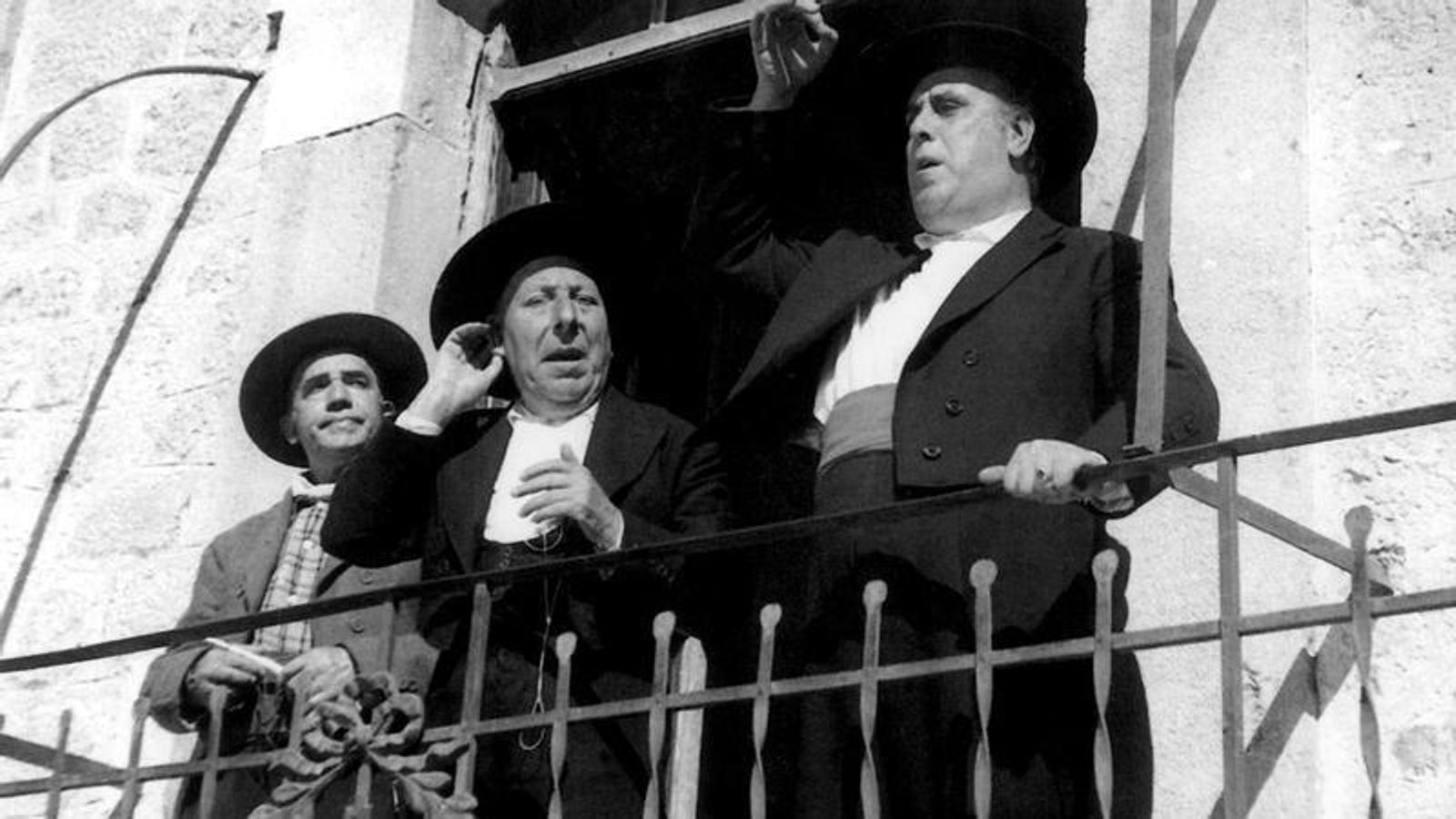
Reader Xavier Huguet calls our attention to the American denomination that we sometimes use at ARA. It is not insignificant, in a historical period when we have to talk about Americans every day, even if it's because of a psychopath. He writes me this email:“I note with some perplexity the systematic and forced use by ARA of the adjective estadounidenc/estadounidenca. United States of America is the official name of a country –the first independent country on the continent– which has always called itself simply America, and its citizens are Americans.I understand that the term American may sound abusive and exclusive to some foreigners, although Canadians also use this adjective, but in all European languages the normal adjective is American or North American. Currently, an Institute of North American Studies still exists in Barcelona which at one time was of great importance.The American invention is ridiculous, cumbersome and discordant –concludes the reader–. It has not yet occurred to anyone to refer to the British as United Kingdomers, even though the British Isles are two. Finally, and the strongest argument, is that no one says American, but American or North American, just as no one says United Kingdomer. Do not be more Catholic than the Pope, please”.Pau Domènech, head of the Language section, gives me his argument: “Indeed, the adjective North American continues to be the most common to refer to the inhabitants of the United States of America. However, as the dictionary says, the form statunidenc has exactly the same meaning. Why, then, can't we take advantage of its existence to use more precise language? Just as we went from a very general American to a somewhat general North American: now we should be able to make better use of the language by calling them statunidencs. I am convinced that it will become increasingly widespread, starting with the journalistic world (where there is an obligation to be precise with language), and that, perhaps, one day we will have an Institute of American Studies here.”As Maragall said in the text mentioned supra, “against the word we want no other weapon than the word”; a writing from 1909 in which, beyond curiosity, it speaks of the “north Americans”. There is a conventionally established synecdoche that connotes those from the United States as “Americans”, the famous “Americanos, vienen a España guapos y sanos” from Bienvenido Mr. Marshall, and the DIEC admits the meaning. It also admits estadounidense, as Domènech points out; therefore, the language of ARA is within correctness and, effectively, the word is more precise or, in academic terminology, it narrows the corpus.Another thing is whether it is legitimate, if not, to philosophically question the norm and, taking into consideration the opinion of the reader Xavier Huguet, we rhetorically ask ourselves if it is appropriate to mix the system of political administration, the state, with an identity that precedes it built on proximity semantics such as nation, which Latin etymology refers to where one is born, and homeland, which Greek etymology refers to the father and mother, which Thucydides, Polybius and Euripides extend to ancestors and from Herodotus we arrive at the current concept (references from the very complete Greek-French Dictionary by Anatole Bailly, 1915); a concept that nevertheless contemplates concentric identities (Havel) and the rootedness/will binomial so well developed in Catalonia by the Campalans-Candel- PSUC-Pujol line.The Reader's Advocate takes note of doubts, suggestions, criticisms, and complaints about the newspaper's content in its digital and paper editions, and ensures that the treatment of information is in accordance with deontological codes.To contact the Reader's Advocate you can send an email to eldefensor@ara.cat or record a message of no more than one minute to the WhatsApp number 653784787. In all cases, identification with name, surnames, and DNI number is required.
