The new world disorder reopens the debate on the euro in Sweden
Swedish economists warn that joining the euro would strengthen ties with the core of the EU in a context of geopolitical instability
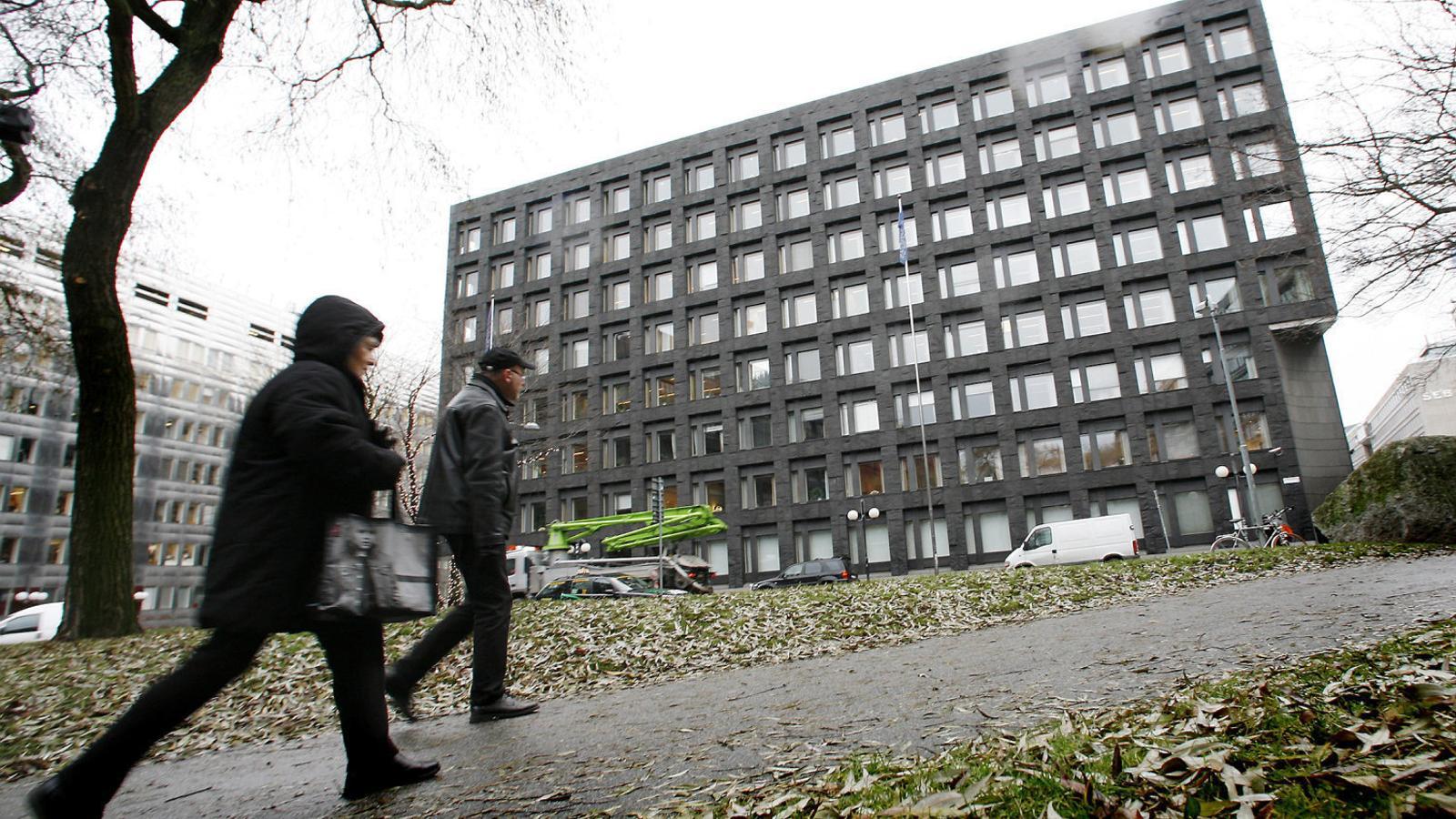

CopenhagenThe Russian invasion of Ukraine precipitated the end of Swedish neutrality with its entry into NATO. Now the Nordic country is opening the debate towards a new historical turn after decades of reticence: the adoption of the euro. As a member of the European Union for over 30 years, Sweden is one of the few countries that have maintained their own currency, the krona. Brussels' laws stipulate that the Scandinavian country will one day join the euro, but in reality, this issue has been postponed without ever setting a date. However, closer integration with the EU is beginning to seem more attractive to Stockholm, which is seeking a shield against increasing geopolitical instability and the deterioration of transatlantic relations with the United States under Donald Trump.
Although the debate on adopting the common European currency is still in its early stages, a shift in the Swedish government's stance is occurring. In 2003, when Swedish citizens rejected joining the euro in a referendum, the debate focused on the krona's capacity as an adjustment mechanism for the larger Nordic economy. Now, however, geopolitical tensions have introduced a new factor into the discussion.
Donald Trump's erratic tariff policy has highlighted that smaller economies are more exposed to market volatility. To this, we must add an American foreign policy that includes threats to allied countries like Denmark or Canada, while European countries like Sweden also see Russia and China as a threat. This diagnosis is also shared by the central bank (Riksbank), which has warned that financial instability has increased as a consequence of tariffs and the US administration's foreign policy agenda.
In this new context, those who advocate for the adoption of the euro argue that the common currency would strengthen political ties with the rest of the European countries, while also giving Swedes a voice in deciding on EU monetary affairs. Another argument is that adopting the euro would also boost foreign trade within the EU (which accounts for 60% of exports, according to Sweden Statistics), and would favor direct investments from other EU countries. From Brussels' perspective, Sweden's change of position would also be a milestone to celebrate, adding credibility to the euro at a time when Trump's unpredictability is diminishing the dollar's credibility.
In this regard, the first steps towards the adoption of the euro have already begun to be taken by the Swedish executive, even if only tentatively. At the beginning of the year, the Minister of Finance, Elisabeth Svantesson, announced to Parliament the creation of a committee of experts to investigate the advantages and disadvantages of changing the currency to the euro: “The world is changing and so is the EU,” stated Svantesson. "Therefore, we must also dare to evaluate, investigate and analyze the issue for the benefit of Sweden, Swedish households and Swedish companies," she stressed.
This change in the Swedish government's stance is based on a report led by Professor Emeritus at the Stockholm School of Economics Lars Calmfors, one of the most influential figures in monetary matters in the country, as he also led the governmental commission that examined the implications of adopting the euro before the 2003 referendum. At that time, the committee of experts was cautious and recommended postponing the adoption of the euro on the grounds of preserving sovereignty over monetary policies. Now, however, the economist's stance has completely changed and he is more positive about Sweden's entry into the euro: “The geopolitical conditions are very different today than before, and this dynamic increases the value of being part of the core of the EU,” the expert pointed out in an interview with the media outlet Bloomberg. Today, "Russia, China and, of course, the US are much less reliable," Calmfors elaborated.
The economist also pointed out that “the Swedish economic cycle has become increasingly aligned with that of the eurozone, which reduces the need for an independent monetary policy.”
Little public support
Among business voices, the idea that adopting the single European currency would offer greater security and protection for the economy is increasingly taking hold, according to the medium Politico. On the other hand, from the Stockholm-based think tank Timbro, they have argued that adopting the euro would help However, the majority of Swedes continue to oppose the euro, according to the latest Eurobarometer, in which only 39% of citizens are in favor, 7 percentage points more than in previous years, but still far from achieving a majority. For the leading party in the governing coalition, the Moderate Party, this support is fundamental:
