Dependence, aging and reconciliation as great challenges
Care cooperatives open a new path in care quality, professional dignity, and democratic management. Catalonia is one of the most active territories in the State in this field
-
CAT -
CAST
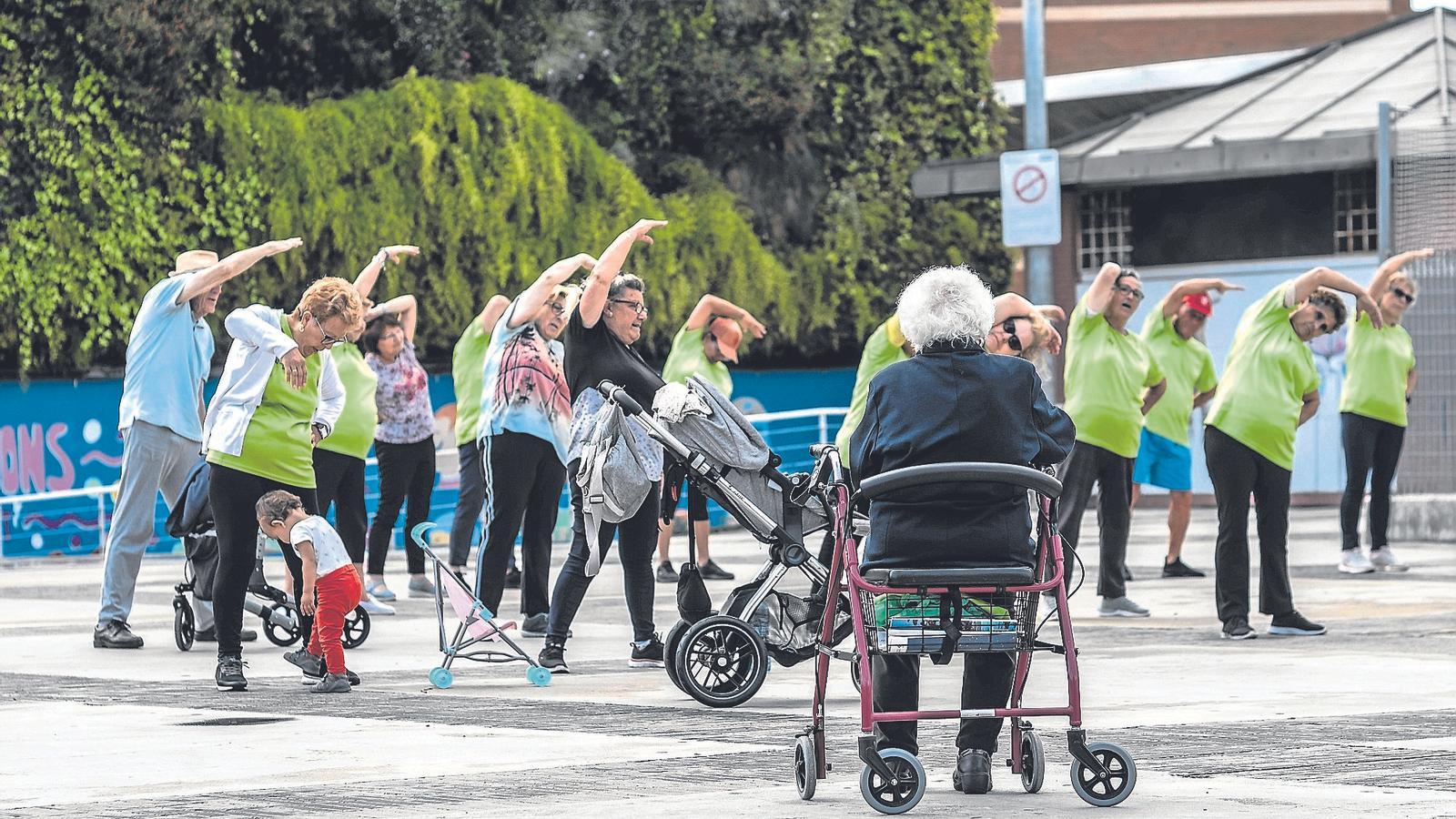
In an increasingly aging society, where the needs for care for the elderly, dependent, or disabled are growing, the care sector faces the challenge of responding to a growing demand without reproducing the job insecurity that has historically accompanied these jobs.
Often feminized, invisible, and little recognized, care tasks now demand new organizational models that focus on both the quality of care and the working conditions of the professionals who make them possible.
In Catalonia, proposals such as Suara's focus the debate on care as a right and not as a business. Suara is one of the most relevant social economy organizations in the territory and develops services in the areas of childhood, youth, home care, dependency, social inclusion, training, and employment.
The organization was born in 2008 from the merger of three Catalan social cooperatives with a long previous track record in services for people. Its structure is based on cooperative principles of democratic participation, with an assembly of members as the highest decision-making body and a model that promotes the involvement of workers in governance.
“Following the new social services law, the new regulatory framework of the Public Sector Contracts Law, and the autonomy and dependency law, which now turns 20, we considered how we could be competitive to sustain ourselves with a cooperative project and with values in the face of the opening market, which was seen as an opportunity for construction and service companies expert in public procurement,” explains Laura Peracaula, co-director general of Suara Cooperativa. “During these years we worked to stay alive, growing sustainably and forging a strong alliance to avoid disappearing as happened to other cooperatives, small and not so small,” she recalls.
A long-term challenge
The challenge was immense then and still is today, especially in elder care. “The 65+ age group is getting wider and wider, and this means we need to be sustainable in the long term. At Suara, we work on this, and if we say that one of our values is innovation, it's because we need to advance and transform in this direction”.
The cooperative reinvests all its surpluses to respond to its purpose and seek solutions to new challenges. In the field of elder care, the Social Digital Lab has produced proven projects such as Casal TV (a participatory and interactive space that combats unwanted loneliness through television), home sensorization (which detects patterns and anticipates any incident), or the creation of virtual spaces (for the improvement of cognitive decline).
The three projects are designed from the perspective of prevention and improvement of living conditions and have a direct impact on home care. “A few days ago, CETIS (Committee of Experts for Social Transformation and Innovation attached to the Department of Social Rights and Inclusion) published the report “Dependency Care in Catalonia: Challenges and Proposals” which makes evident the need to increase care for people at home. For this, we need brave policies and to define a home service portfolio adapted to the current and future reality. This way, it would be easier for municipalities to finance themselves and acquire these types of services,” emphasizes Peracaula. Catalonia suffers from underfunding in this area, partly because the Law on Personal Autonomy and Dependency was not accompanied by a budget aligned with the real needs of people.
With other incipient projects such as the implementation of robotics in residences, where Suara opts for the ACP (person-centered care) model, integrating technology with scientifically proven results. In residences, points out Laura Peracaula, “we are committed to this model and to advancing in reduced co-living units so that people can feel at home”.
For dignified work
Despite being one of the pillars of our society, care and its professionals occupy the low end of the labor scale within this system. Involuntary part-time work, low wages, and high staff turnover are some of the characteristics that define care in Catalonia and the rest of the State. The lack of professionals also adds a new problem for its proper functioning.
Suara has more than 1,800 members and 5,500 professionals. “Our foundations are very strong because we connect people with committed professionals. Like any cooperative, we generate quality jobs, and it is very difficult to compete with that,” emphasizes Peracaula. However, there is “a lot of room for improvement in the recognition of professionals in the sector, even though a new agreement comes into effect this year, which will imply progressive increases of over 30% until 2030 in home care”.
For centuries, care has been relegated to the family sphere and has been assumed solely by women without any recognition or compensation. Now that it has begun to be professionalized, it is also women who occupy these vacancies, in most cases immigrants.
By 2050, it is projected that more than half a million people in Catalonia will require home care, double the number in 2021, and to attend to them, there will be fewer professionals due to low birth rates. The outlook is, to say the least, worrying. Hence the positioning of cooperatives to find solutions and dignify the work.
Rooted in the territory
Ensuring a stable, quality service, rooted in the territory and focused on people's needs is the response that many care cooperatives and smaller organizations are also offering in the face of the sector's precariousness. On a more local scale and with smaller structures, La SempreViva Cooperativa de Cures is a good example: a proximity model that adapts its services to the real needs of the community in which it operates.
Born in 2022 in the Lleida region and located in Bellpuig, this young cooperative has specialized in home assistance, care for the elderly, support for dependent people, household tasks, childcare, and training activities. With a community-oriented and proximity approach, its model seeks to dignify both the working conditions of the professionals and the care received by users, demonstrating that it is possible to offer care with quality, stability, and social commitment criteria.
“Our work is transversal,” highlights the cooperative's president, Lluïsa Puig. La SempreViva currently has 14 workers, five of whom are partners—with the intention of continuing to expand the social base—and serves nearly 40 users. Around their needs, it has built a flexible and proximity model. “Our structure is not rigid because we adapt to each person. We value human interaction, proximity, and the ability to offer personalized responses. Furthermore, we work in a very dispersed rural environment, which complicates the organization of services. Possibly, with fewer people we could serve the same users, but many services overlap, which makes coordination more complex,” she explains.
The difficulty of travel and the different tasks (bedding, pickups from day centers, accompaniment to medical appointments, hospital on-call duties, etc.) complicate organization. “It’s a Tetris due to its variability. Also, we always ensure that the professional is trained for the care they need to provide, and even that there is compatibility of personalities”.
Hand in hand with the Ponent Coopera cooperative center and the Bellpuig City Council, “at La SempreVivia we network for the right to care,” emphasizes Lluïsa Puig. Socio-sanitary care for the elderly or dependent, psychological care for adults and families, home cleaning, care for the environment, babysitting, and active aging workshops are part of the services offered by the cooperative, with the aim of guaranteeing proximity care and responding to the community's needs.
Care cooperativism not only proposes another way of understanding care for people but also advocates for decent working conditions as a guarantee of better service, a strong link with the territory, and an organization that prioritizes people over economic benefit. This is precisely the raison d'être of the social and solidarity economy.
