The 'teacup' semi-autobiographical series that will make you want to travel to Australia
'My brilliant career', by Netflix, adapts a classic from 1901 written by Miles Franklin

-
CAT -
CAST
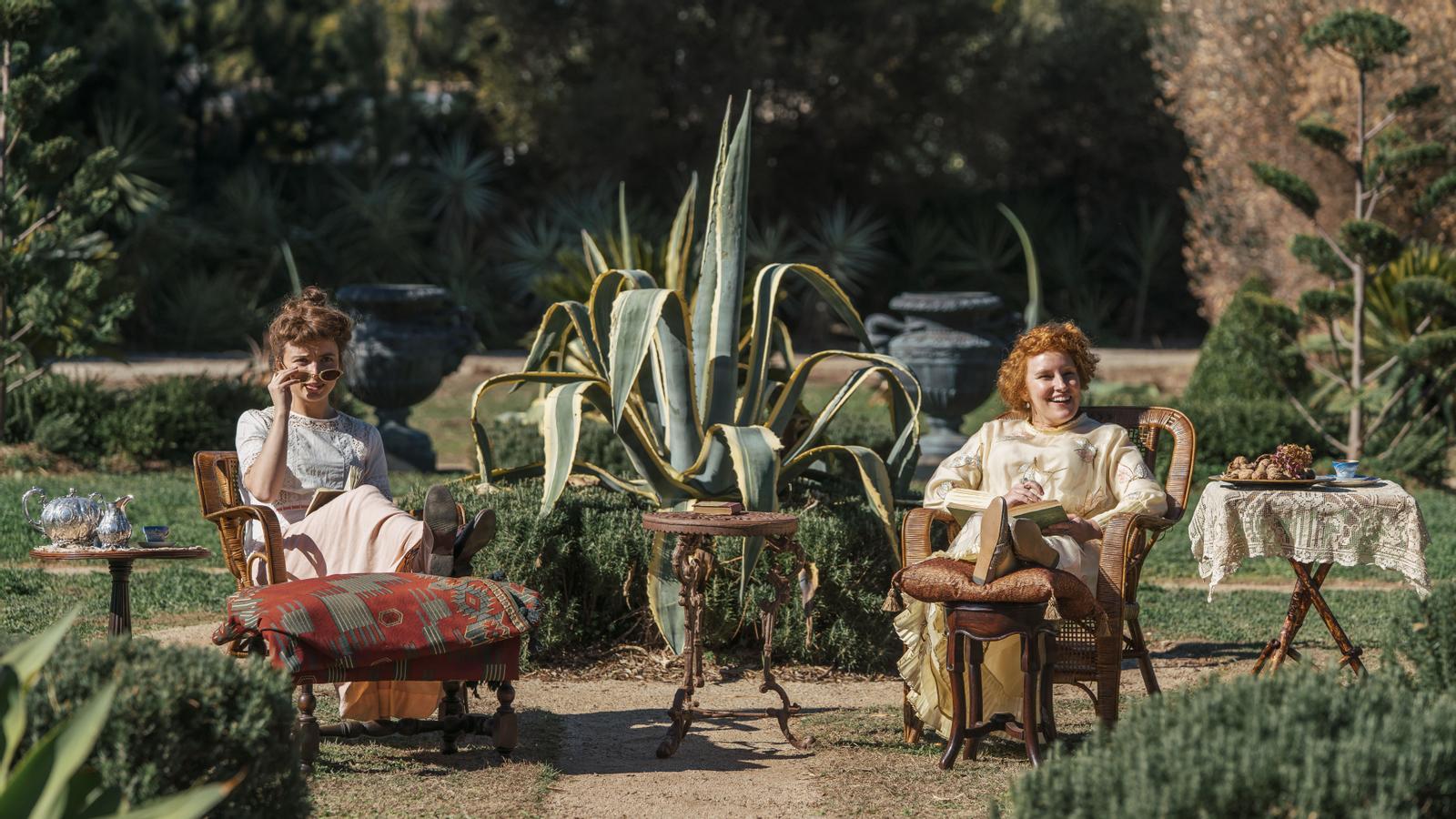
BarcelonaSeries called teacups are usually associated with a British universe, but if we broaden our horizons and understand that this label serves to define period fiction starring women, stories from almost anywhere in the world can fit. One of Netflix's latest releases, the miniseries My brilliant career, could be considered an Australian teacup series with some touches of Little Women. It is an adaptation of the homonymous novel by the Australian Miles Franklin (1879-1954), who wrote this semi-autobiographical story when she was 19 years old. With only six episodes, it is currently the second most watched series on Netflix in the country.
The heroine of My brilliant career is Sybylla Melvyn, an imaginative young woman with literary aspirations who lived in New South Wales at the end of the 19th and beginning of the 20th century. Daughter of farmers, the economic difficulties of her large family due to the drought and her father's debts forced her to move in with her grandmother, who had to find her a husband within Australian high society. Marriage was the way to save the family from economic ruin, but it jeopardized the personal and professional freedom she aspired to. Determined to become a writer, she would try to do everything possible not to marry, even if love crossed her path.
Stella Maria Sarah Miles Franklin, better known as Miles Franklin, debuted as a writer with this book, which initially was only intended to entertain her friends. She wrote it in six months, taking advantage of the evenings after she had finished her chores on her parents' farm. Sybylla's rebellious and effervescent character closely resembled the author's personality, and some of the other characters in the novel were inspired by her family and life circumstances.
In 1899, Franklin sent the manuscript to various Australian publishers, who rejected it. Desperate for someone to publish the book, she sent it to the poet Henry Lawson, who, like her, had a close connection with rural Australia. During a trip to Edinburgh, Lawson managed to get the publishing house William Blackwood & Son to publish it, and the first copies arrived in Australia in September 1901. The book, with an evident feminist character, was a success thanks, in part, to the country's political and social moment: in January of that year, Australia achieved independence from the United Kingdom. The book's empowerment discourse, even if feminine, fit with the moment of national pride. In 1910, however, Franklin herself decided to withdraw the book from circulation, overwhelmed by the adverse reaction of family and acquaintances who saw too many parallels with their lives. The novel was not republished until 1966, 12 years after Franklin had died.
Two adaptations
The showrunner of the Netflix version is Liz Doran, a screenwriter who worked on one of the benchmark series of Australian fiction, the comedy Please, like me. "I read the book for the first time in 2019 and was immediately captivated by how Sybylla's struggle resonates with all of us today. I couldn't pass up the opportunity to offer a new generation a story that encourages them to pursue their dreams," explains Doran, who has created a visually exuberant adaptation. One of the keys to the miniseries working is having an actress who is up to the protagonist's level. The chosen one is Philippa Northeast, who also appears in The newsreader, the Australian journalistic drama that can also be seen on Netflix. The cast of My brilliant career also features Christopher Chung (Slow horses), one of Sybylla's main suitors.

This is not the first time Franklin's novel has made the leap to the screen. In 1979, Gillian Armstrong released a film adaptation starring Sam Neill and Judy Davis that vied for the Golden Globe for Best Film and received an Oscar nomination in the Best Costume category. Currently, it is considered one of the key films in the resurgence of Australian cinema and an example of feminist fiction. However, Doran assures that the miniseries and the film are quite different, mainly because the former has more footage, allowing for the novel's world to be expanded with new characters or the introduction of unexplained realities, such as those of the original indigenous people of Australia.
