Felipe González has a lesson for you

-
CAT -
CAST
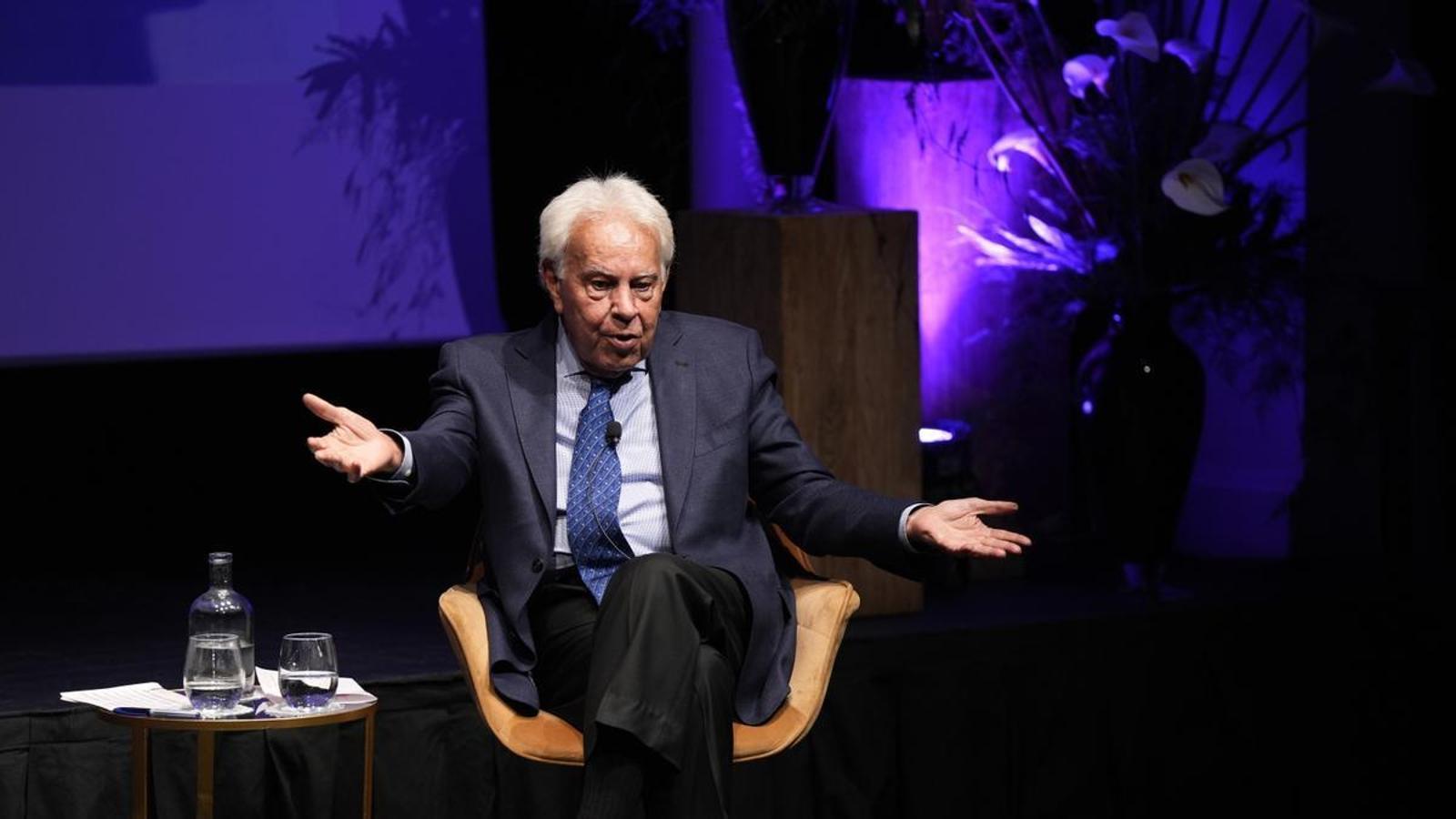
Nineteen men pull the cable that will transport the gigantic corpse of 3,200 fathoms to the tomb. This is the premise of Donald Barthelme's sublime novel, The Dead Father, by Donald Barthelme. The son and his wife lead the arduous expedition, wondering how that omnipresent being can still dictate his law even after death. Because there is a problem: the father continues to give speeches, issue edicts, and unleash his censoring paternal fury.In another order of things, Felipe González today tops two of the Madrid right-wing newspapers' front pages. I'll stick with that of El Mundo, where they highlight this quote of his: “There is a political responsibility: he resigns or calls elections”. This is the man who claimed to learn about the Filesa or Roldán case through the press to the point that this excuse became a recurring phrase to ridicule him. And he is exactly the same man who accompanied former minister José Barrionuevo and former secretary of state Rafael Vera to the prison gate when they were convicted of the kidnapping of Segundo Marey. Genial and true to form, Felipe González now demands the assumption of responsibilities, he who attributed all the rot that surfaced through El Mundo –who would have thought, now such a friendly newspaper– to a media campaign by what he called the crime syndicate. Who would have told him, years to come, that the newspaper founded by Pedro J. Ramírez would be the one to restore his lost moral authority.Returning to Barthelme, in the story Views of my father weeping the last word is “Etc.”. Just like that. It is interpreted that the author wanted to emphasize the cyclical nature of history, the inevitable repetitions, and a certain cosmic impotence. It will be interesting to see if, in thirty years, Pedro Sánchez is hailed as a new hero in El Mundo, criticizing the socialist president of the day and his scandals.
