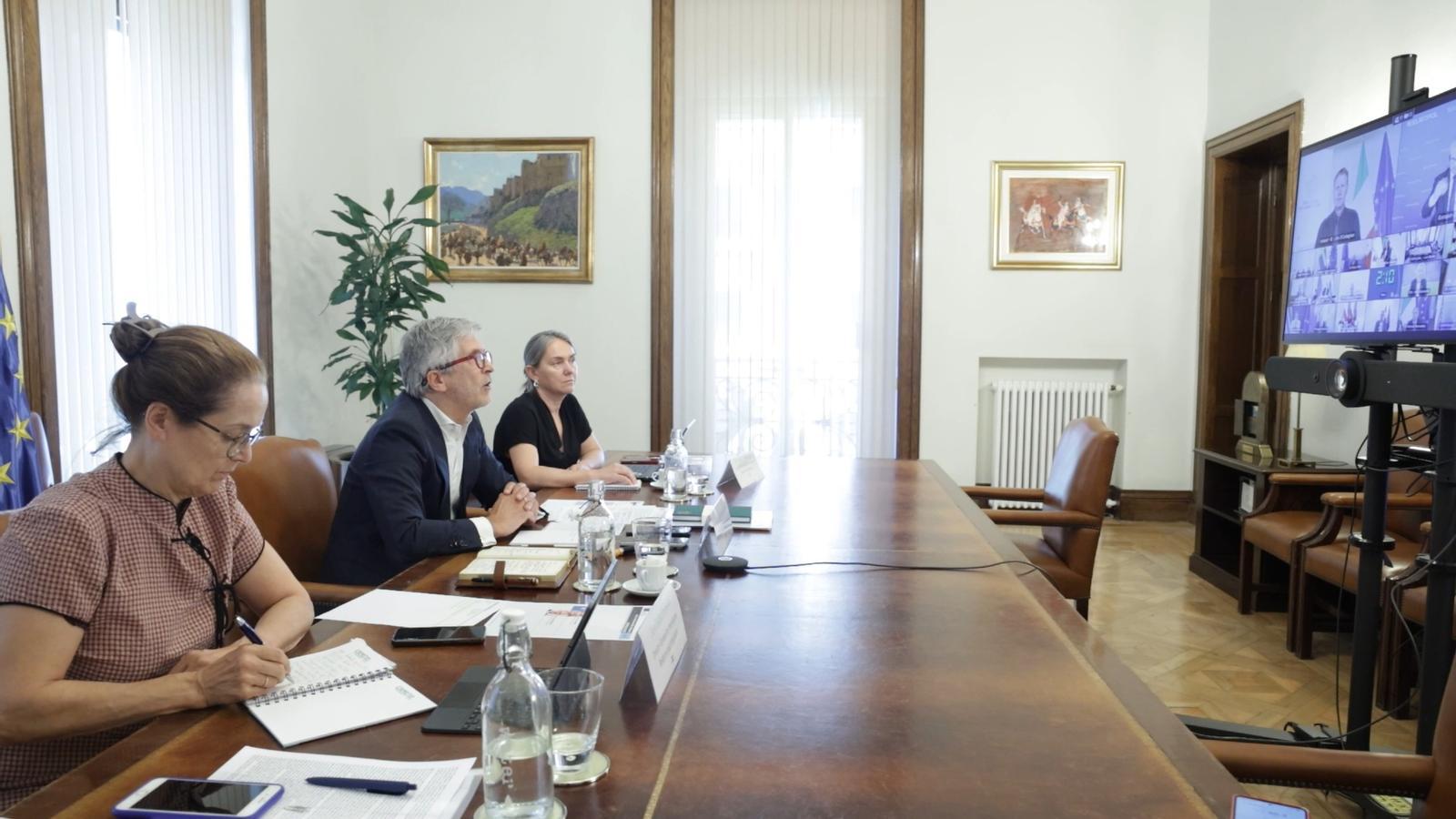

These are some weekend front-page headlines: “Europe cries out against Sánchez” (Abc), “The EU considers Sánchez a failure and demands migratory control” (El Mundo) and “Europe revolts against Sánchez for endangering its borders” (El Mundo). One might infer that there is great concern about what the European Union has to say about the migratory crisis experienced in Ceuta. But that would be a wrong conclusion. Because this Wednesday was the day to report on the summit on this matter. And once again, the survivor Sánchez has come out with minimal scratches. “The EU supports Spain and avoids a clash over regularization,” headlined on the front page of La Vanguardia. “The EU rallies behind Spain for the management of the Ceuta crisis,” seconded El País, which in its subtitle highlighted: “The partners show their ‘total solidarity’, praise the government’s ‘quick and effective’ response and admit that there is no direct relationship between the massive influx and the regularization of immigrants.” Admittedly, these are the two newspapers that apply the most Sanytol to the Spanish president. ARA, for example, headlines saying that “The EU backs Sánchez’s reaction but is wary of regularization” and El Periódico says: “The EU demands more vigilance upon learning that the CNI did not alert,” with a sub-headline that also emphasizes that “The Ministers of the Interior support Spain.”
With this scenario, it would be surprising – if it weren’t so predictable – the response of the right-wing newspapers. This Wednesday, El Mundo, Abc and La Razón sum up 21 headline items related to the Ceuta crisis. Not a single one refers to the EU’s backing: at most, they criticize Marlaska with fatuous and anecdotal politicking. This perpetual masking of any positive news ends up equating these media outlets to the social networks they criticize so much: the glue with which they hook their audience is the toxic resin of anger. But, sooner or later, so much heat causes detachment, disconnection.
