Lorena Iglesias: "Being young in the 90s and early 2000s was a bit unbearable"
Actress and creator of the series 'Millennial mal'

-
CAT -
CAST
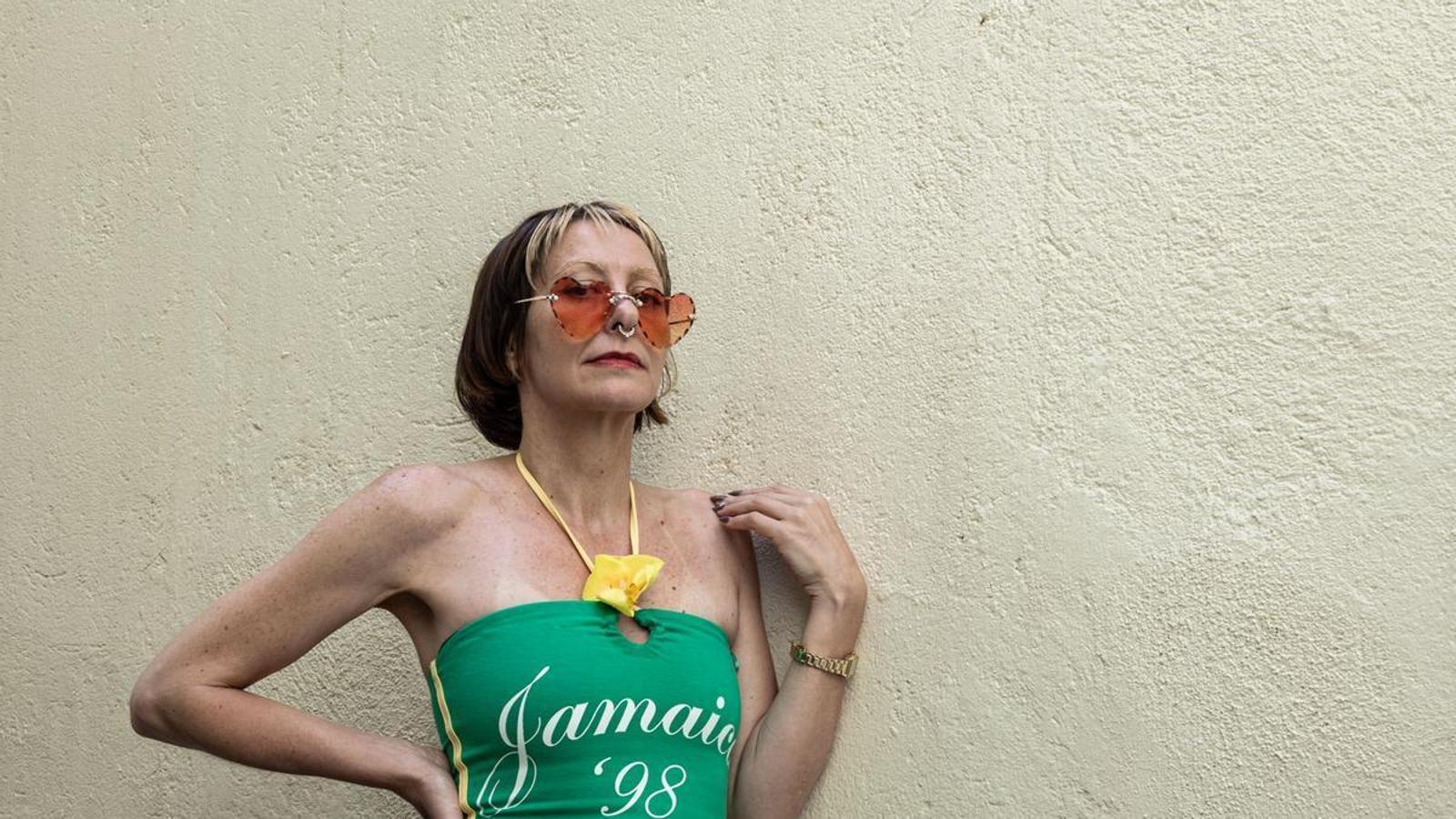
BarcelonaLorena Iglesias (A Coruña, 1980) is the creator and protagonist of Filmin's new original production series, Millennial mal. The comedy, which premieres this Tuesday on the platform, follows Judith, an unemployed 42-year-old librarian who mistakenly receives a university scholarship she applied for when she was a student. With nothing to lose, she decides to return to the classroom, but first, she will undergo a transformation process to go from being a woman of the millennial generation to becoming a young woman of the Generation Z.
Does the series Millennial mal stem somewhat from a midlife crisis or have nothing to do with it?
— It does have to do with it, but it also has a lot to do with a complaint from those in their 40s. It's this feeling, which I share with colleagues my age, that our youth was a bitch. Those of us who were young in the 90s and early 2000s didn't live our youth as we should have, it was crossed by patriarchy. There were very unfair, very unequal situations. Men undervalued us intellectually, there were situations of harassment, of dangerous nightlife. Being young at that time was a bit unbearable.
Did we not detect these unfair situations until after that youth?
— Yes, exactly. Now we see young people living their youth on social media in a much healthier way in many respects, and it makes us envious. I wish I were young in 2026. Especially because I think the millennial generation is a very messed-up generation: we've been through many economic crises, and many of us live like young people but only in the negative aspects, like sharing flats and having precarious jobs. There's a feeling that we'll never have the good part of being young. I think it's a debt society owes to the women of this generation.
The main character, Judith, has a supposedly adult life but also has elements with a certain childish spirit, such as the decoration of her house. One of her most prized possessions is a Gusiluz doll. Is this an aspect that you think defines millennials?
— I never thought this was childish. I see her as very stuck in some codes she doesn't want to let go of because she's afraid. At first, the character has given up, she is settled and comfortable, it's very difficult for anything to move her. Something external has to happen, like her cat falling out the window, her not being able to pay the veterinary expenses, and a scholarship arriving by mistake, for her to decide to rethink her identity.
Judith pretends to be a Gen Z girl. Have you done an investigation process to understand how this generation thinks?
— In my environment there are people from generation zeta. In fact, the actresses who appear in the series were already my friends. Furthermore, I am very curious about current affairs and I am always informing myself through social networks. Nowadays it is impossible to say "I couldn't do this investigation". You don't need to go to the door of a high school with a recorder, if you are a screenwriter it is super easy to connect with other realities and do research through the internet. You watch some podcasts and the algorithm itself leads you there.
Do you feel like Generation Z has been looked down upon by other generations?
— Yes, and I still have it. I think it's a mistake. The series defends precisely the opposite, intergenerational connection. I think we are constantly pitting generations against each other and I think, because of that, there are different waves of feminisms. We need more empathy and to put ourselves in the place of people who were born at other times and have lived other circumstances, to share experiences and references. We must think that there are different ways of being young and of being old.
What can Gen Z learn from millennials?
— Many things, but perhaps one would be to lose the fear of cringe, which is something we didn't have. [In our generation] It was rewarded to be weird, to be daring, to be rebellious, originality. There was more variety within urban tribes. Being alternative was cool and there wasn't this fear of making a fool of oneself, but it's also true that there weren't social networks that amplified by 5,000 what you did. I think it's an interesting lesson for generation Z: you shouldn't be ashamed of almost anything.
And millennials who can learn from Gen Z?
— Emotional intelligence, deconstructing masculinity.
Is a part of the millennials already doing it?
— Yes, especially millennials, millennial men are finding it harder. Few are succeeding.
One of Judith's most important relationships is with her cat. Is this also defining of her generation?
— I have a cat that I talk to as if she were a baby. Surely the crazy cat lady is the Judith with whom I identify the most. I suppose it has to do with not having a baby and projecting onto our pets. I don't think it's so bad. My pet taught me to be more tender, which was something I hadn't experienced before because I don't have children.
You presented the series at the Malaga Festival, what reactions did you receive?
— So far very good, with both older people than me and younger people or people my age. I hope I can connect with different generations because reinventing yourself has nothing to do with age. My mother did it at 80 years old.
Can I ask you how it was reinvented?
— Yes, of course. She became a widow, my father was very old, he was 100 years old, so it's not a drama or anything, I can talk about it calmly. Since my mother stopped having to take care of my grandmother and my father had a kind of awakening: he pierced all his ears, got a lot of piercings and started dressing more youthfully and dating. He went through grief, obviously, but then he had a brutal awakening.
A kind of second life?
— Yes, everything she couldn't experience in her time because she came from a very precarious family, she started doing it in her early 70s. It's never too late. She began to enjoy herself in a different way. When she made this whole change, the context didn't matter to her at all: she lived in a very small town and, even though people criticized her, she didn't care what others thought. I think this is a very beautiful thing about age. The approach to youth in old age seems very pure and full to me. I see her enjoy herself without any kind of cringe.
You mentioned the precariousness your mother lived through, do you think it has also been a constant in the lives of most millennials?
— Of course. Many times we are told that we are Peter Pan-like and that we have to let go of youth. I can't let go of it because I live like a twenty-year-old: it seems very strange to me not to live like this when I'm living in a shared apartment and in very unstable situations. How should I go out on the street dressed like a lady with pearls? I can't do that, it's a lie.
