'In houses with a piano, Valencian is not spoken'
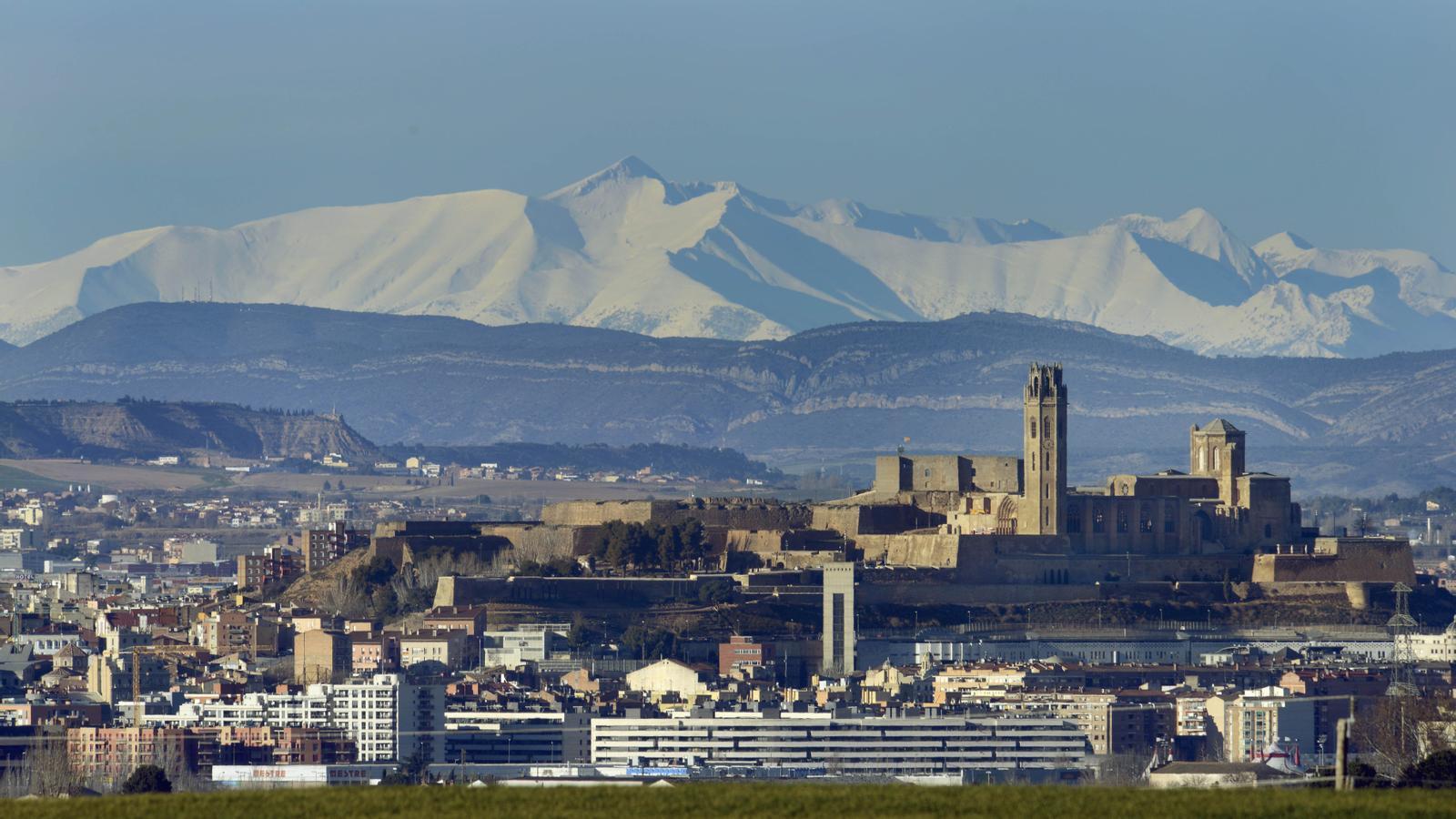
Lleida“We'll see each other around here or in Barcelona”, “Before your boss left”, “No rewards for the worker”. Southern accent between a sea breeze and the cry of a seagull – I don't agree! – The blue strip of the newspaper Mediterráneo allows the red drop of Paco Navarro (“An oxymoron is to say military intelligence”) and that of a small report – a pleasant surprise – about Ramon Usall's Futbolítica : once footballers defied tyrants. Three tables, one Valencian (*Raimon: “I sing in Valencian, which is the way we have here to refer to Catalan”) and another bilingual one that acts as a transition to the last one, Castilian. In Castelló de la Plana the language is a real mess.
And the library is very little, in terms of infrastructure and catalog. It must not be a priority. Of common contemporary classics, Foix, Papasseit, and M. Torres are missing. Of Catalan women poets, all of them. Of current leading figures, none. The only one from the 'ponent' region I find is Terra cansada, by Jordi Pàmias, published by the Valencian Perifèric. Fuster's Països Catalans are also not a priority. I am pleased, on the other hand, with the institutional editions of Xavier Casp and Bernat Artola, with the poetry of Josep Porcar, and with the records of Ramon Godes. We should import them.
In Lleida we are lucky. I don't know how aware we are of it, but we are. An auditorium with a spectacular program; a Morera Museum that finally does justice to Lamolla, Cristòfol, Benseny... A Panera, an Orfeó, a Cafè del Teatre. And in the private sphere, we have, for example, a Screenbox that shows Lubitsch, Kurosawa, Chaplin, and a lot more. And bookstores that have given literature the status it deserves and have dignified the local author. Oh, La Irreductible! Oh, La Fatal! A Grans Records that promotes vinyl and music from the margins. What a shame about Antares. I can't imagine it – my youth, poetry, love, Ignasi's jazz, el Monge, el Peralta... – Antares! Next to the Public Library. What a lucky library!
Where they are a bit lost is in Vins and Lluís Besa. I suppose we should talk to them and make them understand that the party, the joy, and the rock'n'roll are even more so if they are rooted in the territory. If I were the mayor or the culture councilor, I would talk to them: “Hey! Excellent, the initiative. But you have to articulate it around this cool thing here (Xavier Baró, Pardal Roquer, Fill del Mestre, Joan Lozano, Joan Baró, Meritxell Gené, Lapiaz, Bru...) And the jazz of Macià, Cebolla, Lledó...; and the verses of Sanuy, Cleofé, Meritxells (Nus i Cucurella)... Veterans and young people, all disciplines, together to stir the pot! This way you'll hit it big,” I would tell them.
Because in Lleida, a fruitful seed could sprout like Folch i Torres's Pomells de Joventut, which made Catalonia tremble under the feet of children processing the flower of virtue and brandishing the root of the land. And it is that in Catalonia we have... The song, we have (“She has power, Catalonia is powerful...” Peret says it). And while it is true that we could do everything better, it is no less true that we are the most powerful stateless nation in Europe. And when you travel, you see it even more clearly. That's why they want us meek, depressed, and they claim our triumphs. We must not succumb to the boot on our neck, we must hold on to the song. A song cannot be tied down.
We will hit it big. Perhaps even our newspaper will tell about it, which oscillates, dare I say, between the blue and red headlines – the blue (the blues, oh, oh, oh!), stretching the poppy fields everywhere. And the Ara Terres de Ponent will tell about it – for many years! – And Andrés Rodríguez, the journalist who writes as free as a Triana chord, will put a bandage of notes and colors on Laherida while singing the definitive “Oh yeah!”.
