Why are more and more Catalan families sharing houses on weekends?
Second homes are no longer an affordable option for many families who can barely afford a first home; that's why they devise other solutions to enjoy weekends away from the city.

-
CAT -
CAST
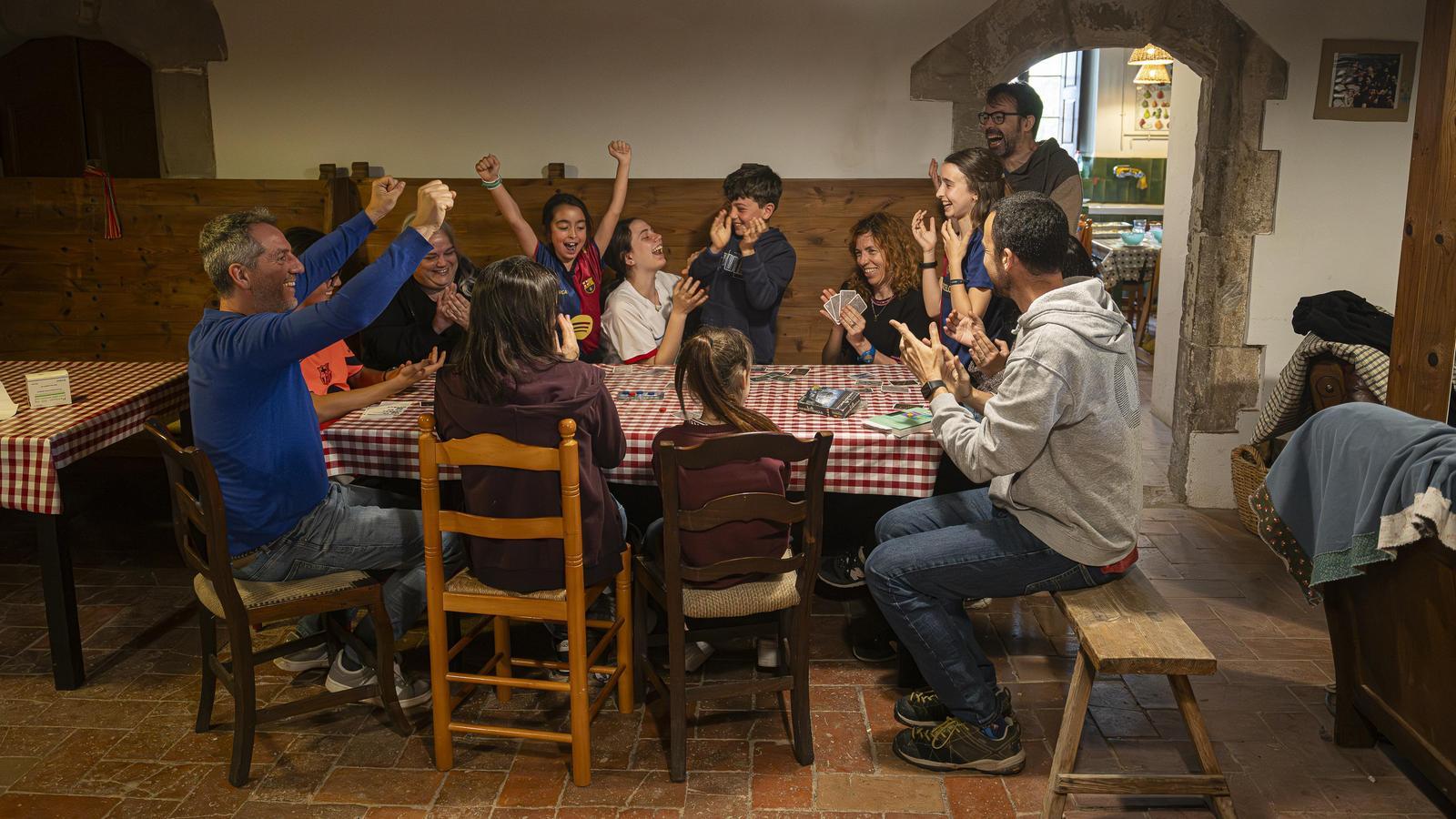
BarcelonaAt just fifteen days old, Bruna spent her first weekend in a house that, not long before, her parents and a dozen other families had jointly rented to share time and leisure. She is now twenty years old and, although she doesn't go as often as before, she is happy to have it available. “I remember the excitement of Friday afternoons, when I knew we were going,” explains Bruna, “we had a great time, we went on excursions and we had a cabin”.
Bruna's family is a driving force behind a project that is already more than two decades old and has been incorporating new groups as others leave. Lida is one of these new additions and learned about it because she was invited by some friends. “I want this, I said immediately,” she explains. After this first contact came the pandemic. It was then complicated for her to find a large house outside of Barcelona to start a new project, and in those that were operational, there was no space. Finally, the same friends who showed it to her were leaving and took the opportunity.
They now go more or less once a month and especially during the school year and would like to be able to meet more with the other families. They are one of the families that make the most use of it. She knows that when children get older it is more difficult, because they have their own agenda of sports competitions, music, extracurricular activities… That is why she takes advantage of the fact that hers are still small to enjoy it to the fullest and recognizes that for the project to be sustainable there must be families with young boys and girls, since adolescence is the time that generates the most dropouts. “I am grateful that my parents didn't drop out and kept fighting for it”, admits Bruna, “because even as a teenager, even though we could have other plans, we also had a good time”. With this experience, Bruna already thinks that, if it depends on her, she will try to keep it going: “I have many memories there, at the house, it's an idea that really appeals to me and I would also really like it for my children”.

Sharing houses outside of Barcelona is a practice that is not only more economically affordable than having your own second home, but it also generates a lot of satisfaction among those who opt for it. Natàlia Cantó, a sociologist and professor in the Arts and Humanities Studies at the UOC, sees these advantages, but highlights some added values, such as having playmates for the children, sharing conversations and evenings, for adults, and, even, sharing family care activities. All of this can represent "a great learning experience", according to Cantó, who emphasizes that the family context also transmits "a message and a style of leisure and of inhabiting the world".
'Los de la rectoría'
In the project in which Jordi participates, they share this same philosophy. They were group scoutmates when they were young and now sixteen years ago they decided to look for a space to share weekends. They found it in Montclar del Berguedà, where the Bishopric rented them the rectory. He and his partner did not move in until they had their first daughter and now for more than ten years they have tried to go there once a month. They have a very good relationship with the village, a municipality that has suffered depopulation decades ago, where they are known as “those of the rectory”, and the Bishopric has never put any inconvenience on them either.
They are five family units, three with children, who experience this space as a place to meet with friends. “If the others don't come, we hardly come up,” says Jordi, to explain that what gives meaning to the initiative is sharing time with friends who also have children of similar ages. In fact, up to six children between eight and sixteen years old can be found. To achieve this, they try to take advantage of all long weekends and reserve, above all, two dates to be all together: San Juan and the Fiesta Mayor.
Rules and organization
Expanding the network of relationships for the little ones fosters their sense of community and autonomy and, for this reason, family psychologist Gemma Tejedor, from the Nexum center in Barcelona, considers it a "very enriching" experience, but also warns that it must be "taken care of, generating understanding among the members and applying an adult perspective with communication and complicity".
In this regard, there are no written rules and each project functions as its promoters have wanted. In Jordi's case, they started from the experience of scouting, which has facilitated this understanding from the beginning, and they are lucky that it is a large house and each family has its own room. Although they have had to meet occasionally to make decisions, they do not have a "ten commandments of operation", but rather very basic rules, such as leaving a small extraordinary amount in the common pot for bills each night they spend there. Thus, whoever uses it the most, participates more in the expenses. Regarding meals, a menu is designed upon arrival, groceries are bought, and meals are cooked for those present by everyone. "We have made each other," explains Jordi.
Lida and Bruna's house is not big enough for each family to have their own room, but that doesn't cause them any inconvenience either, because the ten of them rarely coincide. As Jordi they have fixed dates (San Juan, Castañada, and a calçotada in February), but it's also complicated for all ten to be there. They have no rules beyond the minimum requirement to leave the house clean and locked, but they do have agreed-upon menus for the arrival night and the first meal. Everyone knows they have to bring the ingredients to cook, among themselves, those first dishes, and the rest is decided beforehand and they also bring everything to cook together. Once a year, they also try to ensure that at least one member from each family comes up to do general maintenance.
A safe place
If I hadn't bet on this project, Lida's family wouldn't have looked for a second home on their own either. What motivated them to join was being able to offer their daughters the opportunity to share space with other children "in a careful and healthy way, with close and friendly people". It's the same way of understanding the experience that Jordi has, who doesn't assimilate it as a second home but as a meeting space. "It fills us greatly to see that for our sons and daughters Montclar is a safe space, where they have friends who are like cousins," he details, "it's like a kind of family." Bruna's memory and assessment confirm that the goal is achievable: she believes that the experience has taught her to share, when she was young, and has brought her very interesting and very different conversations, as an adult. "I grew up there, I learned many things and experienced them, and above all, it is a safe place where no one judges me no matter what happens".
