Sandra Monge Palladino: "You were born in Catalonia, but I chose to come here"
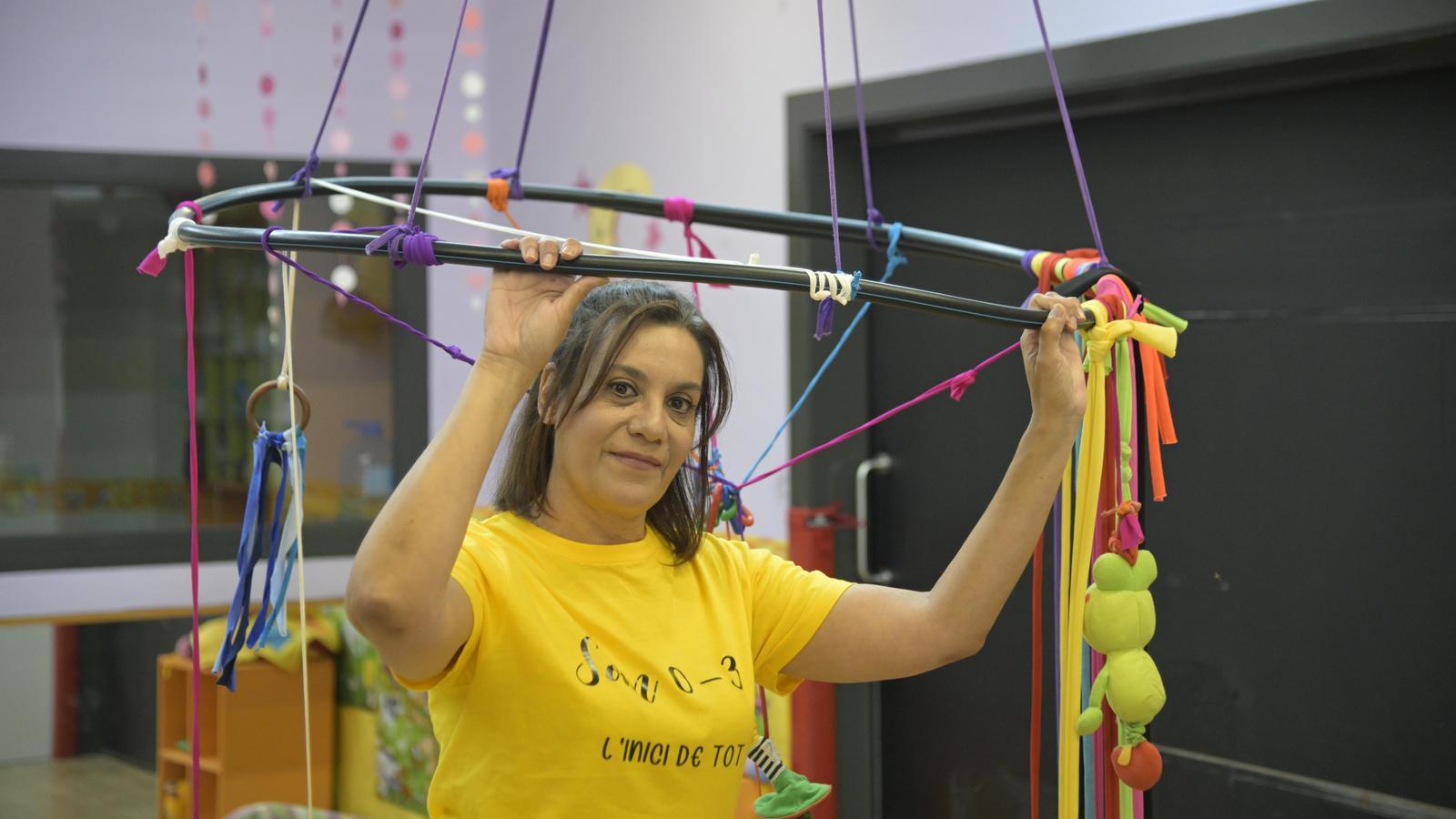
Teacher at the Arbeca nursery school, she fled a turbulent Argentina to fulfill her life's dream

-
CAT -
CAST
ArbecaWhen she was a child, without knowing why, she already asked to live in Catalonia. And now, at 57, she knows she will never return to her country of origin. Sandra Monge Palladino was born in 1969 in the Argentine city of Rosario, into a family originally from the Italian Piedmont. Educated in a ideologically very diverse environment, she has always been linked to anti-capitalist left-wing movements. During her childhood, she suffered the blows of the military dictatorship of General Videla (1976-1983), by which she has always remained marked.
Although democracy was theoretically reinstated in the mid-eighties, she continued to suffer confrontation because of her ideas. She studied teaching and anthropology, just as the University of Rosario was recovering humanities studies that had been suppressed by the military junta. These were years when she associated with Catalan and Basque professors, some very politically committed, and she came into contact with the Centre Català de Rosario, where she reaffirmed her political militancy and her interest in Catalonia. In these circles, she met who is now her husband and with whom she soon after had a child. She became a mother at 23 years old.
These were still turbulent times in Argentina. The Due Obedience and Final Point laws, which acquitted many of the repressive military personnel, had recently been enacted, and these were years when confrontations and some armed uprisings still occurred. In this context, she kept her political commitment active, amidst threats and intimidation, until a bullet grazed her cheek in an attack deliberately aimed at her. “The police then asked me if I believed in God, because I had been saved by a miracle,” she recalls.
That warning and later an intentional fire in their home ultimately led the family to an exile that she defines as ideological. “We had money, but we wanted freedom”, justifies Monge. With her husband and a child, they chose the destination of Barcelona, the city she had always dreamed of since she was little. But the beginnings were really hard. “I felt uprooted, without a social network and university degrees that were not validated”, she laments. So she started from scratch. “I had to rebuild myself socially, intellectually and professionally”, she recalls.
Over time she ended up putting down roots. She worked as a teacher in a school in Pineda de Mar, worked as a socio-sanitary agent and also directed an open center. Among many hours, she could make a living at the end of the month.
New life in the lands of Lleida
In 2006, she invested her savings in buying a house in Arbeca (in Les Garrigues) and life would take another unexpected turn. During a summer of renovating the old house, her son, already a teenager, fell in love with that “miserable little town”, she jokes. “At first, I thought Arbeca was horrible, too small, with not many shops and nothing interesting to do”, she assures. But they stayed.
Forced, once again, to start over, she had an unexpected stroke of luck and was offered the direction of one of the nursery schools in Mollerussa. She was part of a worker cooperative that she ran for about ten years. That was as long as she could endure a project that eventually became economically unviable. “Those were times when I didn't earn more than 600 euros a month”, she assures.
When it seemed that the education sector was closing its doors to her and would force her to pack her bags again, the pandemic saved her. Life in Arbeca presented itself as the best option for confinement, and she dedicated her time to validating her anthropology studies. Until, another stroke of luck offered her a place at the Sant Jaume nursery school in Arbeca, which she has held for three years.
We don't know if Sandra Monge's adventures have come to an end, but she is convinced that they will always be in Catalonia. “Catalans were born here, but I chose it”, clarifies the Argentine teacher. “I have always felt an obsession to come here, where I dragged my family –she explains– because I am attracted to Catalans fighting for their ideas”.
She assumes that microracism exists in Catalan society, “in the same way that it also exists in my country”. In Arbeca she feels loved and welcomed. And she wishes to apply the same in classrooms. “To be able to have an inclusive and democratic education, the child must be treated as an equal”, she claims. But she acknowledges that new families make it easy. “Due to their condition as immigrants, they come predisposed to receive information, they need it, they seek inclusion”, she assures.
The reception of children in all their diversity, according to the teacher, represents a perfect symbiosis in Arbeca. Families find in the municipal nursery school a place of support and reference in their lives, but at the same time they contribute to repopulating the rural world. “If we want territory, we need to fill the nursery schools”, she concludes.
A firm defender of the current mobilizations for the improvement of the Catalan educational system, Monge is an Argentinian who always speaks Catalan. Only in rare exceptions, especially when she gets angry, does she do it "in rosarino”.

