Why the nuclear threat increases with the war in the Middle East
The escalation of war in the Middle East, the breakdown of nuclear treaties, and the lack of international rules have placed the planet in an unprecedentedly risky scenario.


-
CAT -
CAST
LondonThe radars of the 49th Missile Defense Battalion, based in Fort Greely (Alaska)They detect the launch of an intercontinental ballistic missile (ICBM) heading toward some point in the United States. They can't identify its launch point, but they know that in just over eighteen minutes, unless it's an error in the tracking satellites, it will impact its predetermined target. The military chain of command is activated, preparing to intercept it. The political structure is also set in motion to decide, ultimately by the president, whether to counterattack—against whom, but?—which could trigger a global nuclear war. This is the beginning of the gripping Netflix hit that premiered last October. In House of DynamiteFrom Kathryn Bigelow's film. In the movie, the chances of intercepting an ICBM in flight, traveling at a speed of six kilometers per second, are 61%. Do they manage to intercept the missile? No need to spoil it.
The film plays with a hypothetical scenario: what would happen if a missile… On September 26, 1983, a Soviet early warning system for nuclear attacks erroneously indicated that the Americans had launched one against the Soviet Union. Lieutenant Colonel Stanislav Petrov, of the USSR's air defense force, supervisor of the system, determined that the alarm was false. But what if he had decided the opposite? Could the warning have triggered a counterattack from Moscow? Would the famous Red Telephone have been of no use? What would the consequences have been?
Despite the risk of accidents, the era of consensus on the need to reduce the number of nuclear weapons in the world seems to have ended. According to the 2022 US National Defense Strategy, a human being will remain "in charge" of any decision to use or not use a nuclear weapon. Then-US President Joe Biden and his Chinese counterpart, Xi Jinping, agreed that "there should be human control over the ultimate decision." The Trump administration, however, is much more in favor of artificial intelligence.
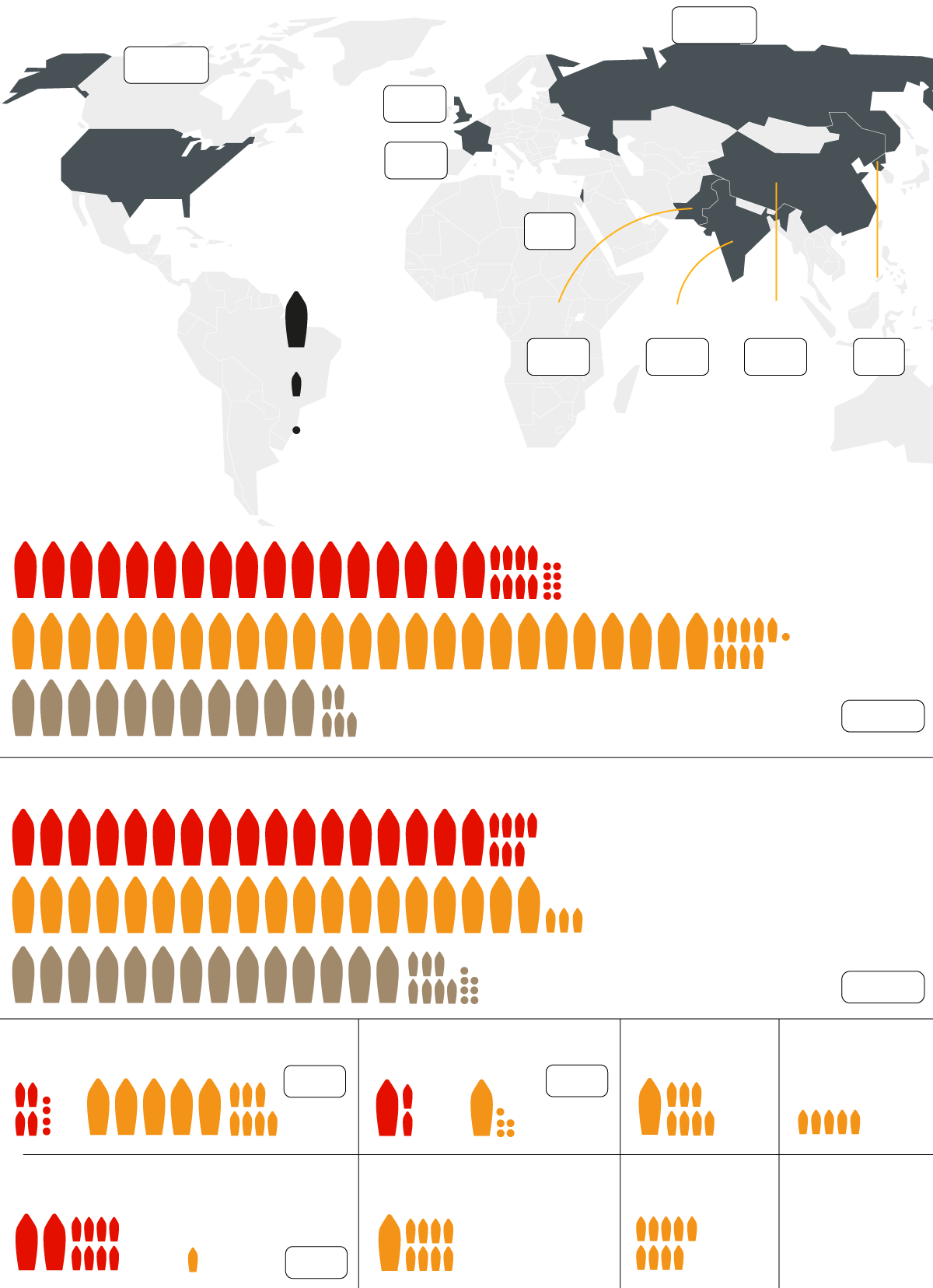
Be that as it may, what was a policy of reducing nuclear warheads at the end of the Cold War by the two great rivals of the second half of the 20th century, the United States and the Soviet Union—and Russia, which emerged as its successor—has very recently reached its epilogue. the extinction, on February 5th, from the New Start,the last treaty that limited nuclear weaponsstrategies of these two global players.
Rússia
5.459
5.177
Regne Unit
225
Estats Units
290
França
Israel
90
Corea del Nord
Ogives
Índia
Pakistan
Xina
100 unitats
Desplegades
170
180
600
50
Emmagatzemades
10 unitats
Retirades
1 ogiva
Rússia
1.718
2.591
5.459
1.150
Estats Units
1.770
1.930
5.177
1.477
Pakistan
Regne Unit
Xina
Corea
del Nord
225
600
170
105
120
50
24
576
França
Índia
Israel
90
280
290
180
10
Rússia
1.718
2.591
5.459
1.150
Estats Units
1.770
1.930
5.177
1.477
Xina
Índia
600
24
576
180
França
Pakistan
280
290
170
10
Regne Unit
Israel
Corea
del Nord
225
50
105
120
90
Rússia
1.718
2.591
5.459
1.150
Estats Units
1.770
1.930
5.177
1.477
Xina
Índia
600
24
576
180
França
Pakistan
280
290
170
10
Regne Unit
Israel
Corea
del Nord
225
50
105
120
90
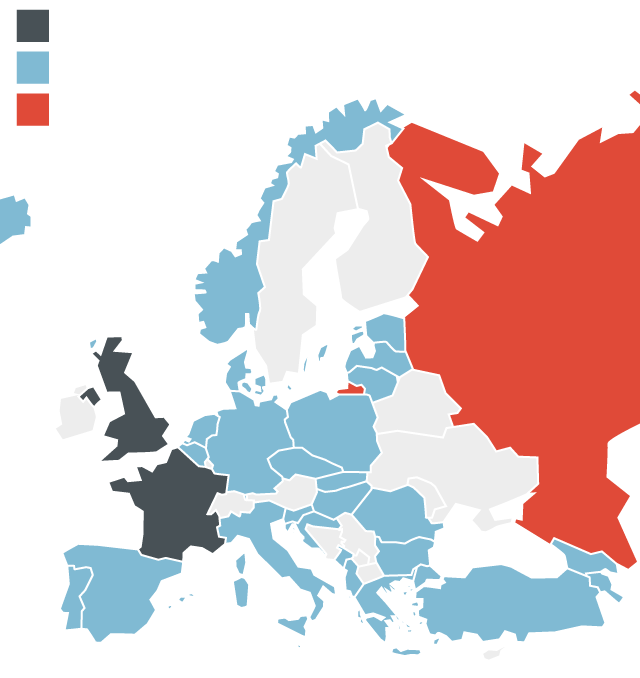
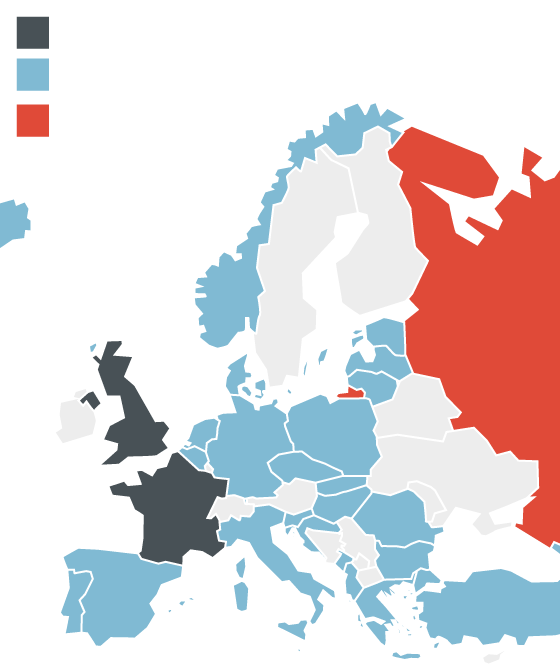
In this context of the end of self-imposed limitations, two days after the start of the attacks by Israel and the United States against IranFrench President Emmanuel Macron reported that would increase his country's nuclear arsenalwhich currently stands at 290 warheads. He did not specify the number of new warheads he would develop, but he did order the construction of a new nuclear-powered submarine.
The great latent fear
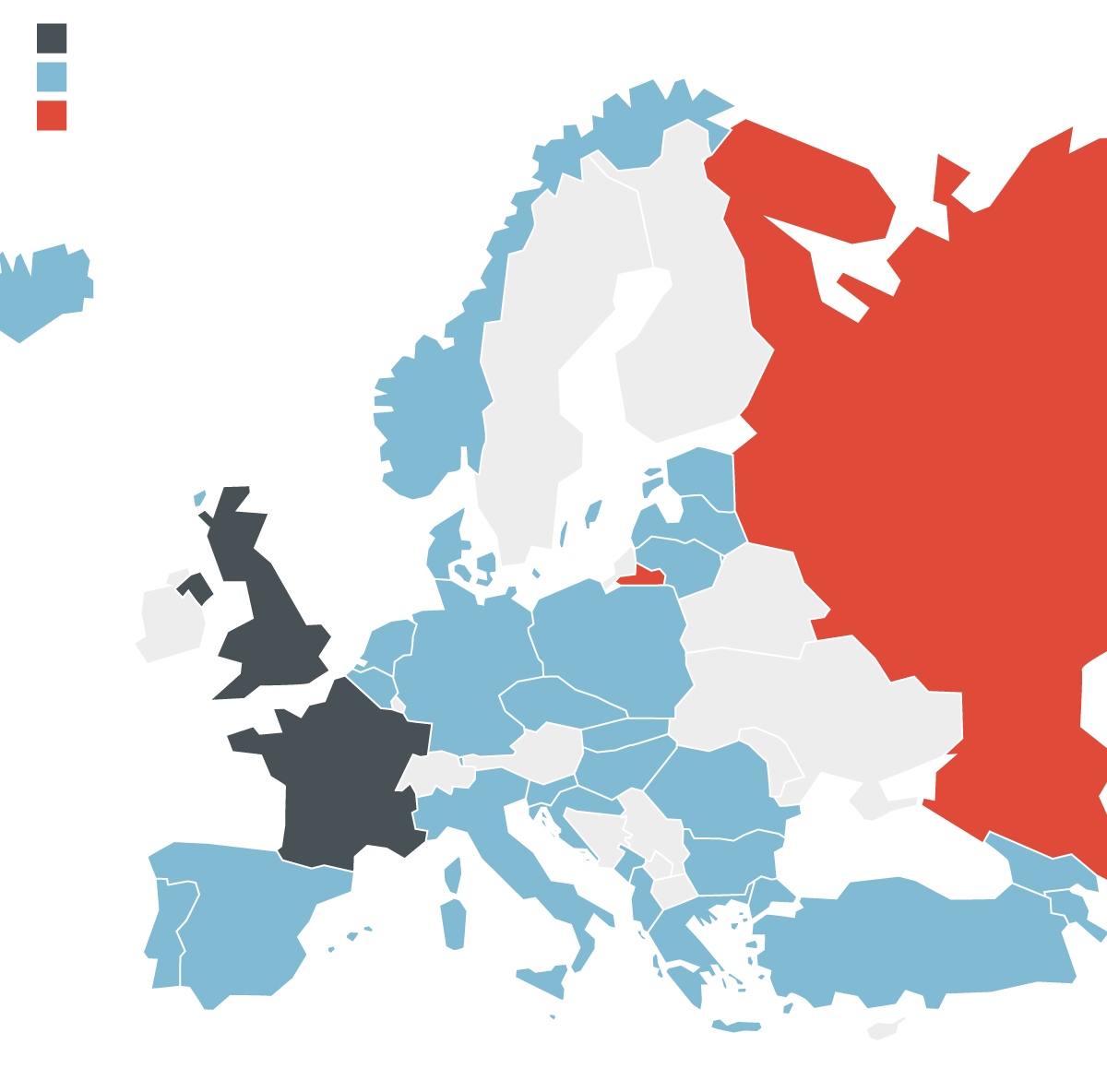
As a result of Hamas's assault on Israel on October 7, 2023, and the Benjamin Netanyahu's response against the Gaza StripThe great fear in the region was Iran's involvement in the conflict and that, like dominoes, the Persian Gulf countries would be drawn into a regional war. Last year, this was ultimately avoided, despite the Twelve Days' WarDuring the US-Israeli conflict, the United States also bombed Tehran and supposedly ended its nuclear program, according to President Trump at the time. Last week's US-Israeli attack has quickly escalated. On Sunday night, Cyprus, a European Union country, was affected when a drone struck a British-owned base in the eastern part of the island. The incident was repeated on Monday with two more drones. On Wednesday, Turkey was also involved when NATO shot down a missile that was flying over its airspace, and that fell 80 kilometers from the Incirlik base, where between 20 and 50 US B61 tactical gravity nuclear bombs are located.
Armes nuclears pròpies
Armes nuclears dels Estats Units a Europa
Armes russes
Islàndia
Noruega
Regne
Unit
Rússia
Estònia
Letònia
Dinamarca
Lituània
P. Baixos
Polònia
Alemanya
Bèlgica
Rep. Txeca
Eslovàquia
Hongria
Croàcia
Romania
França
Bulgària
Montenegro
Albània
Espanya
Portugal
Itàlia
Turquia
Malta
Grècia
Armes nuclears pròpies
Armes nuclears dels Estats Units a Europa
Armes russes
Armes nuclears pròpies
Armes nuclears dels EUA a Europa
Armes russes
On the same day, the war reached Sri Lanka and South Asia, when a US submarine sank an Iranian frigateOn Thursday, the South Caucasus was also affected when Azerbaijan—a country with very good relations with the United States and Israel—was hit by several drones. In all cases, both in the Turkish incident and in Azerbaijan, Iran denied responsibility.
Is a new world war underway? On the occasion of Fourth anniversary of the Russian invasion of UkrainePresident Volodymyr Zelensky told the BBC that yes, Putin declared it. Professor Scott Lucas of the Clinton Institute at University College Dublin disagrees, but admits that "a war beyond the Middle East is now possible." He adds: "War is always dangerous, of course, but this conflict is exacerbated by the breakdown of any [unclear] rule of the game international."
Mark Justin Lyall, former national security advisor to British Prime Minister David Cameron between 2015 and 2017, expresses a similar sentiment. "We already have a widespread regional war, and it could still expand further." For example, if the United States' attempts to arm the militias within the Iranian Revolutionary Militias, could strong Kurdish forces in both Iran and Iraq destabilize Turkey in the medium to long term? "The reason is that Israel has no incentive to stop the campaign," he says. "From their point of view, it's a situation..." win-winWhatever the outcome, Iran's military capabilities will be severely degraded.
What could the end be? "When Iran no longer has ammunition to launch against its neighbors, the conflict may simply fizzle out, or when the United States is persuaded, by its own public victory, by its own public opinion, by Congress, to halt the operation."
Ukraine and the Middle East are not the only major current conflict zones. One very close to Iran is the conflict between Pakistan and Afghanistan, which They've been exchanging fire for over a week. along the 2,600 kilometers of shared border. The escalation comes against a backdrop of increasingly close ties between the Trump administration and the Islamabad military junta, led by General Asim Munir, which presents itself as a regional security partner of Washington, following its withdrawal from Afghanistan five years ago.
In Africa, and according to the Stockholm International Peace Research Institute (SIPRI)There are between 10 and 15 significant armed conflicts. Among others, these include conflicts in Sudan, eastern Congo, the jihadist insurgency in the Sahel, affecting Mali, Burkina Faso, and Niger, the war against Al-Shabaab in Somalia, and lingering conflicts in Ethiopia and Libya.
The nuclear temptation
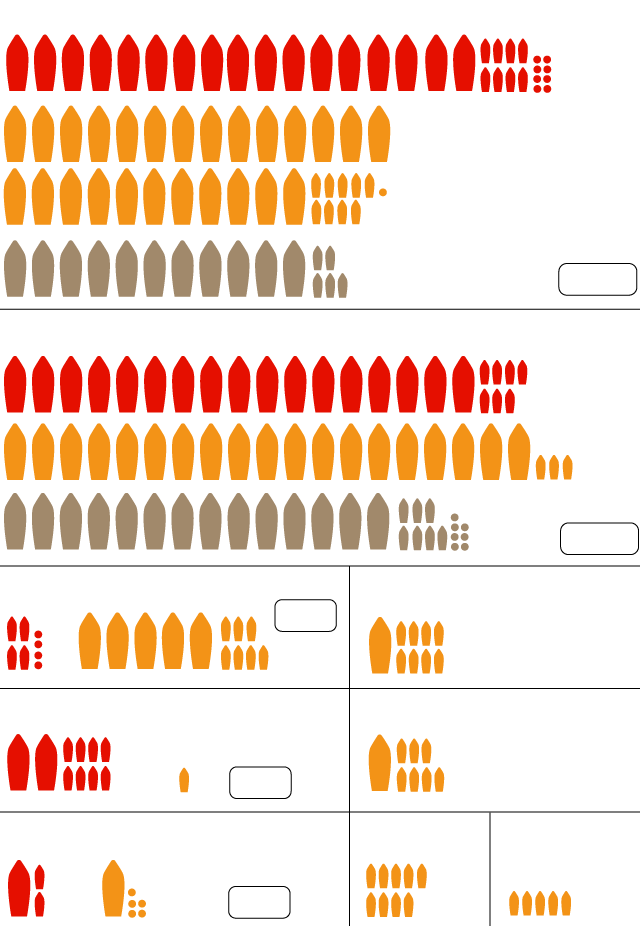
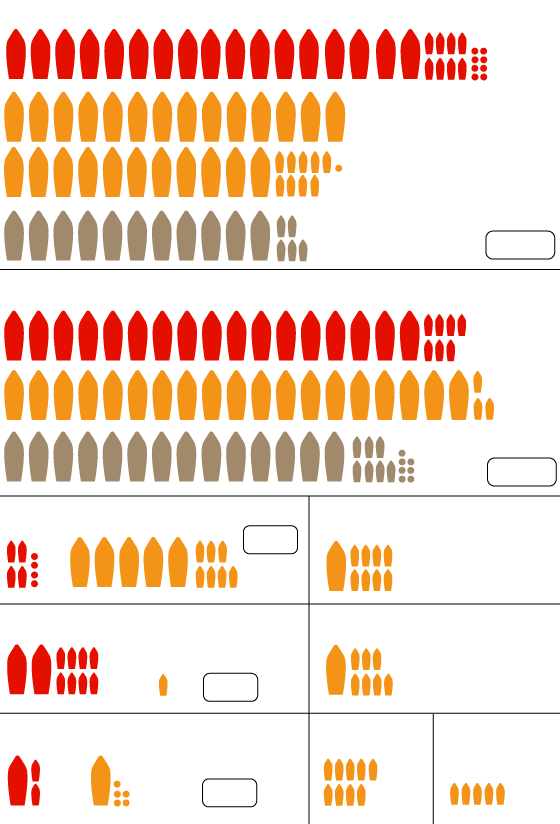
In this context of multiple flashpoints, is an accident possible? Or a deliberate decision to end entrenched conflicts through more expeditious means than conventional ones? Could the spread of regional wars culminate in a conflict of this kind? The arsenal is there. According to the latest SIPRI report, published in the SIPRI Yearbook 2025According to the data from January 2025, there were 12,241 nuclear weapons in the world. The same source indicates that 9,614 are in potentially usable military arsenals, 3,912 are deployed on missiles or bombers, and approximately 2,100 are on immediate alert (primarily missiles). In the Middle East, and although there has never been official acknowledgment, the only country with nuclear weapons is Israel. In the context of the conflict, however, on Tuesday, Pakistan, another country with a nuclear arsenal, warned Iran not to attack Saudi Arabia. The two countries have maintained a strategic alliance for more than fifty years—2.5 million Pakistanis live in Saudi Arabia—and on September 17, 2025, they signed the Strategic Mutual Defense Agreement (SMDA), which stipulates that "any aggression against either of them" will be met with force.
The Center for Strategic and International Studies (CSIS) in Washington argues that the proliferation of crises between nuclear powers – Pakistan and India have skirmishes from time to time, The last one was in May of last year—has made the possibility of nuclear conflict a structural element of international security. In a report published last year, researchers Heather Williams and Nicholas Adamopoulos warned that “nuclear risks are on the rise and crises involving nuclear-armed actors appear to be becoming more frequent, with the potential to become a defining feature of future regional conflicts.”
In contemporary strategic analysis, several think tanks warn that modern conflicts can escalate in different ways. In addition to the risk of wormhole escalationThat is, a sudden escalation that skips several steps and can lead directly to a much more serious confrontation – even a nuclear one – analysts also speak of chain escalationThis term describes a chain reaction of escalation, in which each military action provokes a response from another actor, often an ally or linked to the first, generating a sequence of reprisals that progressively expands the conflict. In this scenario, a war that is initially limited can incorporate new countries or armed actors until it becomes a regional—or even global—conflict without either side having initially foreseen this expansion. A classic example of this possibility would be the outbreak of the First World War, with the assassination of Archduke Franz Ferdinand in Sarajevo, the intervention of Russia, the entry of Germany into the war, and the mobilization of France and the United Kingdom. The Doomsday Clock is at 85 seconds to midnighta symbolic milestone that would mean the destruction of the planet. For the moment, Putin's Russia, preoccupied with Ukraine, has kept a low profile in the Middle East, although on Friday, the Washington PostHe asserted that Moscow is supporting Iran with intelligence reports about the location of US forces. China has played a discreet role. It has supported to the "protection of legitimate rights and interests" from Tehran, but he has not offered it military supportDespite being Iran's main trading partner.
In any case, the extreme volatility of the region makes the strategic calculation of Washington and Tel Aviv seem like a very risky gamble. At this point, the metaphor ofIn House of Dynamite It takes on a new meaning: the danger is not that a radar at Fort Greely alerts of a missile launch from an unidentified site, but that someone decides to light the match convinced that they can control the fire.
