"We can no longer assume that leaders will act rationally": alert for the increase in nuclear risk
A report from SIPRI warns that China is expanding its atomic arsenal faster than any other country

-
CAT -
CAST
BarcelonaNuclear deterrence is the idea that one state will think twice before attacking another if the second possesses a nuclear weapon. With this premise, for decades the maintenance of atomic arsenals has been justified and some middle powers have continued developing and modernizing missiles in an opaque manner. Political consensus on the idea of nuclear deterrence has reached the point where European powers are beginning to unite under a single nuclear umbrella, now that their American protector is more reluctant to defend them.
this 2026 the New Start definitively expiredthis 2026 the New Start finally expiredespecially the outbreak of the conflict between India and Pakistan, both with nuclear weaponsFor all these reasons, SIPRI director Karim Haggag warns that "the dangers associated with nuclear weapons" are growing and insists that this path is not a guarantee to avoid conflicts: "World events –especially the outbreak of conflict between India and Pakistan, both with nuclear weapons– call into question the logic of nuclear deterrence," he concludes.
As demonstrated during his grand military paradeChina changes military doctrine
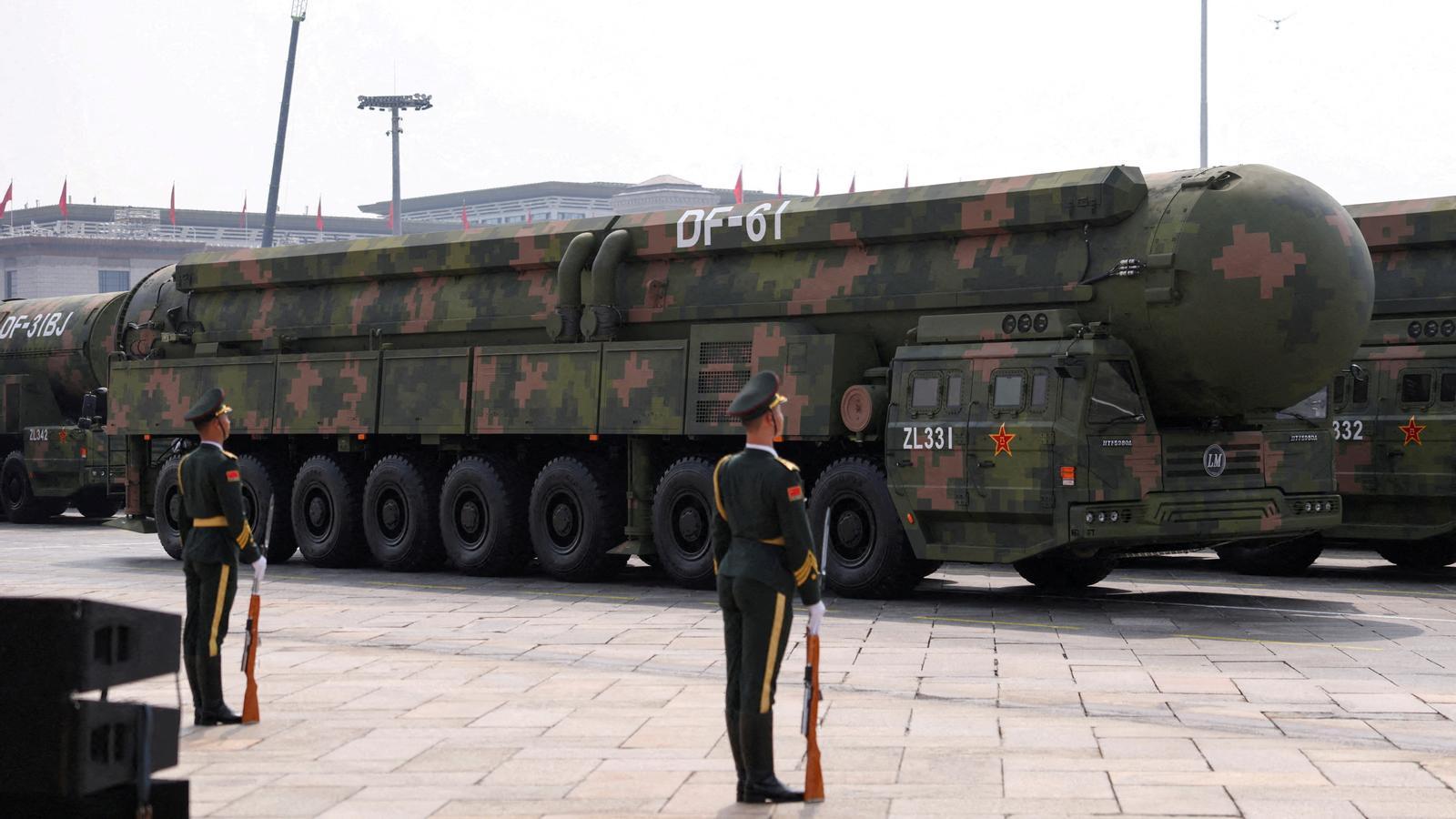
One of the yearbook's conclusions, in fact, is that China is expanding its nuclear arsenal faster than any other country. As demonstrated during its grand military parade, Beijing is making efforts to develop new nuclear systems, and is shifting its military doctrine towards a "first-strike counterattack" posture, meaning a system that allows it to attack the moment it detects an incoming threat, before enemy projectiles hit. Currently, it already has more intercontinental ballistic missile launchers (those that can be loaded with nuclear warheads) than Russia and the United States. And it is estimated that by the end of the decade, it will surpass both powers in this type of missile as well. However, the Asian giant has "only" 620 nuclear warheads, 20 more than the previous year, a figure, however, that is still far from the more than 5,000 held by Washington and Moscow.
For this reason, for the first time, the US considers that it must simultaneously counter the forces of two major nuclear powers: Russia and China. In contrast, the nuclear programs of the Kremlin and the White House are more stagnant. Washington has had planning and funding problems that will delay the modernization of its arsenal and increase its cost: the US military budget is saturated by the production of non-strategic weapons and by having to finance Trump's multi-billion dollar shield, the so-called Golden Dome. For its part, Russia's nuclear modernization program also faces difficulties, mainly due to Western economic sanctions and competing demands linked to the war in Ukraine.
Finally, the report highlights a last element that raises the risk of a nuclear attack to an unprecedented level. AI is being integrated into decision-making and target selection systems, and this accelerates the pace of war (reducing the window for leaders to make decisions) and reduces human oversight. For this reason, the yearbook warns, the risk of unpredictability and miscalculation increases, as does the risk of a nuclear response.
