Three years of the most ignored war: "Atrocious crimes are being committed"
The conflict in Sudan, which suffers from the world's largest displacement crisis, reaches its third anniversary with hopes pinned on the Berlin summit

-
CAT -
CAST
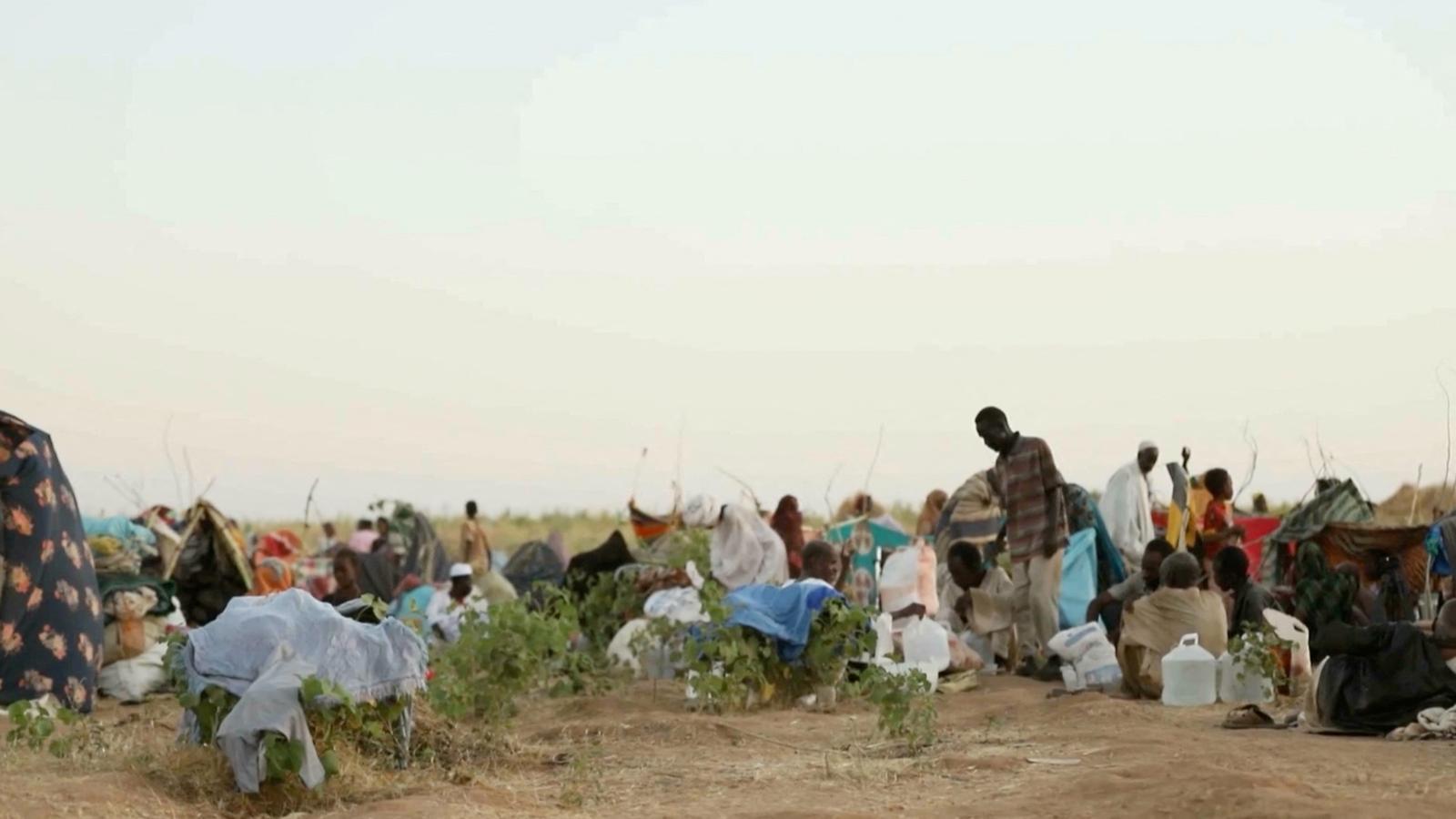
Barcelona"Before the war, I had a good life. [...] One day a shell fell at home. It killed my father and mother instantly." This is the testimony collected by Doctors Without Borders from Amna, a thirteen-year-old girl who now lives with her fifteen-year-old sister in the Tawila refugee camp in Darfur. Like her, 14 million people have been displaced to Sudan because of the war. Like her parents, about 150,000 people have died victims of the conflict.
What began as an exchange of fire between the Rapid Support Forces and the country's Armed Forces has, in three years, become a multidimensional catastrophe: it has caused the worst humanitarian crisis in the world, devastating episodes of ethnic cleansing, and has left the country de facto divided, with a jumble of regional actors involved that hinder any way out of the conflict.
"The humanitarian situation in Sudan is extreme at this point," says Muriel Boursier, Doctors Without Borders' emergency coordinator in Darfur, to el ARA. She insists on "the scale" of the catastrophe that has multiplied the needs on the ground: the war has dismantled essential services, such as healthcare, protection, food security, and basic safety. According to data from the International Red Cross, between 70% and 80% of health infrastructure is not operational. The World Food Programme provides assistance to more than 3.5 million Sudanese in the Darfur and Kordofan regions, where famine has been confirmed. But concern is growing about maintaining this assistance: funding is not arriving, and the scenario could worsen due to the rise in prices stemming from the conflict in the Middle East.

Beyond humanitarian terms, Boursier has noted that the war is extreme in "the levels of violence experienced by the civilian population". "Atrocious crimes are being committed by both sides. The fight between the two military factions is dragging the country towards a deadly abyss," says Solomon Dersso, director of the think tank Amani Africa from Ethiopia.
Despite everything, Sudan continues to be an almost invisible war to the eyes of the international community. "We are living through a historic moment with a global record of conflicts," says Dersso, who laments that the magnitude of what is happening in the Middle East and Europe "sucks up global attention and eclipses Sudan." But for CIDOB associate researcher Òscar Mateos, it is also a problem of Western perception. He warns that we often approach it "from a profoundly racist mentality, without understanding its roots".
A war between former allies
The most immediate conflict is the result of the confrontation between two actors –the Rapid Support Forces (RSF) in Sudan and the Armed Forces– who were once allies in overthrowing the previous government of Omar al-Bashir. The men who led each military branch, General Mohamed Hamdan Dagalo and General Abdel Fattah al-Burhan, respectively, disagreed on the country's direction and the structure of the military forces.
On April 15, 2023, the shooting began, which immediately escalated into a national conflict with the involvement of many regional actors. To this day, the country's army – under the orders of Abdel Fattah al-Burhan– controls most of the north and east, while the RSF, with Hamdan Dagalo, controls the west. In that area is Darfur, which has been the scene of some of the harshest crimes of the entire war. Its capital, el-Fasher, fell to the RSF late last year, after 18 months of siege. When humanitarian personnel were able to enter, they found evidence of mass killings that Human Rights Watch has described as an "ethnic cleansing campaign".
Boursier, who is located precisely in this region, warns that they are attending to more and more civilians: "They are children and women who are not participating in the conflict." And explains that "sexual violence has been a characteristic" of the war, used as a weapon by men from both sides. "We have treated more than 3,000 women in Darfur, only in the places where we have a presence, not counting the rest of the country or victims who, out of fear or shame, do not report it," she recounts.
The virulence of the conflict has been generated in an "atmosphere of almost total impunity", in the opinion of Dersso, which has been tolerated and encouraged by regional allies. "One of the factors that makes this war so destructive and difficult to resolve is the extraordinary level of involvement of regional and extra-regional actors," he maintains. Both the United Arab Emirates, which finances the RSF, and Egypt, which supports the Sudanese army, are deeply involved and have interests in the country. But one must also consider "the role of Russian private security companies and the Kremlin," adds Mateos. For the Ethiopian expert, Sudan's fragmentation is so profound that "the very existence of the country" is in danger. By military means, neither side has options to achieve total victory.
With no end in sight
Meanwhile, media ostracism has also condemned Sudan to diplomatic silence: the resolution of the conflict is at a dead end. This Wednesday, a summit begins in Berlin that could be an opportunity to end the conflict. About fifty representatives are expected to participate – among whom there will be representation from Germany, the African Union, the European Union, France, the United Kingdom, and the United States – who will also look to secure funding for humanitarian aid. But expectations are low. At least, those relating to a political resolution. The Sudanese Armed Forces and one of the rival militias have already said they will not participate.
"We can expect scarce results. Civil society itself has discredited and delegitimized the summit's setup, and many participating actors have little interest and incentives in finding a constructive peace agreement," states Mateos. But for Dersso, Berlin's importance is above all about "bringing the war to light" and mobilizing international public opinion. "It is the place where a strategic turn should begin. If the summit serves to focus on civilians, new possibilities for resolution will open up," he argues.
