Three years later, Israel returns to the places of October 7
Grief has returned to occupy the scenes of the attacks while pressure grows for the state to investigate the errors that allowed the massacre

-
CAT -
CAST
JerusalemAt 6:29 a.m., Israel came to a standstill. For one minute, the streets fell silent and thousands of people came out to remember those who died three years ago. The country thus began a day that did not have a single stage or a single ceremony. The tribute was spread across the kibbutzim, the rural communities near the border with Gaza, the streets of Tel Aviv, in front of the Parliament in Jerusalem and, above all, in the places where the massacre took shape.
In the Nova festival area, memories have returned to occupy the same landscape where 378 people were murdered and dozens more kidnapped by Hamas, in the attack that began at 6:29 a.m. At the entrance, a stage hosts musical performances. On the esplanade, tents and memorials remember the victims. The place has ceased to be a festival: it is an open-air cemetery where family members, survivors, and friends of the victims have gathered to remember them.
“I light a candle for my sister,” says a young woman as she leaves a bouquet of white flowers. “I miss her every day. She just wanted to enjoy the music.” Around her, other families are doing the same: lighting candles, placing flowers, and cleaning the memorial dedicated to their loved ones.
A young man in a Nova Healing Concept t-shirt, a support initiative linked to the festival survivors, lights candles one after another. "I like to think that, even in the darkest moments, we are united. I do this as a volunteer," he explains. A little further on, two friends remembering young Shani Gabay melt into a hug. Gabay managed to take refuge in an ambulance, but Hamas members ended up firing at the vehicle. The family spent weeks without knowing where she was: her remains were identified after having been buried with those of another woman.
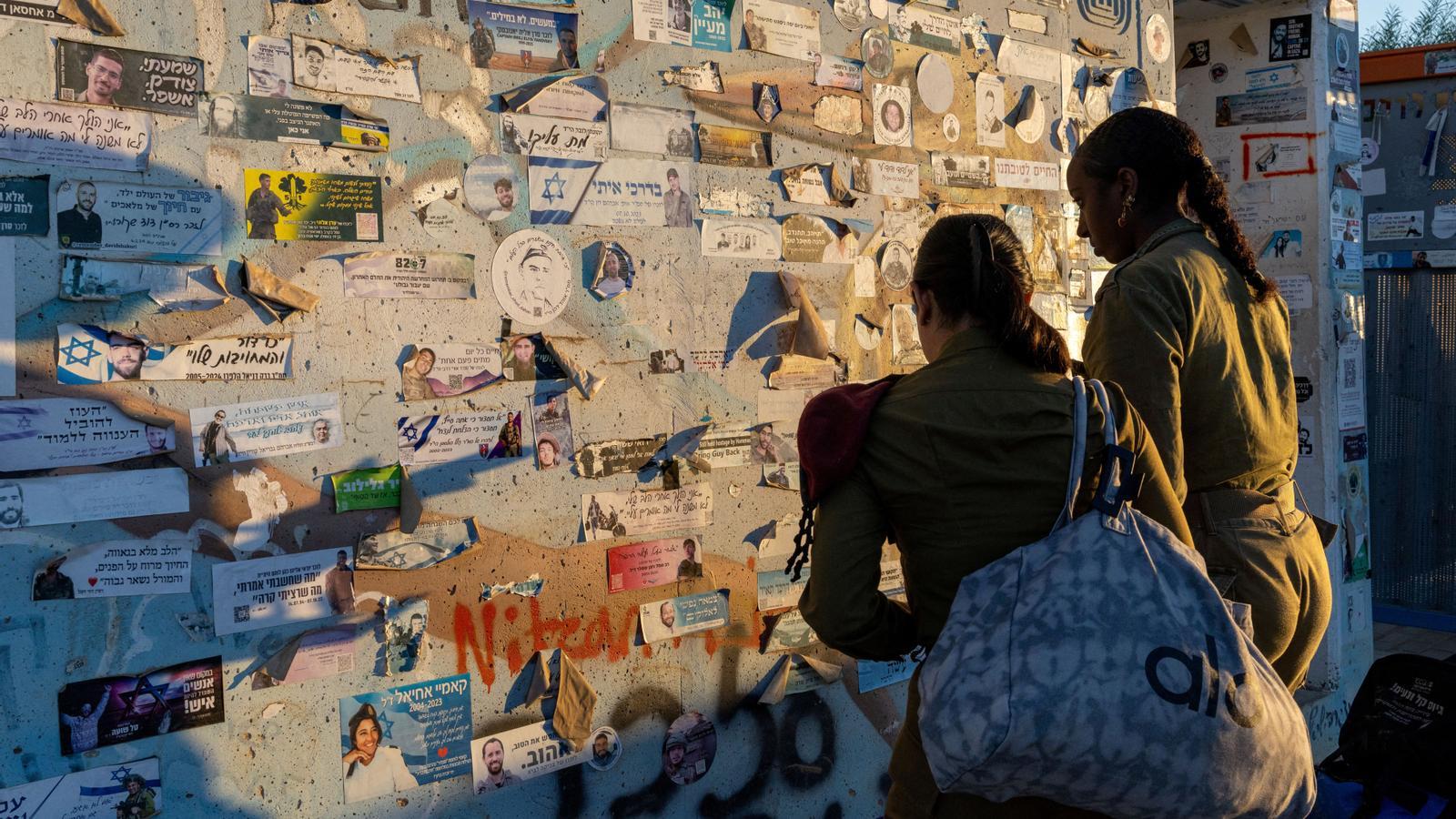
Leaving the Nova, the commemoration continues along route 232, the same road that that morning became one of the bloodiest scenes of the day. Two runners cross the road with the flag of Israel and a group of forty people gather with portraits of the victims at the point where their bodies were found. Some cars still carry stickers with yellow ribbons and photographs of the family members who died that day.
Record and protest
But this Wednesday Israel is not just remembering. It is also asking. Throughout the day, the line between mourning and protest has been blurring. In front of the Israeli Parliament, relatives of victims and former hostages held a minute of silence next to burnt vehicles that came from the Nova festival and displayed banners accusing the government of having abandoned the people who were attacked. In Tel Aviv, protesters briefly blocked the Ayalon highway with a banner that read: “The people will not forget their sons and daughters”. And while at Dizengoff Square the fountain was dyed red, at Trumpeldor Beach human silhouettes laid out on the sand represented the people killed and kidnapped on October 7th.
The question that has permeated these gatherings is the same one that has been accompanying families for months: what went wrong? Israel still does not have a state commission of inquiry into the errors leading up to and committed during the attack, and Israeli Prime Minister Benjamin Netanyahu has so far refused to initiate one. The issue also has a date on the calendar: October 27, when Israel will return to the polls. This Wednesday, Netanyahu's rivals took advantage of the anniversary to once again demand an independent investigation and to visit some of the scenes of October 7. Gadi Eisenkot, former chief of staff and opposition leader, visited a roadside shelter near Re'im, right next to the site where the Nova festival was held, while Naftali Bennett toured the festival grounds and spoke with relatives and survivors.

Netanyahu, on the other hand, has not participated in the memorial events on the ground, although he did appear on Monday at the institutional events. His office has issued a statement in which it explained that the prime minister lit a candle in memory of the victims and assured that Israel will complete its mission and will continue to pursue those responsible for the attack.
The commemoration of the attacks ended at night in Tel Aviv, at Yarkon Park, with a massive event organized by the families affected by October 7th. The ceremony began with a minute of silence and, afterwards, the space was transformed into a great stage of lights, music, and testimonies. “I have been coming for two years,” explains Liol. “Thank God, I didn’t lose anyone, but I feel I must come for my people, for my country.” His wife adds: “It is a shame that this comes from an organization of parents and not from the government itself”
More than 50,000 people have attended, some wearing t-shirts with the photograph of their loved ones; others, wrapped in the Israeli flag or with flags featuring the faces of their family members who died that day. Among the crowd, people look for each other, embrace, and cry. Three years later, Israel has remembered its dead in the same places where it lost them, while demanding to know why the state's defenses failed that morning and who must assume responsibility for it.
