Iran's war spreads: Lebanon, the Gulf and Cyprus under fire
At least 555 people have died in the Persian country as a result of the offensive


-
CAT -
CAST
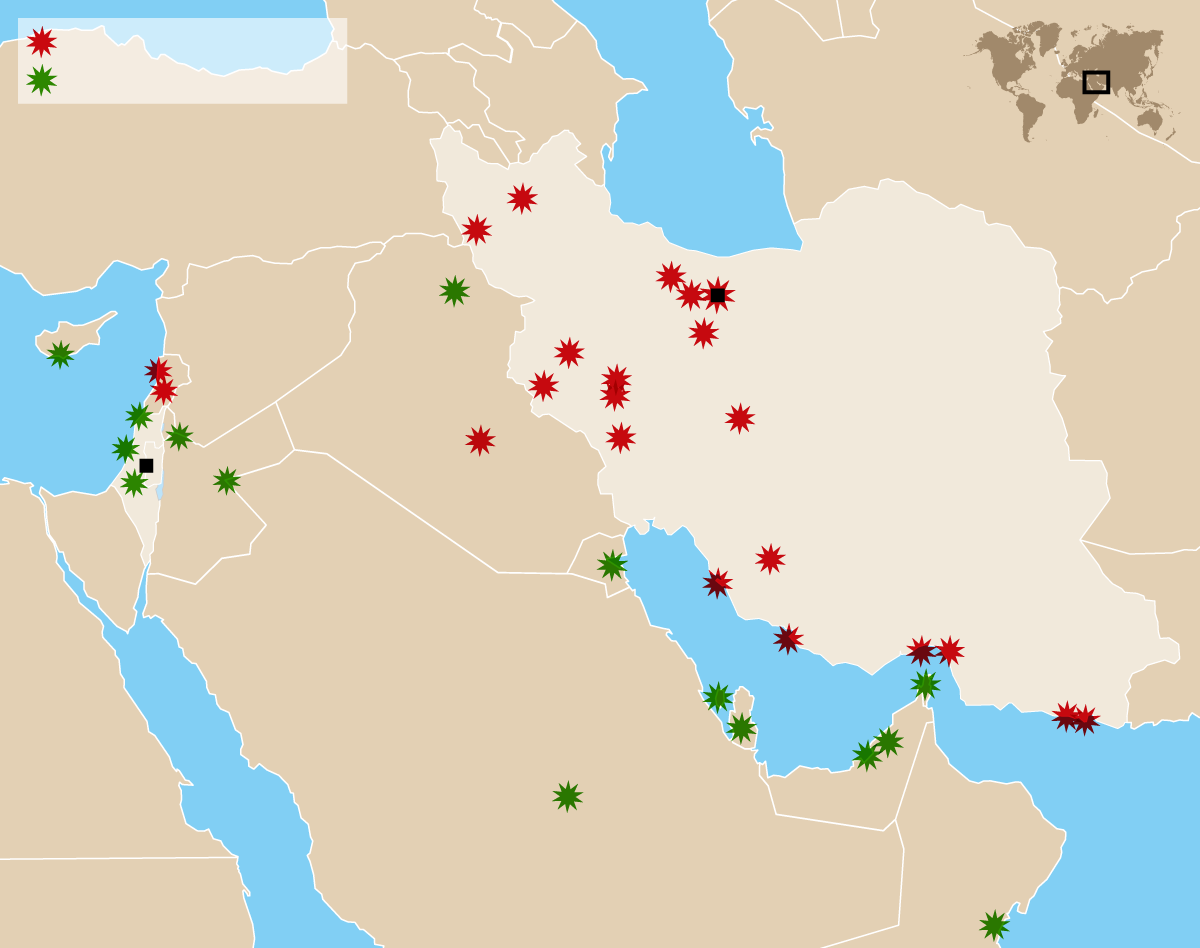
BeirutThe war against Iran is escalating in the region. It has transformed into a far-reaching conflict, not limited to Iran, Israel, and Lebanon. The Iranian offensive spread throughout the Gulf region on Monday and even to Cyprus, where Tehran attacked a British military base. It also used supersonic ballistic missiles for the first time against Tel Aviv, which struck Benjamin Netanyahu's office and the headquarters of the Israeli air force commander. However, Israel maintains that no injuries have been reported.
In Iran, it is difficult to know what is happening because the internet connection has remained cut off in the country for the third consecutive day. However, explosions are almost constant, and Tehran has been bombed again. The Red Crescent has raised the death toll from the war to 555 and stated that 131 cities have been affected.
Atacs dels EUA i Israel
Atacs de l’Iran
mar Caspi
TURQUIA
Teheran
XIPRE
SÍRIA
líban
IRAQ
IRAN
Jerusalem
ISRAEL
kuwait
JORDÀNIA
bahraIN
QATAR
ARÀBIA SAUDITA
golf d’Oman
EGIPTE
EAU
mar Roig
OMAN
Atacs dels EUA i Israel
Atacs de l’Iran
TURQUIA
SÍRIA
IRAQ
IRAN
ISRAEL
kuwait
ARÀBIA
SAUDITA
EGIPTE
EAU
OMAN
Atacs dels EUA i Israel
Atacs de l’Iran
TURQUIA
SÍRIA
IRAQ
IRAN
ISRAEL
kuwait
ARÀBIA
SAUDITA
EGIPTE
EAU
OMAN
In the escalating war across the region, Lebanon has borne the brunt of it. This morning, a series of explosions rocked the southern suburbs of Beirut and several positions in the south of the country, which are Hezbollah strongholds. At least 52 people were killed and 150 wounded, according to a preliminary count. The constant drone of drones hovering over Beirut accompanied each blast, reinforcing the sense of vulnerability in densely populated neighborhoods like Dahieh, where plumes of smoke rose above buildings and streets were littered with debris.

This offensive is Tel Aviv's response to attacks launched by Hezbollah hours earlier, when the group fired missiles and drones toward Israel to avenge the death of Supreme Leader Ali Khamenei in the joint attack by Washington and Tel Aviv. Israel warned that the attacks against Hezbollah would last for days. "We must prepare for long days of fighting," warned the Israeli army's chief of staff, Eyal Zamir. Indeed, the attacks continued throughout Monday. Some were preceded by preemptive evacuation orders, while others struck the city without warning, such as the areas near the former Iranian embassy in Beirut, a symbolic target that underscores that the Israeli offensive is aimed at the political and social heart of Hezbollah. Meanwhile, the Israeli army ordered the evacuation of dozens of villages in southern Lebanon, displacing tens of thousands of people. Roads to the coastal city of Sido and northward have been congested since early morning. Thousands of families have sought refuge in safer areas, and 43 schools have been converted into shelters. The shelters are spread across southern Lebanon, the coastal strip, Mount Lebanon, and the outskirts of Beirut, an indication of the scale of a displacement reminiscent of previous wars and adding further strain to an already fragile local infrastructure.
Although Hezbollah Secretary General Naim Qassem did not formally declare war on Israel, he made it clear that they would not abandon the "camp of resistance." For its part, Israel has not only attacked southern Lebanon but has also struck at the political and social heart of the group in Beirut, claiming to have killed Mohamed Raad, the movement's deputy secretary general and head of its parliamentary bloc since 1992. Hezbollah, however, has denied this. Israel is also keeping the movement's leadership under pressure and has publicly declared that Qassem is also a target.
Other countries attacked
Meanwhile, the Iranian offensive spread throughout the Gulf region on Monday, even reaching the British military base in Akrotiri, Cyprus, which was attacked by a drone, sustaining minor damage. According to the Cypriot government, the drone was launched from Lebanon. Following the attack, four F-16 fighter jets from the Greek Air Force arrived on the island to reinforce its security. Attacks were also reported on Monday in Jordan, Iraq, Saudi Arabia, the United Arab Emirates, Qatar, Bahrain, Kuwait, and Oman. Most of these attacks involved missiles and drones, causing explosions and damage to critical infrastructure. For example, the Ras Tanura refinery in Saudi Arabia, one of the largest in the world, has had to temporarily suspend operations. In the United Arab Emirates, authorities have intercepted more than 165 Iranian missiles and 500 drones. Although most were shot down, three civilians were killed and dozens wounded, with several fires and property damage reported. In Kuwait, three US fighter jets were shot down by friendly fire, but all the pilots were rescued alive. In Bahrain, two missiles struck a ship, but caused no casualties.
The Strait of Hormuz
Furthermore, the Iranian counteroffensive has also affected navigation in the Strait of Hormuz, a key waterway for oil exports. This has caused disruptions to maritime trade and driven up oil and gas prices globally. All of this has left stock markets on edge and civilian operations canceled. There are also fears that the energy infrastructure of the entire region could be affected if the escalation continues.

The Gulf states reacted immediately. The Gulf Cooperation Council held several emergency meetings, reinforced defense systems, and condemned the Iranian aggression in a joint statement, calling it "grave violations of sovereignty." Saudi Arabia summoned the Iranian ambassador, and Qatar and the United Arab Emirates reinforced their airspace and preemptively suspended civilian operations. Diplomacy is attempting to contain the crisis as the war continues to escalate, but the risk of further clashes increases by the minute. In Lebanon, the government is trying to bring order to the chaos. President Joseph Aoun convened the Supreme Defense Council, while Prime Minister Nawaf Salam reiterated that the decision to declare war rests solely with the state. His words are a warning to Hezbollah, which operates with military autonomy, with consequences for the entire country. Failure to respond after Khamenei's death would have eroded the group's position within the Iranian axis. However, if the conflict escalates, it could cause devastation that Lebanon would find difficult to withstand. The worst part is that the human, economic, and political cost continues to grow by the minute, and the feeling that the conflict could spread even further lingers in every capital, port, and city in the region.
