The United States withdraws a dozen bombers from the United Kingdom base RAF Fairford
The decision has been taken after new information about a supposed terrorist plot by Iran against the facility

-
CAT -
CAST
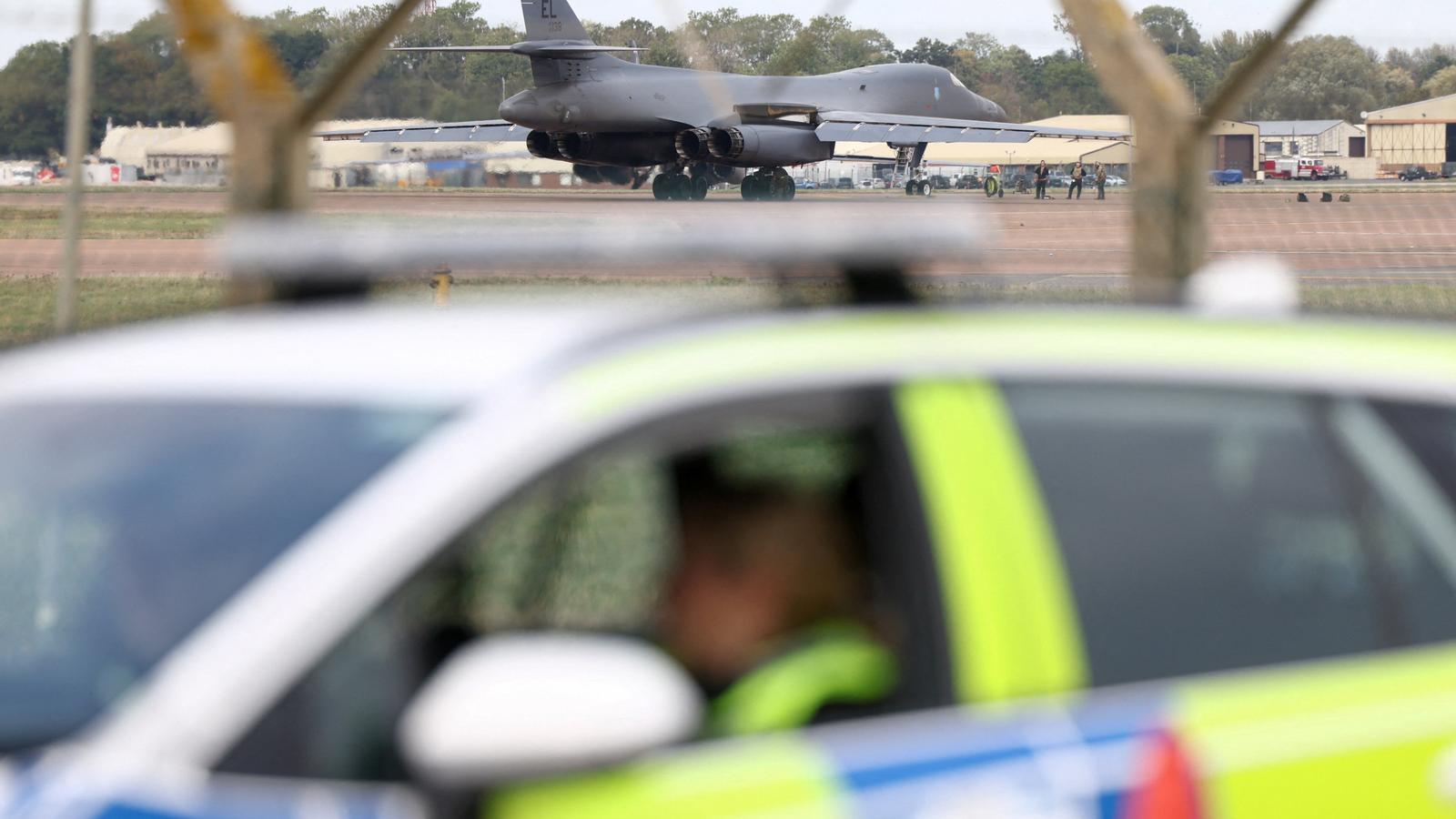
LondonNew chapter in the already endless serial about the alleged plot against the RAF Fairford air base. The United States has withdrawn throughout this Sunday all the bombers –a dozen– that it had deployed there after air force commanders received new information about a possible terrorist attack, with support from Iran, against the facility. The withdrawal occurred with such urgency that some of the planes took off while the tanker aircraft necessary to support them in flight were still being activated, according to American sources cited by The New York Times.
The Pentagon has confirmed that all the bombers have returned to their bases in the United States. Washington has not officially explained the reason for the withdrawal, but Whitehall sources have not questioned that it is related to the September 27 incident, when the police received a warning about three suspicious vehicles that were apparently heading toward the base. Following these events, five men between 23 and 25 years old, residing in London, were arrested the same Sunday, and a sixth, with dual nationality, British and Iranian, on Thursday. All were released on bail twenty-four hours after their respective arrests.
The withdrawal does not imply that the bombers have ceased to be available for the possible resumption of punitive operations against Iran. The Pentagon has assured that the aircraft remain prepared to carry out missions "anywhere and at any time," including operations in which takeoff and landing are performed from the continental United States territory.
RAF Fairford, 160 kilometers west of London, is a base used by the American air force as an advanced operations point for decades. In recent months, Washington had deployed B-1 and B-52 bombers there for attacks in the Middle East, after the United Kingdom authorized the use of the base. London gave in to the pressures and criticisms of Donald Trump, and at that time British Prime Minister Keir Starmer gave it the green light only for "defensive attacks" against Iran's missile launch ramps.
A Downing Street spokesperson stated this Monday noon that while he would not comment on "military operations of other countries," he assured that the base was secure.
More than a deterrent force
The B-1s operating from Fairford were not just a deterrent force. Some were armed with precision-guided bombs capable of penetrating fortified or buried targets, such as arsenals and military installations, and also with air-to-ground missiles intended for more protected targets located inside Iran. The round-trip missions could last between 12 and 15 hours, depending on the location of the target, and required refueling from tanker aircraft in flight both on the way there and on the way back.
As noted, the episode that triggered this new chapter began last Sunday morning. A local resident alerted the police after she saw three white vans and some hooded men in the vicinity of the base. The police search of the three vehicles confirmed that there were no explosives in the suspicious vehicles, although there was a quantity of gasoline.
Counter-terrorism investigators are studying a possible link to Iran. The same day of the incident, Washington already pointed to the possible Iranian lead. And on Wednesday the Prime Minister, Andy Burnham, stated that there was "solid evidence" that Iran had played some role, without giving further details. Tehran, however, has categorically denied any involvement.
The tension around the RAF Fairford base had increased since the summer. In July, Iran warned that any base used for an aggression against Iranian territory would be considered a "legitimate target" for its forces. Although the United States has assured that the aircraft are operational, and that they can intervene in any framework of operations, it is difficult to say at this moment if the return of the aircraft to the United States diminishes the possibility of a resumption of US attacks against Iran.
