United States say the ceasefire with Iran continues in force despite cross attacks
US Secretary of Defense Pete Hegseth maintains that the operation to escort ships through Hormuz will be "temporary" and that other nations will also have to take charge.
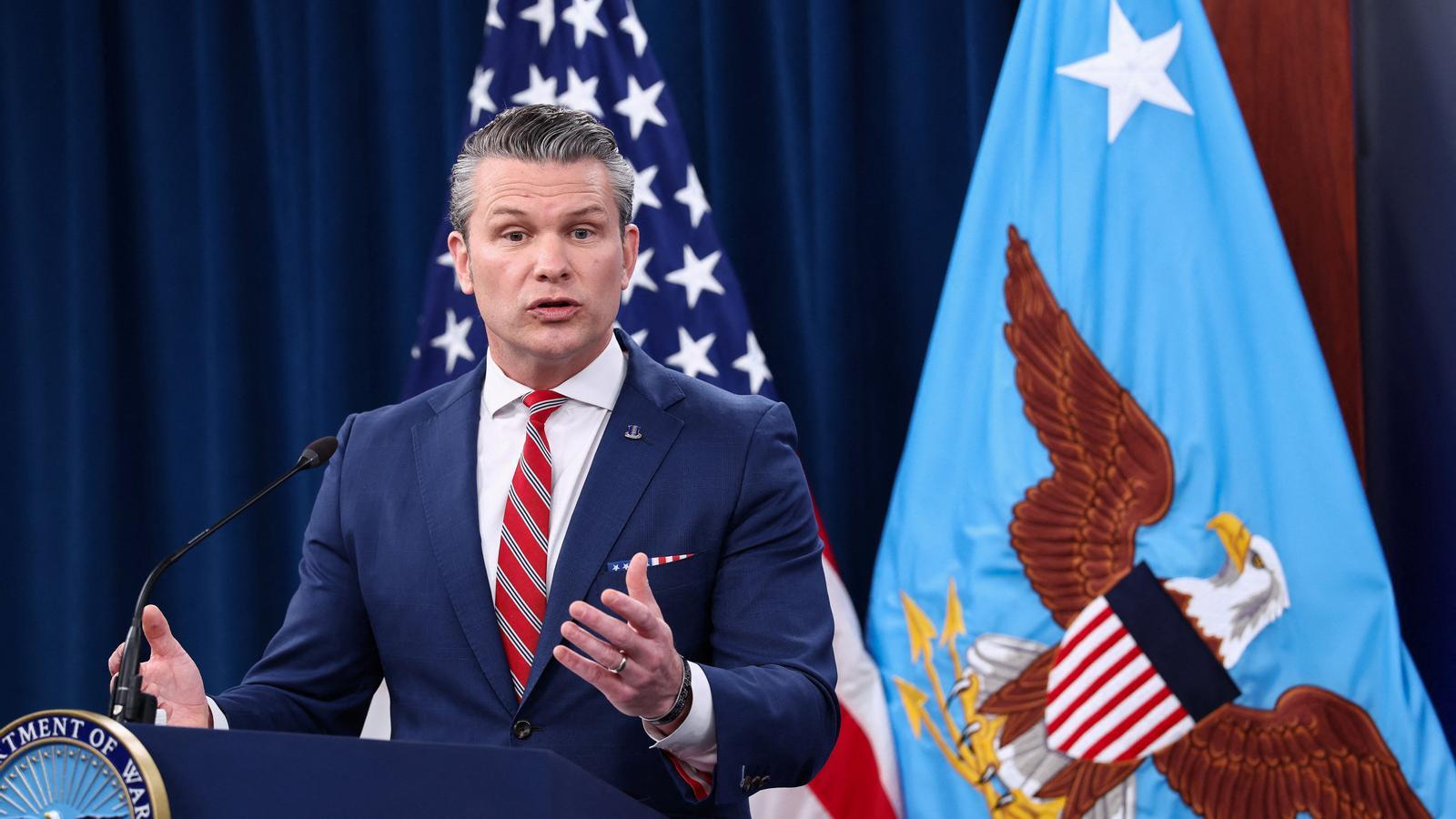

WashingtonThe premise in the White House right now is one: the ceasefire continues despite the cross-border attacks on Monday between American and Iranian forces, and despite the fact that this Tuesday the United Arab Emirates (UAE) intercepted new Iranian missiles. The assertion has been triple by the American executive: in the morning, the head of the Pentagon, Pete Hegseth, affirmed it; at noon, President Donald Trump; and in the afternoon, Secretary of State Marco Rubio. The question is no longer how long the fragile truce will last, which has managed to survive for a month, but what will make it fall. Or rather: until when will it make sense to continue talking about a humanitarian pause if attacks continue to occur.
Hegseth stated in a press conference from the Pentagon that the "ceasefire remains in effect" and insisted that "ultimately, the president can decide if something should become a violation of the ceasefire." Hours later, from the Oval Office, Trump told reporters that when the time comes, "you will find out" when the ceasefire will have ended. "You will find out, because I will let you know when it happens. They know what they should not do to break it." And Rubio directly said that Operation Epic Fury, with which the US began the war against Iran on February 28, "is over." The Republican said that the United States is now in another phase, focused on the "Operation Liberty" mission, to unblock the Strait of Hormuz by escorting commercial ships through the maritime passage. The Secretary of State made this statement from the podium in the White House press room, debuting as the new acting press secretary while Karoline Leavitt is on maternity leave.
The insistence on ensuring that the ceasefire continues, in part, is to try to circumvent Congress's authority in the conflict. Federal law establishes that, after 60 days of conflict, the executive needs permission from the legislature; if not, it must withdraw troops from the region. Last week, in the first hearing before legislators since the war began, Hegseth argued that, technically, only 40 days of conflict had passed because the military pause had been underway for almost a month. This Tuesday, at the press conference from the Pentagon, the Secretary of Defense reiterated that "the clock has been stopped" for a month and urged Tehran to "be prudent".

Hegseth appeared accompanied by the Chairman of the Joint Chiefs of Staff, General Dan Caine, who recalled that the Iranians have attacked U.S. forces more than 10 times since the truce began. Hours earlier, the speaker of the Iranian Parliament, Mohammad Bagher Ghalibaf, had accused the U.S. of endangering navigation through the maritime passage and warned: "We haven't even started yet." In this regard, the Secretary of Defense insisted that Project Liberty announced by the president over the weekend is a "defensive" mission. Later, Rubio repeated it again. "It's very simple, we don't shoot unless they shoot us first," he stated, while accusing Iran of committing piracy with the blockade of Hormuz.
Rubio says there are already ten dead sailors
The Pentagon also assures that the mission will be "temporary" and has warned that soon other nations will have to get involved in it. Hegesth has made direct mention of South Korea, Japan, Australia, and Europe, from which he has said he hopes they will "step forward". On Monday, Trump already told South Korea that it should get involved in the actions after a South Korean ship was affected by the crossfire between the United States and Iran. In a more diplomatic key, Rubio has recalled that the blockade affects nations "all over the world" and that among the ships stranded for weeks are also their citizens. "This blockade affects nations all over the world, the vast majority of which are not even participating in any kind of military hostility, and now [...] it is putting the lives of their citizens at risk," stressed the head of diplomacy, who claims that 10 sailors have died as a result of the situation. Rubio has insisted that the objective of all this is to return the Strait of Hormuz to the situation it was in before the war.
The Central Command (Centcom) admitted yesterday to having intercepted three Iranian cruise missiles and claimed to have sunk six Iranian speedboats. But the ayatollahs' attacks have not only been directed at American positions. As at the beginning of the war, Tehran has once again applied the logic of horizontal warfare and has also opened fire on other Gulf countries. Oman reported a bombing in a residential area on Monday, and the United Arab Emirates (UAE) bore the brunt with at least 12 missiles intercepted and four drones. For its part, Israel sent one of its anti-aircraft defense systems to the UAE, in an extraordinary gesture of rapprochement with the Arab country after normalizing relations in 2020 through the Abraham Accords.
General Caine has warned that the military is "prepared to resume military actions" if ordered, but has assured that, for now, Iran's attacks on ships in the Strait of Hormuz have not reached the threshold that would oblige them to resume combat operations. He has also not provided further details on what type of action would provoke a resumption of military actions, despite Washington announcing yesterday that it had sunk Iranian ships.
Diplomatic contacts continue
Outside the military arena, the Secretary of State has stated that special envoy Steve Witkoff and the president's son-in-law, Jared Kushner, continue to work on the diplomatic track. This weekend, a new settlement proposal was put forward through Pakistan, the mediating country, but it also did not materialize. Rubio has said it is time for Tehran to "accept the situation" and has said he hopes China will tell the ayatollahs that they are isolating themselves with the blockade of Hormuz. The Asian giant is one of the main victims of the blockade of oil and fuel flow, and next week Trump is scheduled to travel to Beijing to meet with his counterpart, Xi Jinping.
The version that Trump has given on the state of negotiations is the usual one. The US president has once again insisted that Iran "wants to reach an agreement". "What I don't like about Iran is that they speak to me with great respect, and then they go on television and deny having spoken to me. We recently spoke with the president," Trump has said. The tycoon's words have not been confirmed by Tehran.
Despite the fact that the resumption of hostilities further sinks the scarce confidence that shipping and insurance companies might have when transiting through Hormuz again, the Pentagon assures that "trade will soon flow again." The Secretary of Defense has detailed that they have established a large "red, white, and blue" dome through the deployment of drones, aviation, and aircraft to ensure the safe passage of vessels through the strait. While he has assured that they are not seeking any "aggression," he has also warned that "Iran is the clear aggressor" and that it has acted "for its economic benefit" and that its "international extortion is unacceptable." Addressing the ayatollahs' regime directly, he said: "If you attack American troops or innocent commercial ships, you will face devastating American fire."
Likewise, Hegseth has boasted that two commercial ships and American destroyers have already circulated safely through the strait, which, in his opinion, has "embarrassed" Tehran. At this point, according to Hegseth, there are 22,500 sailors embarked on fewer than 1,550 commercial ships trapped in Hormuz.
