The joint candidacy of the Israeli opposition falls short in the challenge to Netanyahu
The alliance of Naftali Bennett and Yair Lapid wants to capitalize on the prime minister's weariness, but rules out an alliance with Arab parties
-
CAT -
CAST
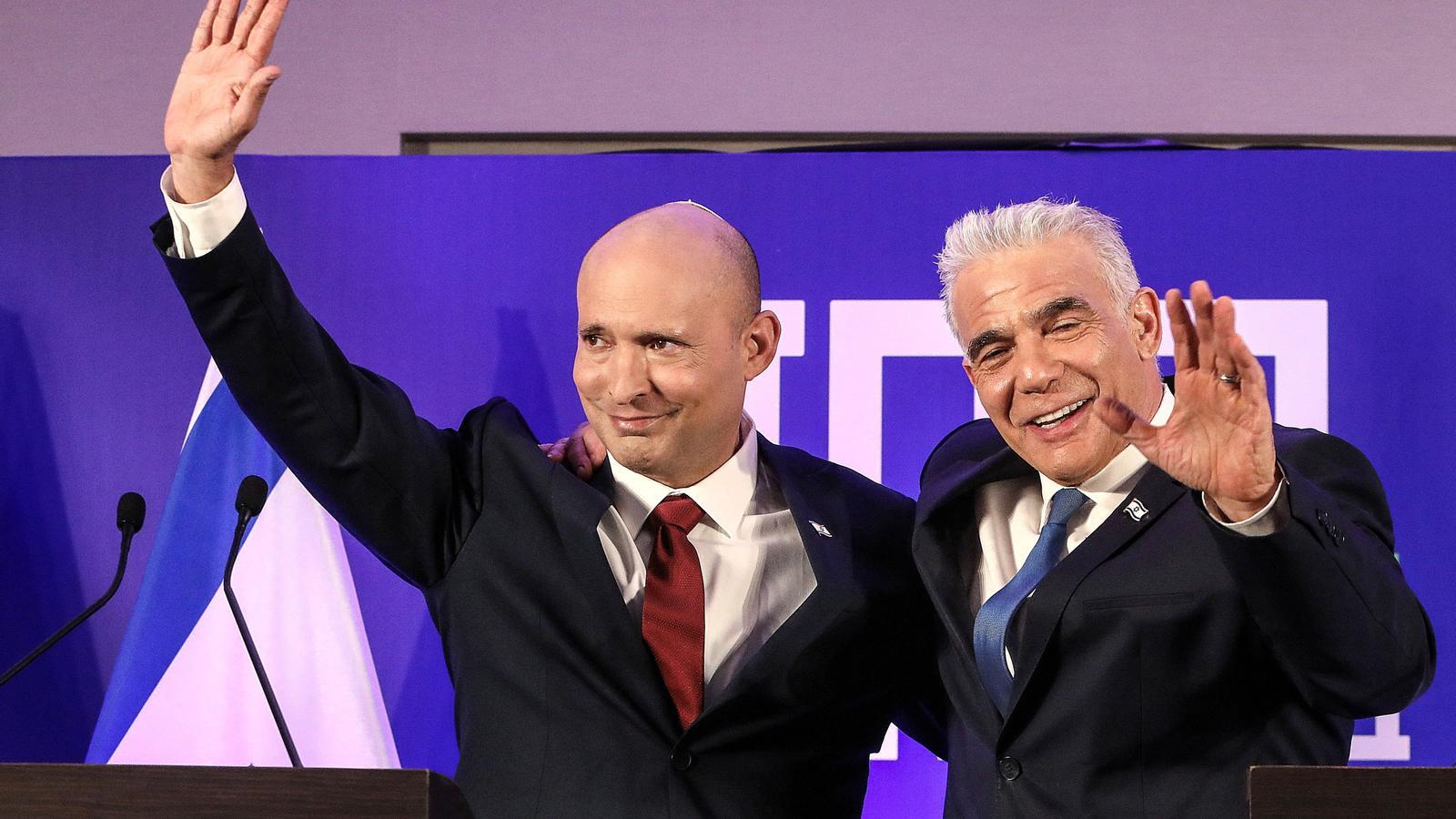
JerusalemIn an Israel marked by months of war with no end in sight, the country will hold elections this fall, the first in which Prime Minister Benjamin Netanyahu will face the polls since the Palestinian attacks of October 7, 2023. The prospect that, despite his weariness, he may win again has led the opposition to unite against him. Naftali Bennett and Yair Lapid, two of the prime minister's main rivals, have announced a coalition to unseat him after 25 years of almost uninterrupted dominance of Israeli politics. The alliance responds to a clear political logic: the two former prime ministers are trying to rebuild a broad central space capable of attracting voters from both the moderate right and the center. Bennett, a former army commander and a reference for the ultranationalist right, has gained weight as a credible figure on security matters – a key factor in full regional confrontation –, while Lapid, leader of liberal centrism and a former television presenter, maintains strength in the urban and secular vote. However, the union has generated doubts regarding its political viability and the power to be a real alternative to Netanyahu.The most recent poll by the Israeli media Walla places the new candidacy, baptized as Junts (Beyahad in Hebrew), around 27 seats, one less than Netanyahu's Likud, which would remain the leading force with about 28 seats. Even more decisive is the bloc's configuration. Parties opposed to Netanyahu are around 59 seats, below the 61 needed for a parliamentary majority. Even in favorable scenarios, the opposition bloc needs the support of other parties. The parties representing Palestinians with Israeli citizenship, who make up 20% of Israel's population, would maintain about a dozen seats, but Lapid and Bennett have ruled out forming a coalition with them.

2021 Edition
Naftali Bennett, representing the more centrist part of the Israeli right, already ran in the 2021 elections together with Yair Lapid in a coalition that won the elections and briefly ousted Benjamin Netanyahu. Bennett was then appointed prime minister, but internal problems within the coalition led him to dissolve Parliament in June 2022 and call new elections, in which Netanyahu once again prevailed.The formation of the joint list “is significant in the sense that the only way for Israel to get rid of Netanyahu is for the rest of the forces to unite under a single list; however, this does not guarantee the formation of a government”, explains to ARA Dr. Leonie Fleischmann, an expert in Israeli politics at Saint George University of London. “Polls do not point to a clear victory, unless another party joins. Furthermore, parties to the right of Netanyahu could also unite and dispute his space”, she states. In this regard, Bennett and Lapid have left the door open to incorporate other key figures, such as Gadi Eisenkot, former chief of staff of the Israeli army and leader of the center-right party Yashar, which could grow to 15 seats.On the other hand, Bennett and Lapid have ruled out repeating the 2021 experience, in which they incorporated the United Arab List into the coalition. According to the expert, the attitude towards the Arab population has worsened notably since Hamas's attacks on October 7, 2023, and, although in 2021 Bennett broke his promise not to make deals with Arab parties, he now rules it out.This is compounded by an underlying problem: beyond the shared rejection of Netanyahu, there are clear differences between the two parties. “The alliance is driven mainly by the goal of ousting Netanyahu, but beyond that they have little in common. One represents the nationalist right, having been a leader of the Yesha Council, which represents settlers in the West Bank. The other is a former journalist who defends the secular middle class and opposes state funding for settlements”, adds Fleischmann.For now, the new alliance has outlined some lines of action, such as creating a state commission of inquiry into October 7, limiting the prime minister's term to eight years, or reforming the military recruitment system for ultra-Orthodox Jews, but without yet deploying an official program.In foreign and security policy, one of the major issues for Israeli society, the differences with Netanyahu are limited. Both have supported military operations in Gaza and Lebanon and maintain hardline positions regarding Iran. The change they propose is largely in leadership rather than strategy in an area where Netanyahu, despite the wear and tear from a war against Iran that has not yet yielded conclusive results, the cases for alleged corruption, and criticism for the management of October 7, continues to hold a position of strength.
