The truce with Iran takes a toll on Trump's credibility and that of the United States as a power
Washington is no longer a guarantee of stability for energy market flows

-
CAT -
CAST
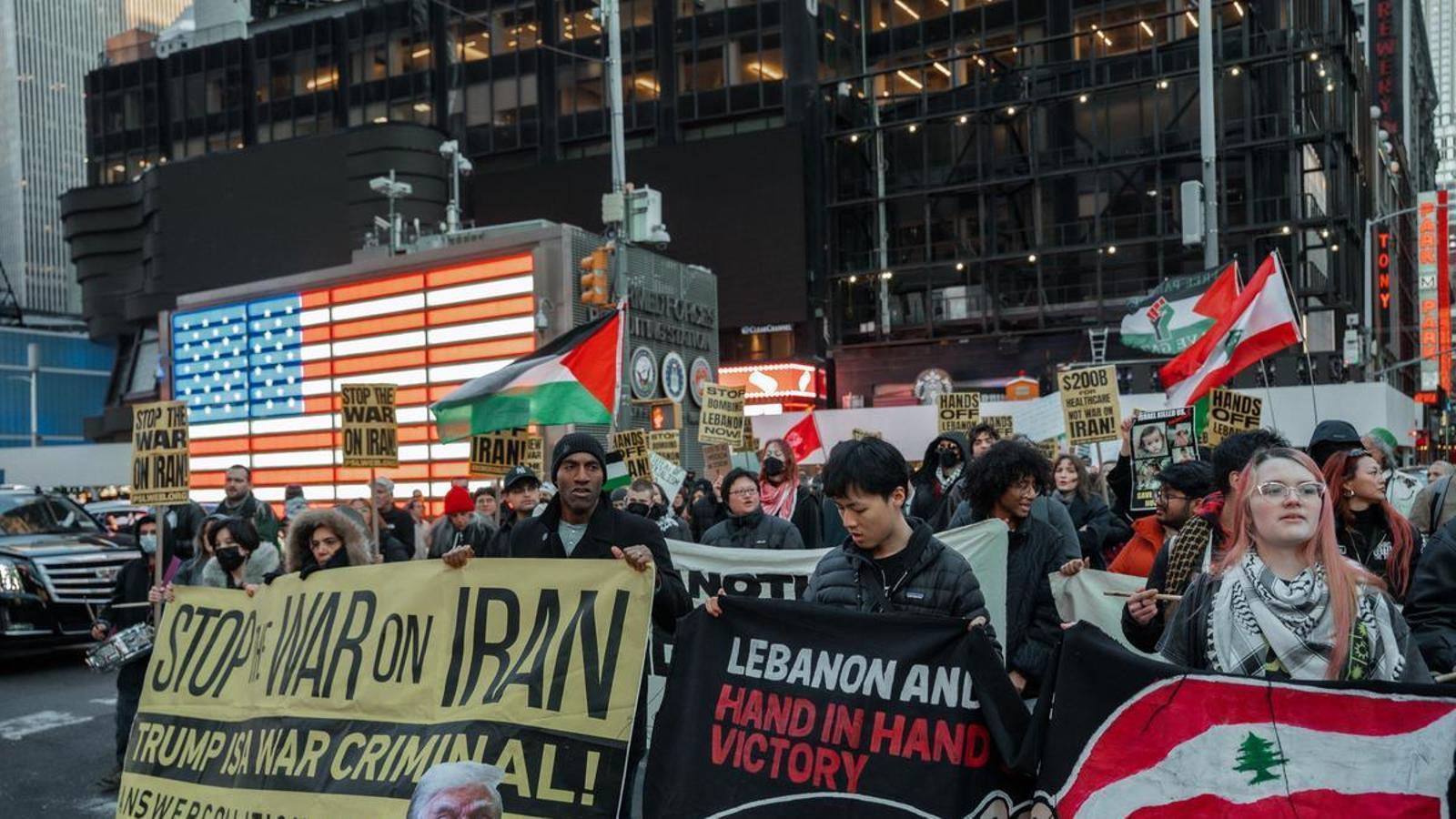
WashingtonA weak truce at the cost of the United States' credibility as the world's leading power. The temporary ceasefire in Iran evidences the high price Donald Trump has had to pay with a war that he wanted to be quick and that has become complicated to a point he had not even suspected. On Tuesday morning, the US president threatened to "destroy Persian civilization" and that same afternoon he ended up announcing a 15-day truce. With the Tehran regime entrenched and in added time, Pakistan's mediation offered a dignified way out for Washington. The result is a painful truth for the United States: its war has consolidated Iran as an actor that controls the Strait of Hormuz and has the power to destabilize the global economy. The ayatollahs have played their cards well in an asymmetric conflict and have resisted.
"The Iranian ceasefire is a revelation: the US has used overwhelming force, and yet, they have not been able to control the outcome. This is a structural power shift," said analyst and professor Robert Pape shortly after the announcement of the cessation of hostilities. Pape, who has advised previous US administrations and specializes in air military operations, emphasized how for 40 days the Pentagon has escalated bombings on Iran "expecting obedience," but "each time the result has been greater instability."
Trump's threat to commit war crimes was a dead end because a new escalation in attacks did not guarantee victory either. On the contrary. A more aggressive campaign would not have calmed the markets either, already choked by the soaring price of a barrel of crude oil. Pape pointed out that what has happened in Iran shows that "power is not what you control, it is what you can put at risk."
No guarantees for the markets
"For decades, US power meant a guarantee of stability in the flows of energy markets. But now, even with maximum force, stability cannot be assured," explained Pape. The reason why the truce does not mean the end of the war –beyond the fact that Israel continues to bomb Lebanon– is because "it reveals a new norm: you don't have to control the system, you just have to make it unreliable." Tehran does not have a military force comparable to that of the United States, but it does have a privilegedgeostrategic position that allows it to inflict damage on a globalized economy. All this, added to the predisposition to engage in a war of attrition because the regime sees itself under an existential threat.
The most critical point out that Hormuz may be to the United States what the Suez Canal was to the British. The analogy is not exact, but it resonates in its essence. In 1956 Great Britain, France, and Israel attacked Egypt to force the opening of the canal, which had been nationalized by the government of Gamal Abdel Nasser. The United States and the USSR pressured to stop the attack, and the canal remained in Egypt's hands. The episode marked the beginning of England's decline as a global power and the rise of the United States.
The erosion of the empire
Right now, the war in Iran does not seem to be giving rise to the rise of a new power. But the erosion of the United States is clear. The agreed-upon truce concentrates a multiple rift that will most likely survive Trump: to the constancy of a loss of coercive credibility is added the discredit as an interlocutor and supposed moral bulwark of the international system. For international law to function, it is basic that countries believe in it and respect it. It is true that the United States accumulates accusations of war crimes that they want to go unpunished, and that is why they do not abide by the International Criminal Court. It is also true that they have given unconditional support to Benjamin Netanyahu to flatten Gaza, but openly verbalizing the will to erase an entire civilization from the planet is a further step. Trump, after capturing the president of Venezuela and initiating an illegal war in the Middle East, formulated a genocidal threat on Tuesday. And he added that he was not at all worried about being accused of war crimes.
The words provoked a backlash, even from Republicans and ultra figures from the MAGA sphere, who rallied under a single idea: the United States is not that. "It is not who we are, and it is not consistent with the principles that have long guided the United States," wrote Texas Congressman Nathaniel Moran. The breakdown is no longer occurring solely around Trump's figure as president, but in the image of the United States as a country. The damage is no longer experienced as a passing fever, but as an open wound.
The management of the truce in Iran is not happening on a blank slate. Since his return to the White House, the tycoon has worked to break the US's role as world gendarme and guarantor of the post-World War II international system. Repeated threats to leave NATO, the trade war, imperialist ambitions over the Panama Canal, Greenland, and Canada, and military intervention in Venezuela have been cracking Washington's image as a stabilizing power. In fact, a similar situation is occurring with the Atlantic Alliance: for the defense pact to be deterrent, there must be full confidence that all its members will answer the call in case of aggression. But the tycoon's repeated outbursts render this principle a dead letter. Wednesday night, Trump, amidst the reality of the Strait of Hormuz managed by the ayatollahs despite the bombs, wrote on Truth Social: "NATO wasn't there when we needed it, and it won't be there if we need it again. Remember Greenland, that big piece of poorly managed ice!"
