Ukrainian wheat stolen by Russia strains ties between Kyiv and Tel Aviv
Zelensky's denunciations of looting in areas occupied by the Russian army highlight Benjamin Netanyahu's geopolitical priority
-
CAT -
CAST
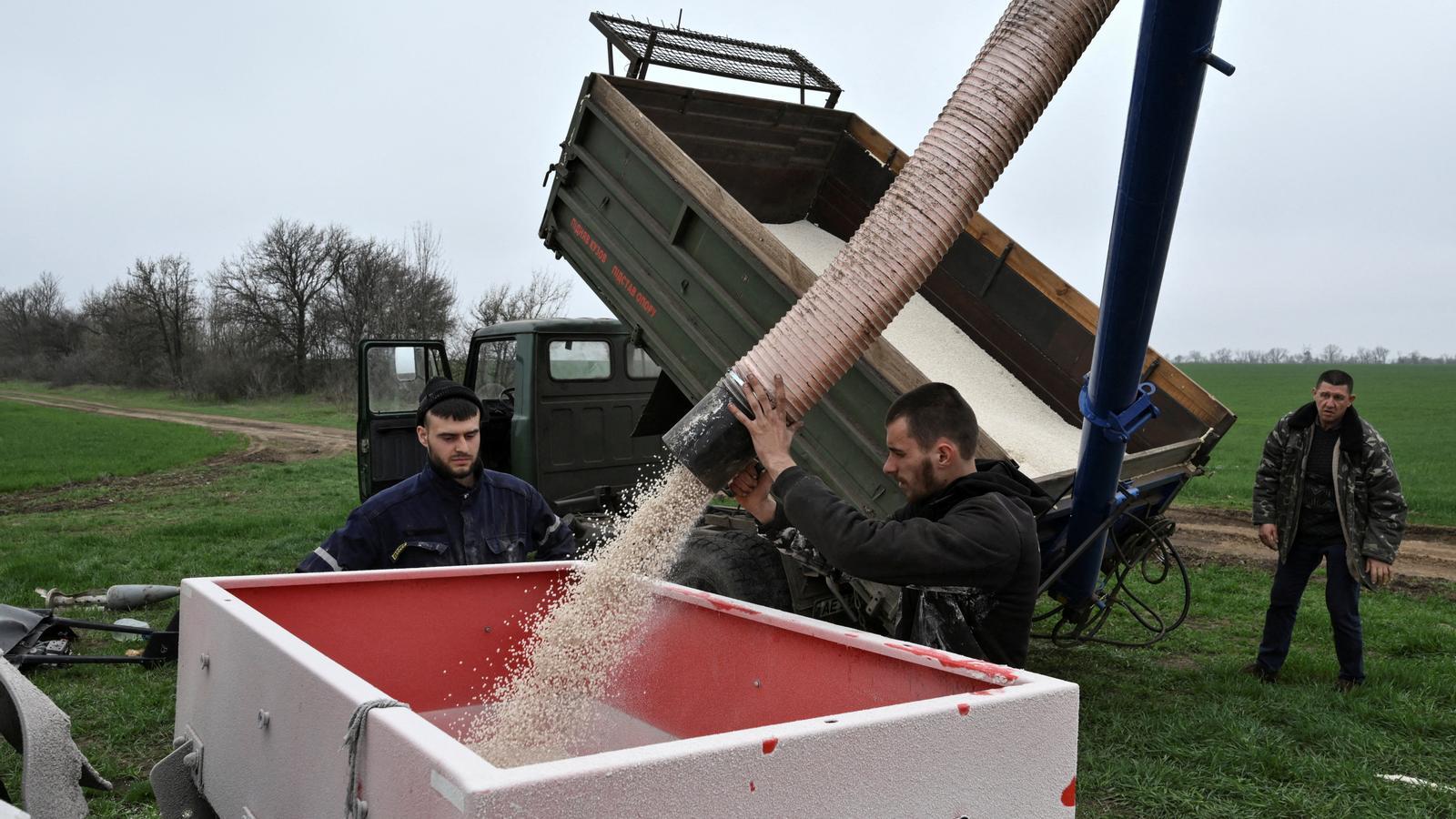
JerusalemThe diplomatic tension between Ukraine and Israel has escalated again following the arrival in Israeli ports of ships that, according to Kyiv, are carrying wheat from Ukrainian territories occupied by Russia. The latest case is that of the ship Panormitis, whose detention has been formally requested by the Ukrainian authorities, while Israel is studying the situation.
Days earlier, another ship, the Abinsk, had unloaded nearly 44,000 tons of wheat at the port of Haifa, in the north of the country. According to Ukraine, these shipments are part of a system of looting agricultural resources in occupied areas that contributes to financing the Russian war.
Beyond the specific case, the controversy over wheat once again highlights the growing fragility of relations between Israel and Ukraine, and demonstrates the delicate balance that Israel is trying to maintain between Ukraine and Russia since the start of the Russian invasion in 2022.
Israel and Ukraine have historically maintained close ties, marked by the presence of a significant Jewish community in Ukrainian territory and by decades of migratory flows to Israel. In recent years, relations had intensified with increased trade under the presidency of Petro Poroshenko and with the arrival of Volodymyr Zelensky, the first Jewish president of Ukraine.

However, this cultural and social proximity has not translated into a deep strategic alliance. As various experts point out, Israeli foreign policy towards Ukraine is conditioned by a central factor: the relationship with Russia.
Israel has traditionally prioritized coordination with Moscow, especially since the Russian intervention in the Syrian civil war in 2015. In that context, with Iran, Israel's great existential threat, and its allied groups like Hezbollah supporting the regime of Bashar al-Assad, the Hebrew state established an implicit pact with the Kremlin. Although it supported Assad, it allowed Israel to continue attacking Iranian targets without coming into conflict with Russian forces deployed in the country.
As collected by the Stanford University think tank, the Hoover Institution, this system allowed Israel to maintain its military freedom of action against Iran while Russia acted as the dominant power in Syria. With the fall of Al-Assad and the transformation of the Syrian chessboard, although Tel Aviv no longer perceives the Russian presence as a decisive operational limitation, Moscow continues to be seen as a key player in the region.
Putin, the counterweight to Turkey
For Israel, Russia maintains an influence capacity over Iran, especially regarding defensive development. Vladimir Putin also plays a balancing role against the rise of Turkey, a country that possesses the second most powerful army in NATO and which in recent years has become one of Israel's main regional enemies, and continues to be a useful partner in a context of deteriorating relations with Europe. This set of factors has led Israel to maintain what several analysts define as an active neutrality towards Ukraine. On the one hand, it condemns the Russian invasion in international forums and supports UN resolutions against Moscow; on the other hand, it avoids imposing sanctions, breaking relations with the Kremlin, or supplying arms to Kyiv.
In this context, the bilateral relationship between Israel and Ukraine is essentially limited to humanitarian aid, food, medical supplies, and a field hospital, along with occasional condemnations of Russian attacks. The calculated ambiguity that Israel practices towards Kyiv has generated growing frustration among Volodymyr Zelensky's government. The Ukrainian president has repeatedly called for more support, especially in anti-aircraft defense, without obtaining a positive response from the Israeli authorities. In parallel, after the outbreak of the war against Iran this February, Ukraine has sought to strengthen its role as a security partner with different Middle Eastern countries, especially regarding expertise in drone defense. Zelensky himself has recently visited Saudi Arabia, the United Arab Emirates, Qatar, and Jordan, but has not stopped in Israel.
This decision, according to analysts, reflects a broader reconfiguration of Kyiv's international relations stemming from the war and a progressive cooling of ties with Tel Aviv. Ukraine may begin to perceive Israel as an insufficient ally, while Israel considers Ukraine a secondary priority given its regional security risks.
