The Svalbard islands, the other strategic point in the fight for control of the Arctic
Norway warns that Russia will increase hybrid warfare operations this year, especially in the north


-
CAT -
CAST
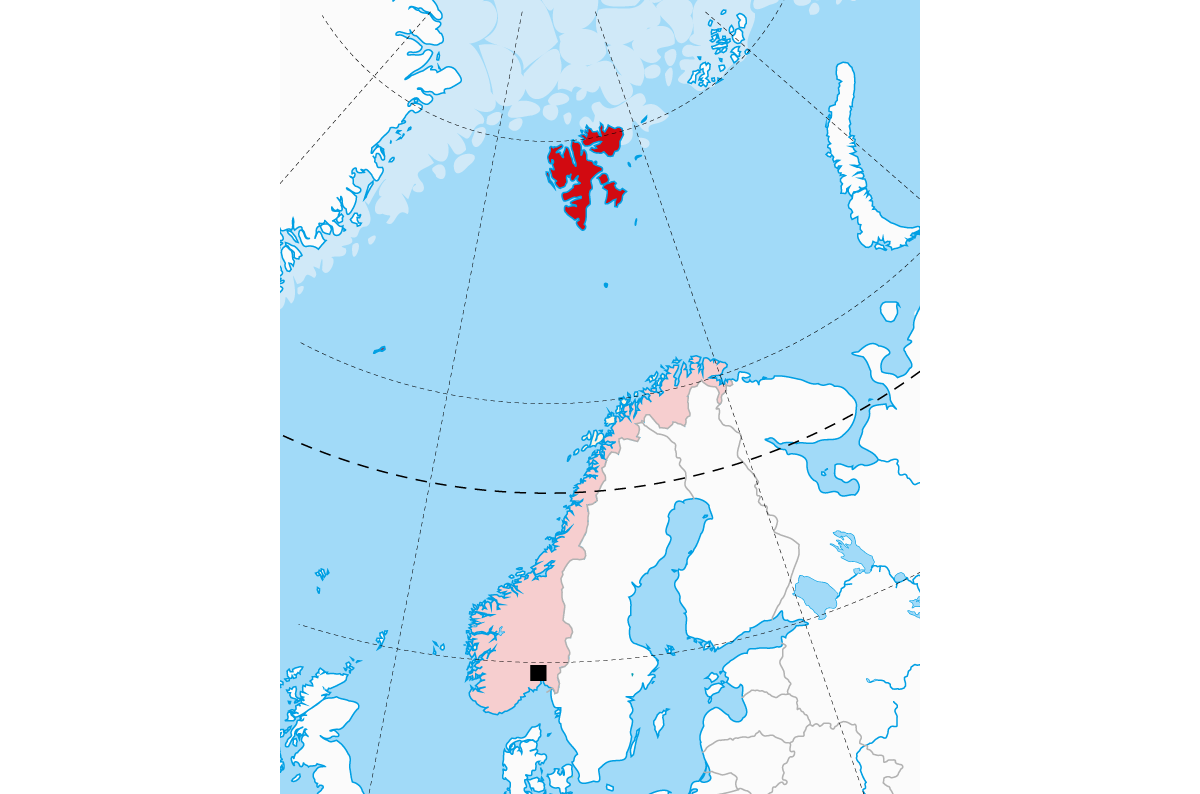
BarcelonaThe Donald Trump's threats to invade Greenland They have put other countries with a presence in the Arctic on alert. Not because they fear an invasion by the US military, but because the entire January spectacle surrounding the Arctic island has strained NATO's unity and strength and added instability to a region increasingly coveted by the major powers. Another strategic territory in the region is the Svalbard archipelago, which belongs to Norway, although Oslo also sees its sovereignty threatened, as does Denmark with Greenland, even though it is also a member of the Atlantic Alliance.
The Svalbard islands have been part of Norway since 1920, since the signing of the Spitsbergen Treaty. However, the document also establishes that any nation that signs the treaty has the right to establish itself in the archipelago to carry out economic and scientific activities. Both Russia and China have a presence. And both Moscow and Beijing are trying to reduce Oslo's power in their favor.
80°
-30°
60°
30°
0°
groenlàndia
Svalbard
mar de
Groenlàndia
mar de
Barentsz
70°
Rússia
cercle polar àrtic
mar de
Noruega
Suècia
Finlàndia
Noruega
60°
Oslo
80°
groenlàndia
-30°
0°
30°
60°
Svalbard
mar de
Groenlàndia
mar de
Barentsz
70°
Rússia
cercle polar àrtic
mar de
Noruega
Suècia
Finlàndia
Noruega
60°
Oslo
80°
-30°
60°
30°
0°
groenlàndia
Svalbard
mar de
Groenlàndia
mar de
Barentsz
70°
Rússia
cercle polar àrtic
mar de
Noruega
Suècia
Finlàndia
Noruega
60°
Oslo
"Svalbard is one of the few parts of the Arctic with a somewhat complicated status regarding its sovereignty, which can lead to various interpretations," Marc Lanteigne, an Arctic expert and professor at the University of Tromsø, told ARA. He explained that Norway is trying to reaffirm its sovereignty and defend itself against foreign influence. It has stripped foreign residents of voting rights, blocked the sale of land to foreign buyers, is tightening controls on foreign researchers, and has claimed hundreds of kilometers of seabed around the archipelago as its own. "What has happened recently is that Russia has begun to argue that Norway is misinterpreting the treaty. And it is pushing for bilateral negotiations on Svalbard's status," the expert said. Moscow argues, for example, that Oslo is not respecting the treaty clause that prohibits it from engaging in "belligerent" activities. The Norwegian coast guard is often stationed in the archipelago, something Russia considers a violation, while Norway argues it has the right to control civilian shipping traffic.
"Svalbard is in a very interesting position, in an area that, with ice erosion, could see much more traffic, both civilian and potentially military," Lanteigne points out. "It's very close to the maritime border between Norway and Russia and will become a much busier shipping route, hence the need for a greater presence."
He adds that lately China has also begun to oppose Oslo's full sovereignty and has argued that they should be more open to consulting with the other signatories to the treaty. "And Norway is starting to worry that Russia and China will try to erode the treaty and oppose its sovereignty."
Soviet seats
In Greenland differenceSvalbard does not have large deposits of mineral resources. Russia operates a coal mine there, which is not profitable, simply to maintain its presence. One of Norway's fears is that Moscow could eventually use it to seize control of the territory, as it has done on other occasions, such as in eastern Ukraine: an invasion of territory under the pretext of protecting its citizens.
The two Russian settlements in Svalbard, Barentsburg and Pyramiden, are something of a Soviet relic, complete with a statue of Lenin and USSR flags. China has also sought to assert its presence, flanking its scientific station with two large stone lions brought from Shanghai. "A polite message to Norway to remind them that they don't intend to follow its rules to the letter, because Oslo has emphasized that they must leave politics aside and focus solely on science," says Lantaigne.
Concern in Norway
In its annual report on security challenges, published last week, the Norwegian Security Service (PST) warns that Russian intelligence is targeting the Svalbard islands and the Finnmark region, the northern part of the country, and cautions that hybrid warfare operations, such as cyberattacks, sabotage, and recruitment, are likely to increase this year. According to the PST, "Russian intelligence and security services are active throughout Norway," but notes that "the northernmost counties and Svalbard are of particular interest and therefore highly exposed to intelligence and influence activities." In an interview this week in The GuardianThe head of the Norwegian armed forces, Eirik Kristoffersen, stated that a Russian invasion of Norwegian territory could not be ruled out. "We do not rule out a Russian land grab [of Norway] as part of their plan to protect their own nuclear capabilities, which is the only thing they have left that truly threatens the United States," he said.
Protecting the nuclear arsenal
He argued that a large part of Russia's nuclear arsenal is located on the Kola Peninsula, very close to Norway, where the Northern Fleet, the main base of the Russian navy, is also stationed. Six of Russia's twelve nuclear submarines are located there, in addition to land-based missiles and nuclear-capable aircraft that would be crucial if Russia were to come into conflict with NATO. And the only way for the Northern Fleet to access the North Atlantic is through the Barents Sea, between the Svalbard archipelago and the northern coast of Europe. Therefore, maintaining this unobstructed access is essential for Moscow.
"This is a scenario that has been discussed for a long time within the Norwegian military," says Lanteigne, who recalls that a television series was even made about it: "the possibility that Russia could cross over and seize part of the country to create a security zone around its installations. This should be ruled out, especially since there is currently a lot of concern about NATO's integrity due to US policy," he emphasizes.
"Norway's idea with the Spitsbergen Treaty was that Svalbard would be a kind of protected area where everyone would set aside politics to research the Arctic. But now, trying to keep this separate from the military and geopolitical situation is much more complicated," Lanteigne concludes.

