"The nonsense of the cordon sanitaire is over": the extreme right presides over a Parliament in Germany for the first time since Nazism
The AfD candidate has received the support of the anti-immigration and pro-Russian party BSW and of defectors from the CDU
-
CAT -
CAST
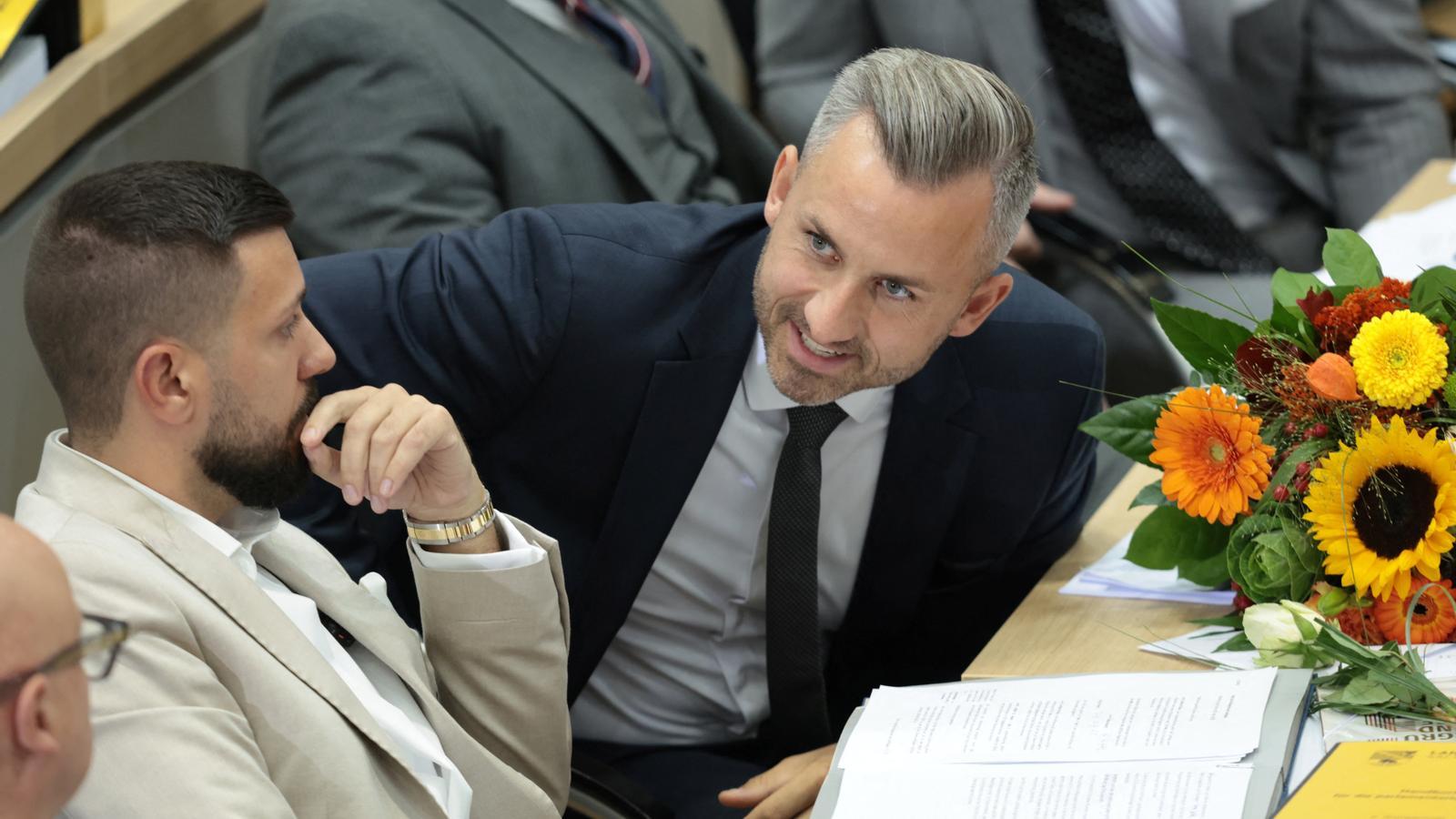
BarcelonaThe far-right is now presiding over a Parliament in Germany, something that had not happened since the end of Nazism. A month after Alternative for Germany (AfD) swept the elections in Saxony-Anhalt, its candidate, Tobias Rausch, has become the new president of the regional chamber with the support of the anti-immigration and pro-Russian BSW party, which split from Die Linke. "The nonsense of the sanitary cordon is over," noted Sarah Wagenknecht, founder of BSW. "Of course, the largest group in the chamber must hold the presidency."
The AfD candidate already had the votes of Wagenknecht's party guaranteed, but the surprise was that, in the end, he obtained four more than expected. Although the vote was anonymous, the AfD leader had already warned that he was negotiating with possible defecting deputies. In individual conversations, he sought the support of representatives of the CDU, the traditional right-wing party to which the chancellor, Friedrich Merz, belongs.
The absolute majority in the Saxony-Anhalt Parliament is at 42 seats and Rausch obtained 48 votes in favor, 29 against, and five abstentions. According to German media such as Der Spiegel, both the unexpected votes in favor and the abstentions came from deputies of the Christian Democratic bench who broke the party's voting discipline.
"The sanitary cordon must remain in the past," said the new president of the chamber, who asked that the Saxony-Anhalt Parliament be an example of breaking the sanitary cordon. "We must show that we can talk to each other."
Involved in a case of influence peddling
Within the AfD, Rausch is considered a pragmatic profile, not markedly ideological. However, this year he was involved in a scandal of alleged influence peddling. He has been a member of the AfD since the party's foundation and in 2014 he ran as a candidate in the European Parliament elections at only 23 years old, although he did not win the seat.
While the plenary session that voted for Rausch as president was being held, there were protests in which demonstrators recalled that the last time the far-right presided over a Parliament in Germany was with the Nazi leader Hermann Göring. However, Wagenknecht denied the comparison: it was not "a Göring 2.0 who was running in the elections".
One of the most forceful voices has been that of the leader of the Die Linke parliamentary group, Eva von Angern, who evoked the Third Reich. "After Hermann Göring, the first president of a Parliament from an extreme-right party must not be allowed to be elected here, in Saxony-Anhalt," she lamented.
Government negotiations
With the presidency of the Parliament of Saxony-Anhalt already awarded, the AfD and BSW continue talks for the formation of a government in the state. The far-right party brushed against an absolute majority in the elections held a month ago, but, in the end, it fell three seats short of achieving it, and now depends on other parties to govern.
Wagenknecht's party has offered its abstention in a hypothetical third vote, in which only a simple majority would be necessary, but Siegmund has announced his intention to submit himself only to one vote. Since the rest of the parties also cannot form an alternative government, the far-right leader has indicated that, if he does not obtain the necessary support in the first vote, he could opt to dissolve Parliament and call elections to try to achieve an absolute majority.
With the precedent of the result of the vote for the presidency of the regional Parliament, Siegmund could also rely on the support of some CDU deputy. The calendar allows room until December to elect the new head of the regional executive.
