The invisible ones of the war in Lebanon: migrant workers trapped in the conflict
People who were already in a vulnerable situation have been left on the streets in the midst of the war

-
CAT -
CAST
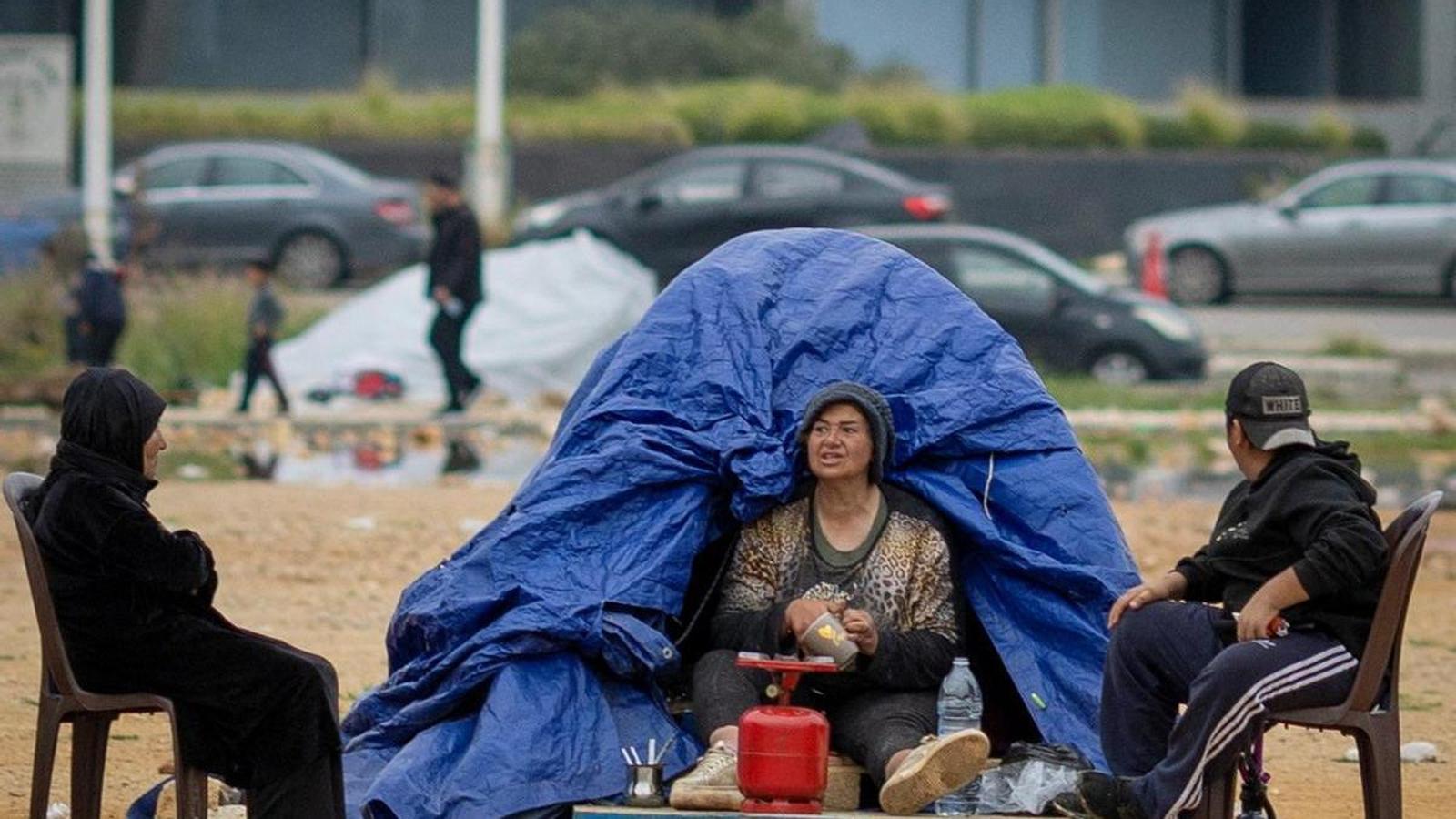
BeirutIn Lebanon, nearly one and a half million people have been displaced by the war, but among them is a group suffering a crisis that is rarely explained: African and Asian female workers and migrants. Essential to the country's functioning, they are trapped between violence and precariousness, trying to survive in a context that depends on their work, but which barely recognizes their rights. The streets of Beirut and the villages of Mount Lebanon reflect this silent reality, where war and marginalization mark daily life for those who support other people's homes while trying to care for their own.
In the church of Saint Joseph, in the suburbs of Beirut, Mohamed Abbas, a nineteen-year-old Yemeni refugee, spends his hours playing cards with his companions, walking through the arcades of the center, and sharing meals with other displaced young people. For him, everything is more complicated: he suffers marginalization and finds himself crowded into a space with other migrants because no one offers him any other alternative. “I dreamed of finishing high school and perhaps studying in another country, but in Lebanon everything is very difficult for African migrants and now I don't know what will happen to my future,” he laments.
Beside him is his friend Mustafa Pogba, seventeen years old, born in Beirut but without papers. His mother, a Sudanese domestic worker, is still under the kafala system, which, like most migrants in the country, ties them to their employers without guarantees. The bombings in the suburbs of Beirut left them on the street. Mustafa explains that they came to the church because his mother works there cleaning, and that no one has offered them another place. He feels trapped by his condition as the son of a migrant: “I have no opportunities –he explains–. I am a great athlete; in another country I would have been signed or would have a scholarship. I don't know what will happen now.”
About 20 kilometers from Beirut, in Ghosta, on Mount Lebanon, the old convent of the Sisters of Charity has been transformed into a home for more than a hundred African migrants who escaped from the south of the country. There, Najla Ibrahim, a 36-year-old Sudanese woman, takes care of her five children while watching them play and preparing their meals. The Red Cross evacuated them to Beirut, and for three days they had to sleep on the street, after fleeing with the few things they could carry. They couldn't find anywhere to shelter until some volunteers took them to the convent. Najla is grateful that her children are in a safe place, but the worry about their future continues, as she tries to maintain the strength needed to get by and offer them safety and love.
Among the residents of the convent is Indrani Manike, a domestic worker from Sri Lanka, who arrived in Lebanon more than twenty years ago. When the bombings began, she had to flee with nothing, paying a hundred dollars for a taxi from Tyre to Sidon before finding shelter in the convent. Although she feels safer, the uncertainty about her future weighs on her. After two decades working in Lebanon, she doesn't know what will happen when the war ends or if she will be able to rebuild her life.
In Jdeideh, north of Beirut, solidarity arises from the migrant community itself. Scholar, a fifty-year-old Nigerian woman, along with other women, have opened their homes to host displaced people. At this moment, eight African women arrive with their children, two with young children and one pregnant, likely by the master who expelled her after the bombings in Sidon. In the living room, the displaced women receive food while singing children's songs together, such as "the wheels on the bus go round and round…", trying to maintain a little normality amidst the chaos. They cook in the apartment kitchen, pack food in cardboard boxes, and, with the help of Lebanese volunteers, distribute aid to those who have nowhere to go. Scholar explains that there are many displaced migrants with children or pregnant women who are on the street with nowhere to go. That's why, she says: "we decided to share what we have with our sisters and brothers, trying to reach as many people as possible".
Survivor networks
In the absence of institutional protection, they are the ones who create solidarity networks that allow survival during the war. Their work is supported by INSAAF, an NGO that defends the rights of domestic workers in Lebanon. Since the bombings intensified, the organization has been distributing emergency aid and coordinating efforts with community leaders to reach women who fall outside traditional assistance systems.
Father Robert, head of the center at Saint Joseph, explains that the war has made visible the precariousness of thousands of migrant workers who sustain daily life in Lebanon and continue to be among the most vulnerable communities. In the church, they find temporary shelter, psychological support, and basic assistance.
In Burj Hammud, the food distribution organized by migrant women like Scholar becomes an act of vital solidarity. Displaced women and children collect the trays while the community demonstrates that, despite war and marginalization, mutual aid is an indispensable support.
Trapped by the impossibility of returning to their home countries and the violence that has displaced them, these women represent one of the most invisible faces of the conflict. Their lives unfold between improvised shelters, convents, and shared apartments, each day marked by uncertainty and lack of support, in a Lebanon where war and institutional indifference leave many people on the brink of survival.

