Rutte justifies Trump's troop withdrawal from Europe despite allies' surprise
NATO and the Pentagon redouble pressure on European partners to continue buying American weapons

-
CAT -
CAST
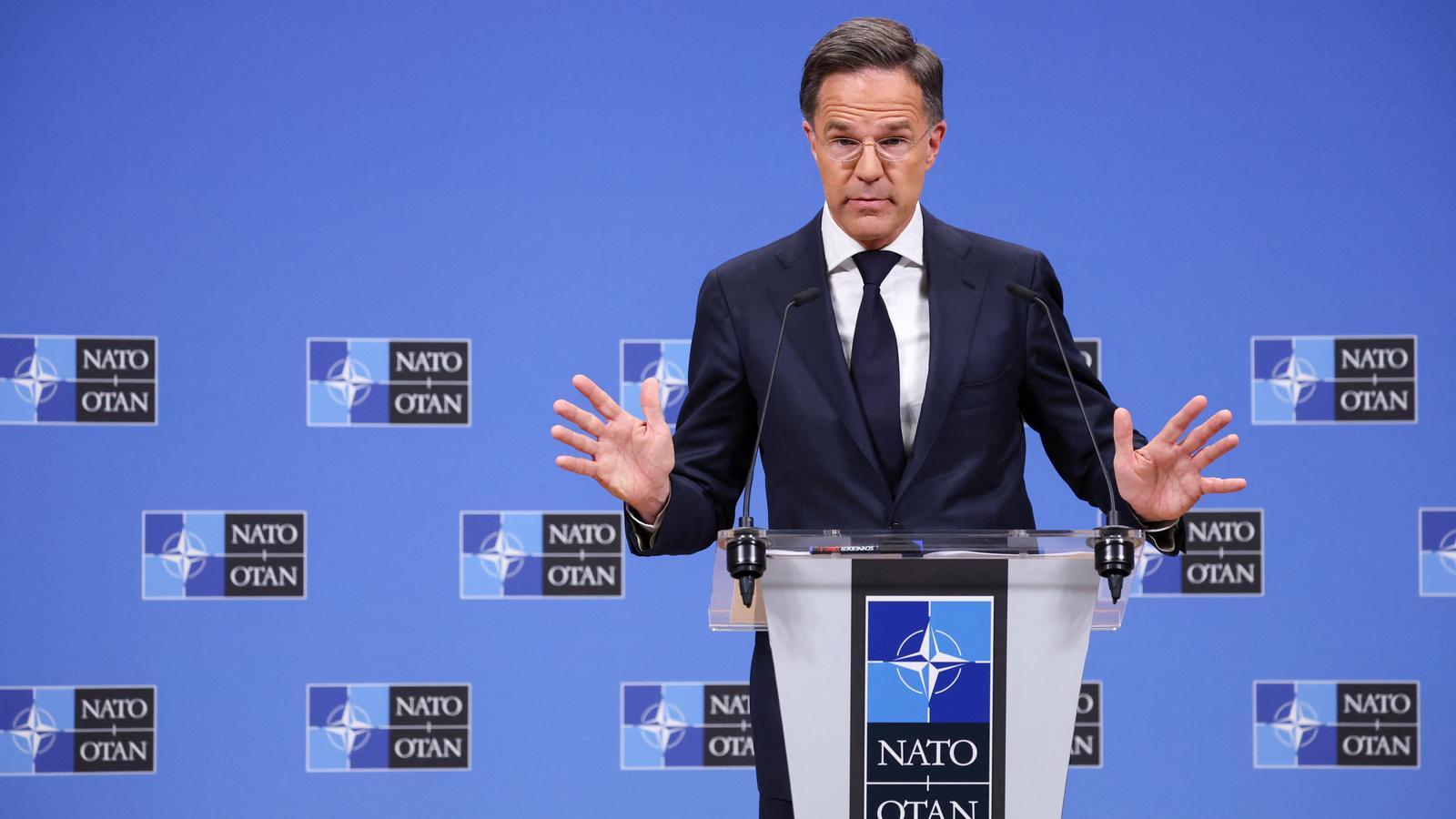
BrusselsDonald Trump has warned since he regained the White House that he intends to abandon the protection that the United States offers to Europe, but it has not been until now that the Republican president has begun to turn it into reality. This Tuesday, the North Atlantic Alliance itself confirmed the withdrawal of 5,000 U.S. soldiers from Germany and the suspension of the temporary deployment of 4,000 more troops to Poland. And this Wednesday, the Secretary General of the North Atlantic Alliance, Mark Rutte, justified the Pentagon's movements and hinted that they will not be the last.
the withdrawal of 5,000 US soldiers from GermanyRutte also denied that Trump's announcement to withdraw U.S. troops from Germany had caught European allies off guard and recalled that the U.S. president has been warning of his intentions for some time. Furthermore, he assured that it will not jeopardize the deterrence capabilities of the transatlantic military entity and that the movements will be made in full coordination among allies.
However, NATO diplomatic sources explain that there are European allies who believe they are not receiving enough information about when and how the United States will withdraw troops, and they say they often find out through the press or angry messages from the U.S. president himself. Thus, the same sources request that coordination among allies be increased and that in no case should it complicate the life of what is theoretically your partner.

On the other hand, the news agency Reuters has reported that the Pentagon is preparing to further reduce the military capabilities it is deploying to the European continent, although it does not specify exactly what this decision may entail. In a press conference, Rutte avoided directly confirming this information, but he did not deny it either, and in fact assured that it is "foreseeable" and "just".
In this regard, the Dutch leader once again pointed out that the future of the entity is NATO 3.0. That is, "a much stronger Europe" within the Atlantic Alliance that ceases to depend on the Pentagon and allows the United States to focus on new regions. "We know that new adjustments [of troops] will be made. The United States must refocus more, for example, on Asia. This will be achieved over time and in a structured manner," added the Secretary General of the Atlantic Alliance.
More pressure on Europe to buy American weapons
The United States demands that European allies gain military independence and multiply their defense spending. At the same time, however, the White House and NATO intend for the member states of the European Union to continue buying American weapons and, therefore, strengthening the North American war industry to the detriment of the European one.
Now the US and the Atlantic Alliance want to take a further step in this direction and bring the impetus of the European military industry to debate at the NATO Foreign Ministers' meeting this Thursday and Friday in Sweden. Diplomatic sources from the organization itself see this as a way to increase pressure on European allies to continue buying American weapons and recall that industrial policies – including military ones – have always been left to the European Union.
Along the same lines, NATO diplomatic sources point out that some allies find it contradictory that the US demands more independence from the EU and, on the contrary, does not allow them to boost their military industry and shows itself absolutely opposed to the creation of a European army or greater military coordination within the framework of European institutions. They also criticize that the American power has abruptly cut off military aid to Ukraine and, in addition to doubling the efforts they dedicate to the war against Russia, they have to buy military armament from the US to send it to Ukrainian troops, as demanded by the President of the United States through the PURL initiative (for the English acronym of Priority Ukrainian Requests List).
