The great challenges of NATO left by Trump's show
The insults and threats of the President of the United States confirm the existential crisis of the Atlantic Alliance
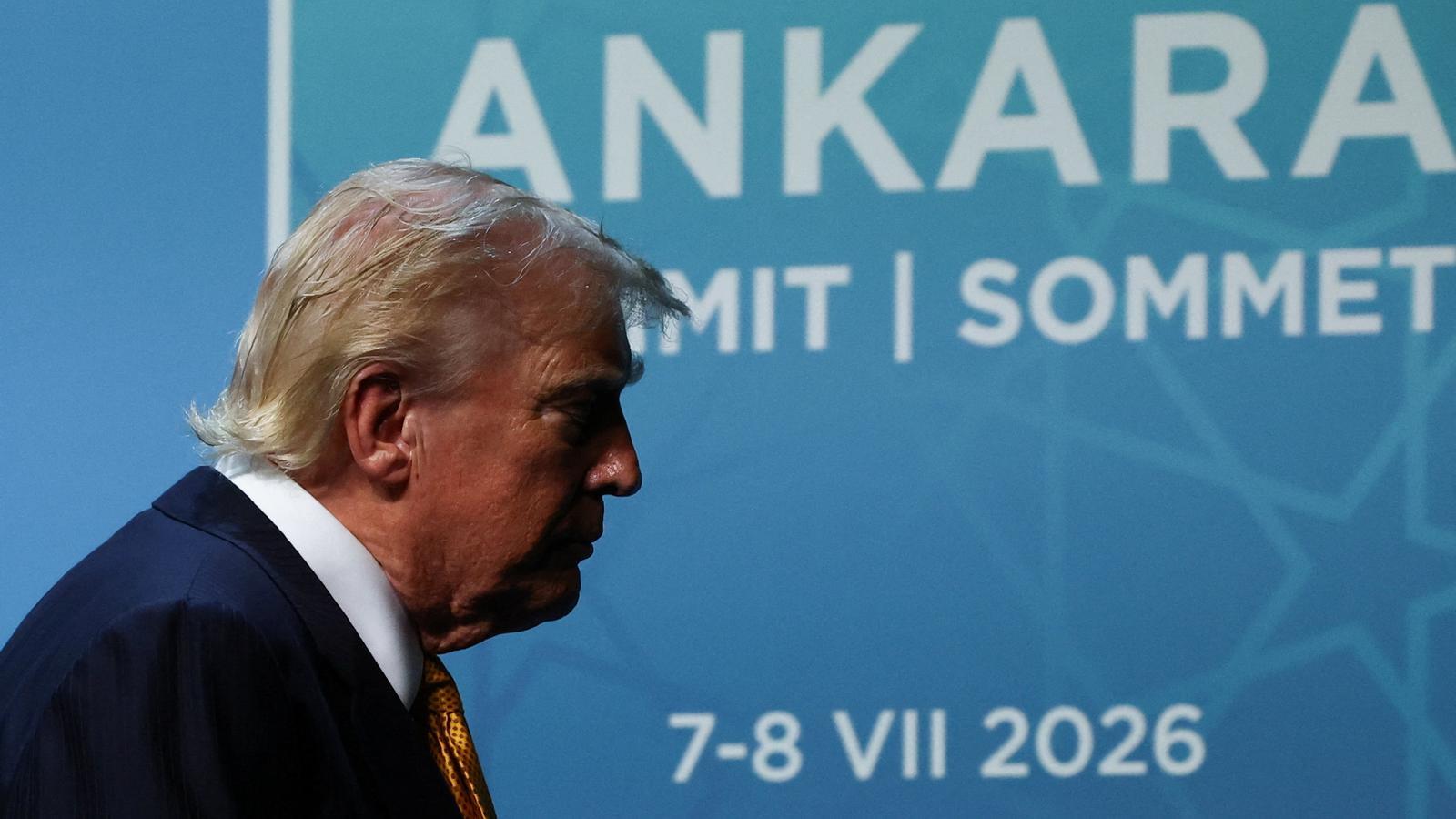

BrusselsDonald Trump has turned NATO summits into a show that revolves around himaround him. As last year, the President of the United States arrived in Ankara railing against the North Atlantic Alliance itself and the vast majority of its partners. He insulted them, humiliated them, and threatened them from the outset. And then, the European allies and the secretary general of the military organization, Mark Rutte, focused on calming him down and de-escalating the tension through praise and kind words. It seems that the flattery had an effect and, finally, as the master of military understanding, he forgave them for the alleged grievances and in the final press conference declared his "love" for them. A happy enough ending compared to how it began. However, these U-turns and all the spectacle that Trump staged in Ankara highlight more than ever the great problems and challenges that NATO has, and especially the European allies, in dealing with the President of the United States.
Less deterrence power
NATO is a military alliance of a defensive nature. However, this power of deterrence rests on two pillars: nuclear weapons and Article 5 of the organization's treaty. The latter, which obliges all allies to defend an ally in case of attack, is failing. The President of the United States himself, the main military power of the Alliance, is continually threatening to abandon the rest of the partners if they receive aggression from, for example, Russia. And, at the NATO summit in Ankara, Trump once again questioned whether the US military should protect the allies on the European continent. These statements particularly concern countries that feel the expansionist threat of Vladimir Putin's regime more closely.

An internal attack
The Alliance is designed to defend against external attacks, but not internal ones. The different armies work in a coordinated manner and, especially the European allies, have outsourced part of their protection to the United States. And that is why European countries are so vulnerable to Trump's threats to invade Greenland, which is a sovereign territory of Denmark, a member state of the European Union and NATO. European partners had been breathing a sigh of relief for months because it seemed that the US president had forgotten his expansionist desires for the Arctic island. However, as soon as he arrived, Trump revived his will to acquire Greenland and showed that he would not let it go just like that, which has once again set off alarm bells among European allies.

Increase military spending
The allies agreed to commit to reaching 5% of gross domestic product (GDP) in military spending. And so far, the vast majority of allies are complying with the defense spending growth path, which NATO diplomatic sources assure pleased Trump greatly and made him change his mind. However, things get complicated in the long term. The percentage must grow progressively, and therefore, the allies' effort will have to be increasingly important, especially in a context of anemic economic growth and with high debt in many countries.
In fact, more and more countries —such as the United Kingdom, Italy, or, among others, Hungary— are publicly admitting the difficulties they face in meeting this large increase and consider it unsustainable in the long term. It is also true that there are still many years until 2035, which is when 5% is theoretically to be reached. Trump will not be there, and the context that has led Europe to a major rearmament may change.

The lack of European autonomy
Trump not only wants European allies to rearm at forced marches, but also to achieve it by buying American weapons. This win-win business for the North American power represents a major obstacle to the will of European allies to stop being militarily dependent on the United States and boost its war industry. In fact, according to the White House itself, more than half of the money from European partners intended for rearmament has gone into the pockets of U.S. arms companies.
The European Union has already presented several measures aimed at boosting the purchase of military equipment manufactured in European territory and, for example, all acquisitions made with part of community funding must prioritize weapons produced in member states. The White House calls these initiatives "protectionist" and the Trump administration is obsessed with stopping them. However, a large part of the allies do not want to give in to Washington's pressure and, for example, Italy's Giorgia Meloni insisted at the NATO summit that the money Rome spends on defense will remain in Italian factories.
The ungovernability
NATO summits have been shortened. Leaders only stay for one day and only meet all together for a maximum of three hours. All to not bore Trump. They also discuss the issues he considers priorities, leaders' speeches – except his – do not last more than five minutes and all are aimed at him, especially to convince him and avoid being the ally who receives new threats. In addition, Rutte left it up in the air that the meeting should continue to be held every year, since the US president always threatens not to attend and NATO wants to prevent the main military power from standing it up. In fact, Trump assured that he only came to Ankara because the Turkish president, his "great friend" Recep Tayyip Erdogan, was organizing it.
The entire meeting focused on military spending and the vast majority of allies explained how quickly they are rearming and, in addition, buying American weapons. The rest of the important issues for the security of the understanding, such as the US military withdrawal from Europe or aid to Ukraine, were completely relegated to the background.

