Chernobyl sarcophagus at risk of "catastrophic collapse" by Russian drone
Greenpeace alerts of a possible nuclear disaster if the dome of the old reactor is not repaired

-
CAT -
CAST
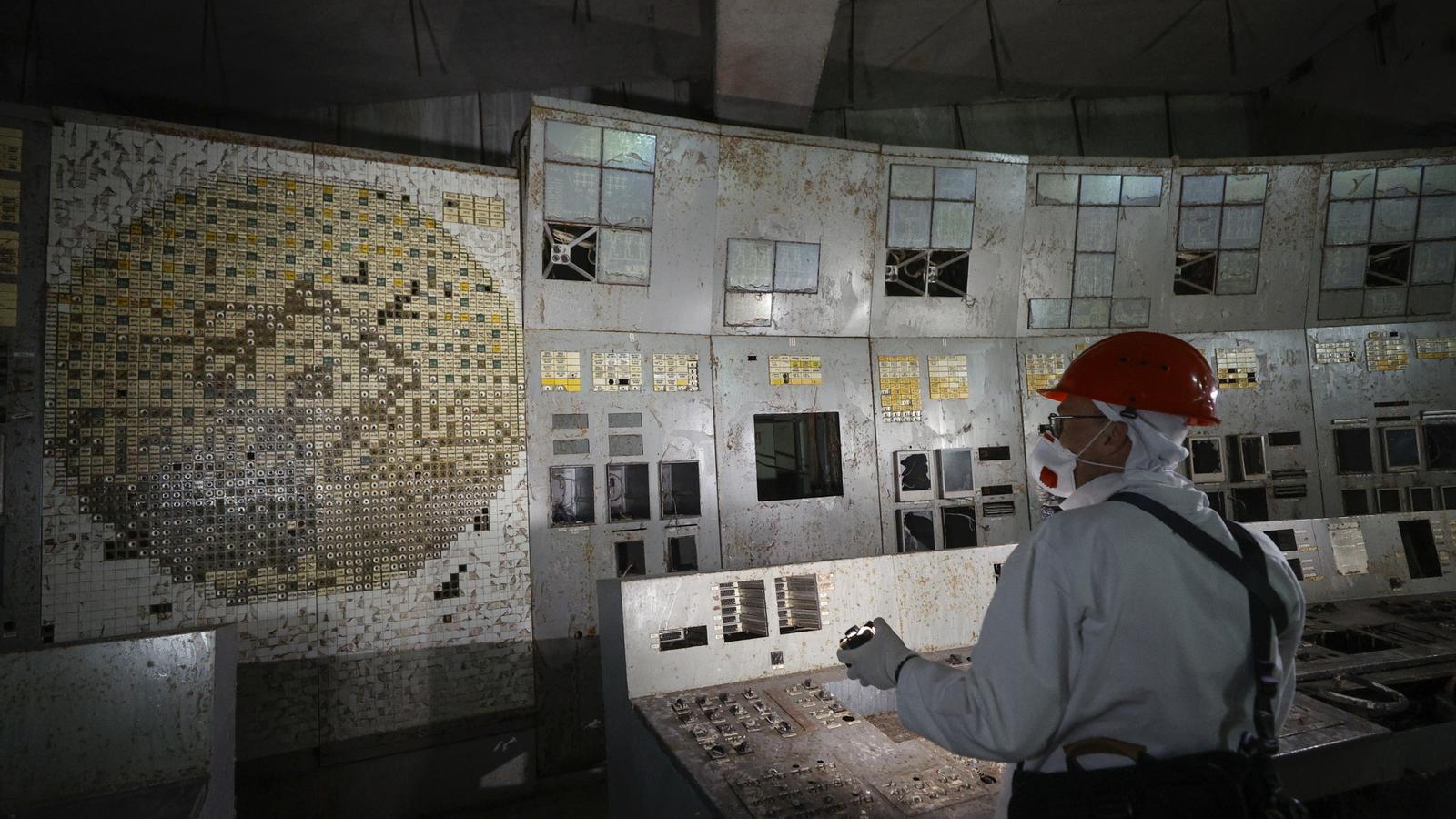
MoscowFebruary 14, 2025. A Russian drone loaded with explosives crashes into the structure protecting the old sarcophagus of the Chernobyl nuclear power plant. The fire burns for three weeks, damages the walls of the new construction and forces it to be repaired because it is no longer capable of containing radiation. Despite this, a year later, on the eve of the fortieth anniversary of the worst atomic disaster in history, maintenance is at a standstill. Russian attacks on Ukraine hinder the engineers' task, and environmental organizations like Greenpeace have just warned that, if nothing is done, there is a risk that the sarcophagus will “collapse” and cause a “catastrophic” radioactive leak, which “knows no borders”. a catastrophic radioactive leak, which “knows no borders”.
The dismantling of the containment arch of the old reactor, hastily installed in the wake of the tragedy in 1986, has been a priority since the new reinforced sarcophagus was erected in 2019. However, first covid and then the Russian invasion prevented it. The Kremlin's army occupied the plant for about five weeks at the beginning of the war, but Ukrainian troops regained control. Since then, Volodymyr Zelensky has repeatedly denounced Russian attacks on the plant, the most serious of which pierced the dome and set it on fire.
The specialists' fear is that if a drone or missile now falls near the plant, the 1986 cover could give way and the four tons of highly radioactive dust deposited among the debris of the reactor core could be dispersed. “New Russian bombings, combined with delays in dismantling the unstable parts of the inner sarcophagus, imply an increased risk of collapse”, Shaun Burnie, Greenpeace's nuclear expert in Ukraine, explains to ARA. According to him, repairs to the outer structure are “necessary” before dismantling the unstable parts of the old protective shield.

puts Europe's largest nuclear power plant, Zaporizhzhia, at riskZaporizhzhia, the latent threat
The Russian invasion of Ukraine also puts at risk Europe's largest nuclear power plant, Zaporizhzhia. Occupied by Russian troops since March 2022 and a key piece in peace negotiations, it is in a cold shutdown situation, meaning the reactors are off and stabilized at a low temperature to prevent the nuclear fuel from heating up and causing an accident. “There is no good news from Zaporizhzhia, but this is the least bad,” points out the Greenpeace expert. However, the Director General of the International Atomic Energy Agency (IAEA), Rafael Grossi, warns that “as long as this devastating conflict continues, nuclear safety will remain under grave threat”.
One of the plant's main problems is that it has lost power fourteen times since the conflict began, most recently last week. This forces the activation of emergency diesel generators designed to be a “line of defense” for the facility, according to the IAEA, and which are now being used “very routinely”. In February, both sides agreed to a local ceasefire to repair the high-voltage line, and now the international body is pressing for both sides to repeat it.

Russia, however, accuses Ukraine of constant attacks on the plant, which they claim have intensified over the past month. The Russian Foreign Ministry announces it will respond, attributing it to Zelensky's desire to divert attention from the war in the Middle East back to Ukraine. Greenpeace, designated as an "undesirable" organization by the Russian justice system, denounces to ARA that these claims are false and that Kyiv has never bombed the Zaporizhzhia nuclear power plant. "It's all Russian false flag operations," states Burnie, who criticizes the IAEA for "repeating and amplifying" Moscow's narrative.
The expert laments that nuclear power plants are "pre-deployed" nuclear weapons that become "an easy target" in a future confrontation. "They were never designed for war conditions," he explains. And he concludes: "Forty years later, Ukraine is still fighting the consequences of the Chernobyl disaster, and the Russian government threatens another Chernobyl, or even worse, by attacking the country's three atomic plants and illegally occupying the Zaporizhzhia nuclear power plant."
