Putin recruits university students to avoid a new mobilization
They promise students a year piloting drones away from the front, but activists warn it is a trap

-
CAT -
CAST
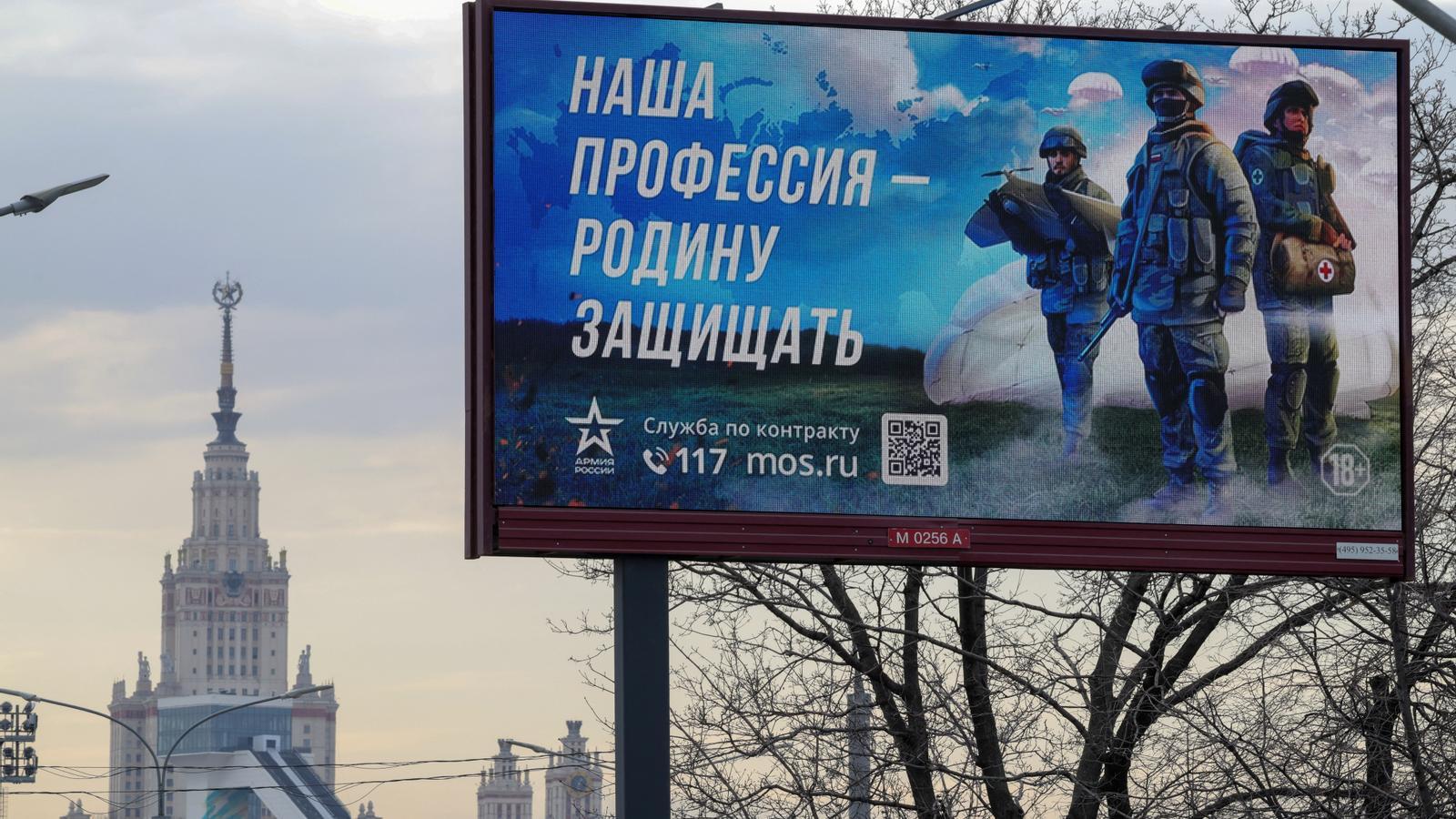
Moscow“Are there any men in the audience? No? What a shame! Take off your pants and put on a skirt!” With these words, the dean of Voronezh State University of Engineering, in southwestern Russia, tried to pressure his students to go fight in Ukraine. The Kremlin has demanded that the rectors of the institutions send 2% of enrolled students to the war. They promise them one year of service in a drone unit far from the front lines, astronomical salaries, and a secure future, but activists warn that it is a trap and that they are very likely to get caught and lose their lives. astronomical salaries and a secure future, but activists warn that it is a trap and that they are very likely to get caught and lose their lives.
Since the end of 2025, higher education institutions have been organizing talks with combatants, who try to convince young people of the benefits of joining the brand new branch of the army dealing with unmanned aerial vehicles. According to student sources speaking to el ARA, the veterans, some of whom have amputations, fly drones, show subjective videos from the front, and aim to stimulate them with the appearance of a video game. One of the attractions of the proposal is that the Ministry of Defense guarantees all possible facilities to those who decide to enroll to continue their studies for free later on, with priority for access to master's degrees and job offers.
All these commitments are false, activists warn. Artiom Kliga, a military lawyer for the Conscientious Objectors Movement, tells el ARA that, in Russia, army contracts do not expire until the mobilization decree approved by Vladimir Putin in 2022 is lifted, that is, until the war ends. “Once signed, they have no option to terminate it,” he warns. When the stipulated one-year period ends, the commitment is automatically extended, and commanders can transfer soldiers wherever they deem appropriate.
There is also another catch: drone units have limited places and not all candidates are accepted. Therefore, it may be that the boys are sent directly to infantry battalions. Furthermore, being a drone pilot is no longer a safe task carried out tens of kilometers from the front line, but rather many operate from the trenches, participate in assault missions, and are a highly prized target for Ukrainian unmanned vehicles. For all these reasons, Kliga concludes that the possibility of them ending up on the front in very dangerous positions "is not just theoretical, but an almost inevitable risk".
Recruiters tend to approach the most ambitious students, those who want to pursue a political career, or the most vulnerable, who accumulate debts or have poor results. "They are told that by signing a contract they can solve their academic problems," points out the lawyer. Some rectors even threaten students with expulsion if they refuse to enlist in the army. "Today, university is over for you, but you have an opportunity: the country needs warriors and believes in you," the director of the Faculty of Innovation of Kazan told them in a video leaked by students to the press.
Students and professors resist
This coercion responds to the quotas imposed by the authorities. According to calculations by journalist Farida Rustamova, if all universities and technical institutes are obliged to provide one in fifty students to the Armed Forces, 76,000 young university students should be sent to Ukraine. The administrations order teachers to cooperate and encourage the boys to take the step. Even so, many find ways not to cooperate with the war machine. "It will be our fault if they sign a contract," an anonymous teacher wrote in a letter to the independent newspaper Vajnie Istorii. "I told them: listen, but don't sign anything, don't accept anything," he recalls.
The students are not enthusiastic about the initiative either. The same student sources assure that they do not know anyone who has succumbed to the pressure campaign. This suggests that the propaganda effort and threats have not borne fruit because, if they had succeeded, examples of success of students turned drone operators would be publicized.
Soldiers are missing at the front
That the Kremlin has opted to raid universities in search of volunteers indicates the extent to which the Russian army is struggling to keep the bloody balance between deaths and new soldiers positive. According to a source from the Moscow recruitment point, explaining to the opposition outlet Viorstka, recruitment plans have failed. Instead of the expected increases of 30% or 40%, enrollments have plummeted. This week, Putin's spokesperson, Dmitri Peskov, has insisted that a partial mobilization is not on the president's agenda, who will resort to all possible stratagems before making the most unpopular decision since the war began.

