"Now we have separate offices for men and women": Western countries give in to the Taliban
They give in to the conditions of the radicals, such as the separation of sexes and restrictions on women
-
CAT -
CAST
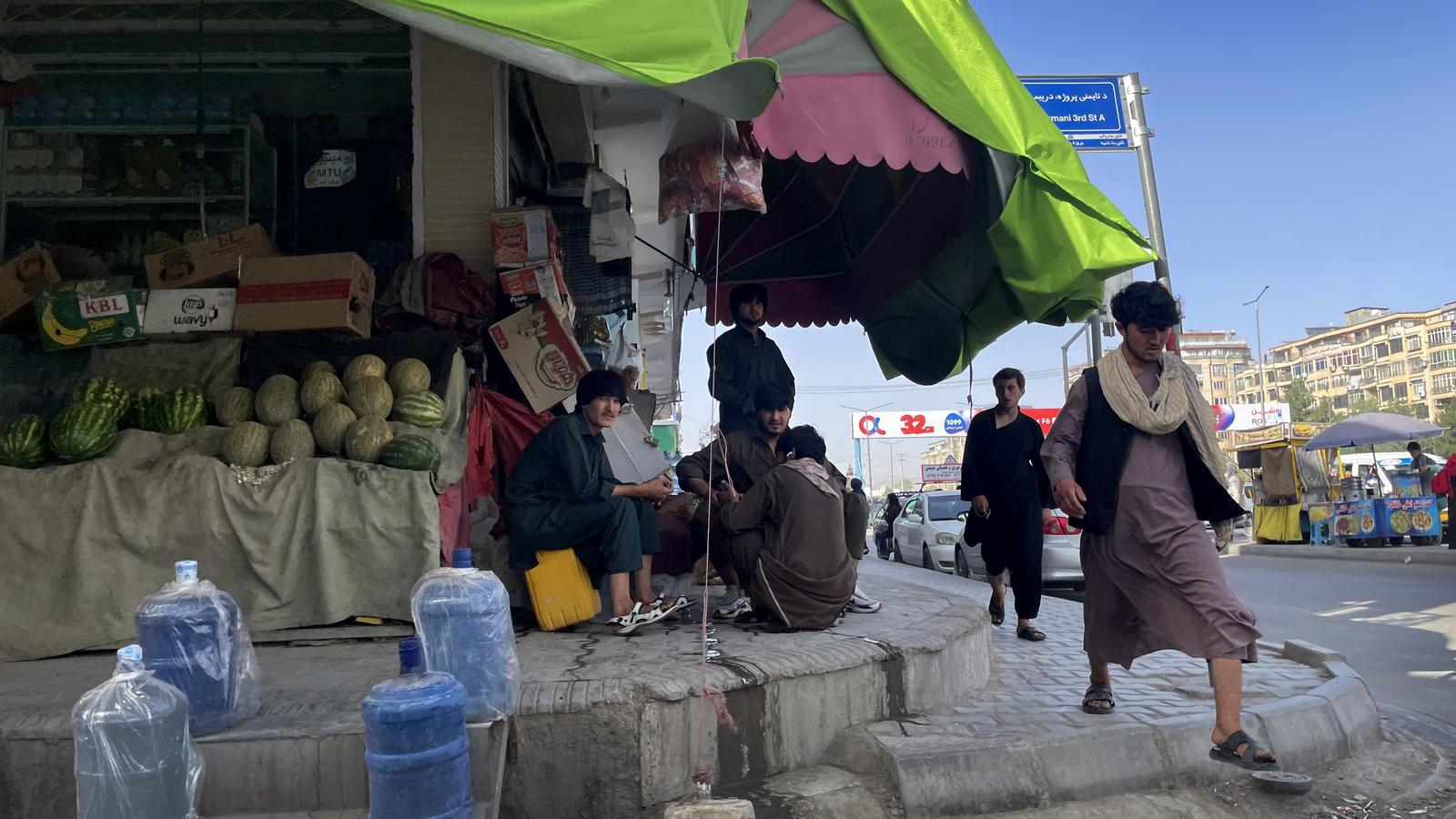
Special correspondent in Kabul“What is your brother’s name?”, asks the guard on duty at the entrance of the Khyber Hotel, in Kabul, to a young Afghan woman dressed in strict Islamic attire, who says she is the sister of one of the thirty or so Afghans deported from Germany on July 28th. In theory, all the deportees had committed a serious crime, as the German government initially reported. But later, the German Interior Minister himself, Alexander Dobrindt, admitted that one of them had never been prosecuted. His only offense was not having his papers in order.
According to some Afghan media outlets, the deportees ended up at the Khyber Hotel, located on one of the main streets of the Kabul neighborhood of Shahr-e-Naw. But the hotel receptionist denies it: “There are no deportees here,” he replies to the girl looking for her brother, after the guard let her into the lobby. “There’s no one here, look elsewhere,” insists the receptionist, while the guard then escorts the young woman out of the hotel and advises her: “Go with your father or another of your brothers to the police station, and ask there.” “I have no father, nor more brothers,” replies the girl. “Well, with an uncle or a cousin,” he then suggests. “I don’t have that either,” she states. “So what kind of family are you, that there isn’t a single man?”, concludes the guard contemptuously, causing the girl, desperate, to be unable to avoid bursting into tears of helplessness. In Taliban Afghanistan, women must be accompanied by a mahram, a male family member, to conduct any business or go to official places.
No news of the deportees
The United Nations Assistance Mission in Afghanistan (UNAMA) also does not know where the deportees are, nor under what conditions they are. "UNAMA has not participated in the deportations. However, we have held discussions with member states on the measures to be taken, including respect for the principle of non-refoulement and the conduct of individual assessments," is the diplomatic response by email from its spokesperson, Stefan Smith. Faced with the insistence of this newspaper, however, he suggests contacting the United Nations High Commissioner for Refugees (UNHCR) to find out what has happened to them.
But UNHCR also has no idea. "We have not had access to them since they returned [to Afghanistan]. The authorities have taken charge of them de facto", its spokesperson, Charlie Goodlake, justified, referring to the Taliban. Likewise, the European Union delegation in Afghanistan washes its hands of it: “Returns are the responsibility of the member states, so I have to refer it to the state that carried them out: Germany,” replies its Head of Political Affairs, Joris Van Winckel. Germany does not have an embassy in Afghanistan. Like the rest of Western countries – including Spain – it evacuated it when the Taliban stormed Kabul in August 2021, and has not reopened it. In other words, there is no one on the ground to monitor it.

During the last five years that the Taliban have been in power, the international community's discourse has been shaped. From condemning their regime, trying to isolate it, and hastily evacuating tens of thousands of people from Afghanistan on military planes in August 2021, it has moved to maintaining diplomatic relations with them and deporting people to the country, even though the Taliban remain the same: their fanatic ideology has not changed, and they control the executive, judicial, and police power in Afghanistan. There is no legislative power. In other words, they control everything.
The European Union received the Taliban in Brussels on June 23 to negotiate future deportations of Afghans. Germany has given the green light for them to have diplomatic representation in its territory, both at the Afghan embassy in Berlin and at the consulate in Bonn, to also manage returns. Russia has recognized them as the legitimate government of Afghanistan, and many other countries have accepted them having an embassy: India, China, Qatar, Turkey, etc. Western countries were confident that the Taliban would change, that they would not be so radical, but it is the Western countries themselves who have changed, adapting to their conditions.
"Before, our workshop classes lasted an hour and a half. Now we have an hour of class, and half an hour of Islamic studies, because the Taliban demand it of us," explains a worker who prefers to remain anonymous from the international NGO War Child Canada, which continues to operate in Afghanistan. They run training workshops – in English, computer skills, trades, etc. – for children and young people between 10 and 18 years old.
“Now we have separate offices for men and women, and we have had to erect a partition at the headquarters in Kabul so that the three or four who work there are not in the same space as the rest of the male staff – he continues detailing–. We have also given the Taliban two of our Land Cruiser all-terrain vehicles, in addition to paying them a lot oftaxes”. Despite this, he assures, the Taliban have no problem meeting with the head of the NGO, who is an Afghan-Canadian woman. “When it comes to talking about money, they don't cause problems,” he concludes.
Entry restrictions
Several Afghan female journalists have told this newspaper that when the UN or the European Union hold press conferences at their headquarters in Kabul, they contact local media managers to ask them to send a male journalist, not a female one. The UNAMA spokesperson denies this emphatically. However, he does acknowledge that the Taliban, who guard the entrance to the United Nations compound in Kabul, do not allow any Afghan women, whether journalists or UN employees, to enter. "That is why we do not hold press conferences or other meetings with local media there," he assures.
The Head of Political Affairs of the European Union delegation in Afghanistan also denies this, but admits that the Taliban intelligence service controlling the entrance to the delegation in Kabul may ask Afghan women to go with a mahram. "If any problem arises, our security colleagues try to negotiate access, often successfully," he states.

The Taliban are also causing problems for the entry of foreign journalists into the country. This would partly explain why Afghanistan has almost disappeared from the media. For their part, local journalists have been forced to self-censor. "We cannot report on the ban on education for girls, nor on the Taliban's arrests, even if it involves reproducing information from a report," explains a journalist who also prefers to remain anonymous. There are some words taboo which they also cannot use: violence, rights, discrimination…
Previously, UN or international NGO vehicles were seen around Kabul. Now it is difficult to see any. On the other hand, the Taliban do not cause problems for tourists visiting the country. The reason is the same: they are a source of income.
The Spanish ambassador
Since December 2025, Spain has had an ambassador on a special mission to Afghanistan, Francisco Javier Puig Saura, who has never set foot in the country and has his office in Madrid. This newspaper has asked what his exact role is. The Spanish Ministry of Foreign Affairs has responded with a long written statement of almost two pages, in which it highlights that the ambassador carries out a “monitoring of the political, economic, social and security situation in Afghanistan”, as well as “the evolution of the situation of women”; and holds diplomatic meetings with “Spanish actors in humanitarian cooperation” and members of “Afghan civil society” abroad.
Likewise, the response from the Ministry of Foreign Affairs underlines that Spain has granted 2,719 visas to Afghan citizens since 2021, even though the number of applications on the waiting list is in the "thousands"; it has demanded accountability from the Taliban at the International Court of Justice and the International Criminal Court; and the Minister of Foreign Affairs, José Manuel Albares, "has actively contributed to keeping the defense of the rights of Afghan women on the global political agenda," by organizing three meetings with Afghan women in exile where "calls to action" were made, or by inaugurating a plaque at the ministry in recognition of the struggle of Afghan women and girls. However, the ministry does not specify at any point what practical use all these symbolic acts have been for the women of Afghanistan, or for the rest of the Afghan population.
"This is no longer our country, it is an Afghanistan we do not recognize," says a young man in Kabul who, like so many others, cannot leave the country because it is very complicated to obtain a visa. A young Afghan woman, who also wants to leave Afghanistan but has not found any scholarships to study at a foreign university, is now looking for some online study, or remote work, something that gives meaning to her life. But the options are also very limited. No country in the international community has thought to offer this alternative either.
