Assassination simulations and insults: Putin goes all out to keep Orbán
The Kremlin interferes in Hungary's elections because it does not want to lose a key ally in the European Union
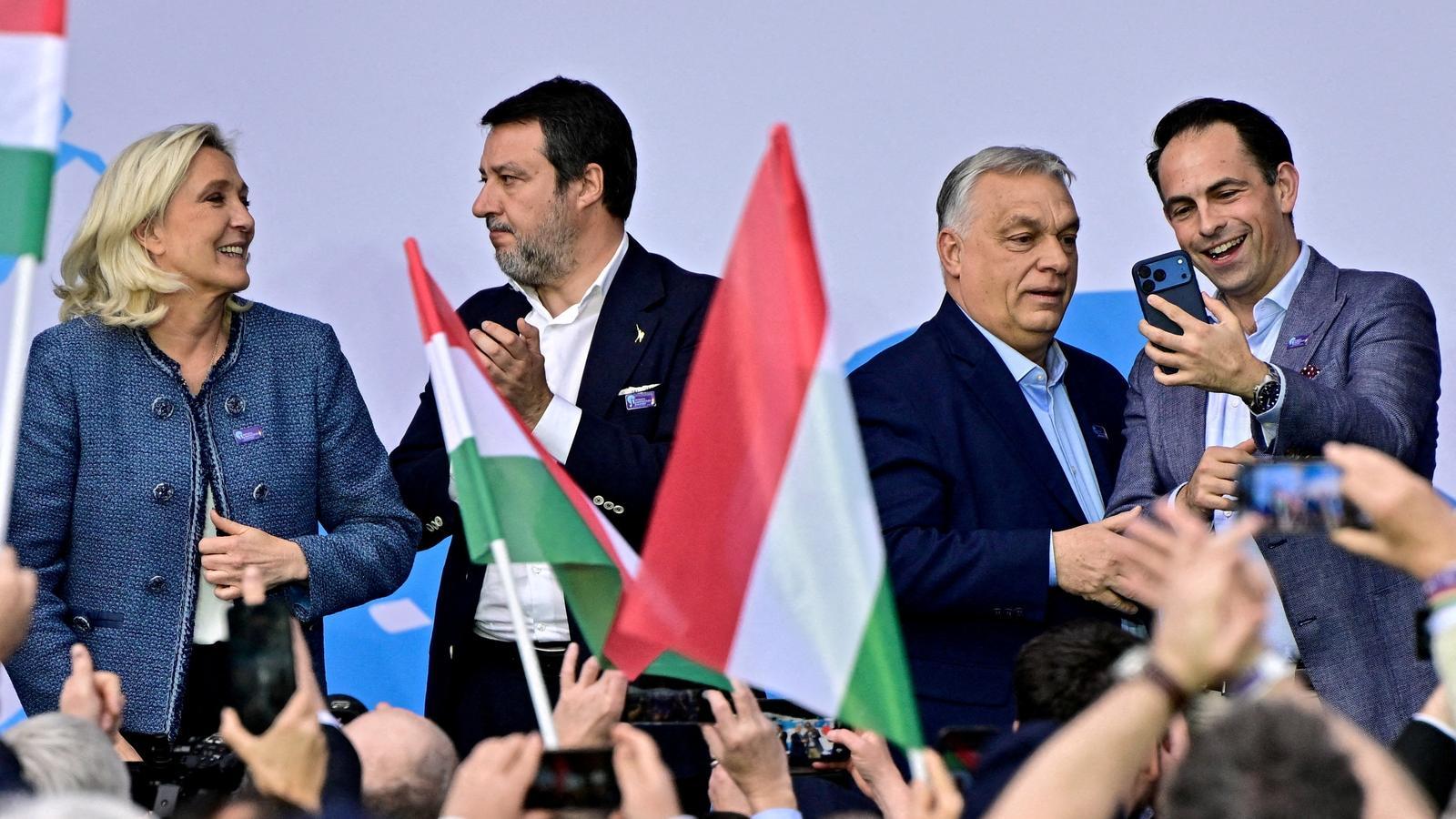
MoscowIn Moscow, alarms have sounded. After sixteen years, Viktor Orbán's continuity at the helm of Hungary is in danger. Vladimir Putin fears losing his great ally in the European Union, a thorn in the side for Brussels' support of Kyiv and a stubborn buyer of repudiated Russian gas and oil. To try to prevent this, various media outlets have warned that the Kremlin has launched an operation to influence the elections of April 12. Actions that include from the disembarkation of spies in Budapest to disinformation campaigns on social media and, even, considering the staging of a false attack against the current prime minister to boost his popularity.
According to the investigative outlet VSquare, Putin has entrusted the Hungarian portfolio to Sergey Kiriyenko, his deputy chief of staff and the architect of the Russian electoral system, which guarantees the obedience of all candidates to the president. Kiriyenko already tested his tactics in the last legislative elections in Moldova, last September, where he failed in the attempt to prevent the triumph of the pro-European bloc. Even so, the modus operandi is expected to be the same. At least three members of Moscow's military intelligence have settled in the Russian embassy in Budapest, with diplomatic passports, from where they coordinate the manipulation strategy on social media.
The campaign is not carried out directly by the Kremlin, but by the Agency for Social Design, an opaque entity dedicated to political influence, ultimately supervised by Kiriyenko, who replaced Yevgeny Prigozhin's farms of bots and cyber trolls
. According to the Financial Times, the intention is to present Orbán as a strong leader with global friends, such as Donald Trump, in contrast to his rival, Péter Magyar, who is portrayed as a puppet of Brussels without external support. At the same time, however, care must be taken that Russian interference is not at all evident because it could be counterproductive for the prime minister's party. The responsibility for disseminating this narrative lies with pro-government autochthonous agents.

The Russian opposition media The Insider has already collected some of the false information that Russian hackers have spread online in recent days. Many of them seek to exploit the clash between Orbán and Volodymyr Zelensky. For example, it is circulating a headline from a non-existent interview with the Ukrainian president to the publication Politico in which he calls Hungarian voters "retarded". Also, a supposed video fromEuronews, citing Human Rights Watch, denounces more than a thousand attacks by Ukrainian refugees against Hungarian citizens throughout Europe.
False assassination attempts
These same bots have gone further by distributing videos about alleged assassination attempts against Orbán and coup threats, an extreme that experts consider unprecedented. A news report falsely attributed to Deutsche Welle claimed that a group of Ukrainian refugees had died trying to detonate an explosive device near the Hungarian prime minister's office. Another video, with the logo of Moldovan television, reported alleged messages from Ukrainians inciting citizens of Hungary to take up arms to overthrow Orbán.
The fantasy of an attack against the Hungarian prime minister is based on a proposal by Russian foreign intelligence (SVR) revealed by the Washington Post. According to the newspaper, the spies suggested orchestrating this staging as a "turning point" that would "radically alter the course of the campaign" and catapult Orbán. The precedent would be found in the assassination attempts against Trump or against the Slovak Prime Minister, Robert Fico, close to the Hungarian. It is not the first time that the SVR has fabricated non-existent threats to destabilize neighboring countries. Just recently, on the eve of the last elections in Moldova, it claimed that NATO was preparing an imminent invasion from Romania.
Both Russia and Hungary flatly deny these accusations. The Kremlin asserts that they are "falsifications," while the Hungarian government dismisses any Russian interference, attributing it to a campaign by the left and a "regrettable attempt to divert attention from the threats of the Ukrainian president." Previously, Zelenski had hinted that he would hand over Orbán's address to his soldiers so that they could "speak in his language," in the midst of the conflict over Ukraine's decision to prevent the passage of Russian oil to Hungary. Words that the prime minister has used to fuel antagonism with the Ukrainian president, to cut off the gas supply to Kiev, and to strengthen his pro-Russian position in the war.
The Hungarian blockade of the European loan of 90,000 million euros to Ukraine, the latest of Orbán's obstacles to military support from the community to Kyiv, is one of the factors that make him an indispensable partner for Putin. The Russian president does not want to give up the privilege of having a mole in Brussels who occasionally leaks the discussions of the Twenty-seven to Moscow and, without hiding, rows in favor of his interests. That is why the Kremlin is willing to do anything and will spare no effort to save its ally. The majority of independent polls, however, give an advantage to Péter Magyar and his Tisza party, although with very variable differences, between 3 and 20 points. Despite this, some polls still give victory to Viktor Orbán, in elections that are shaping up to be the most open in the country in sixteen years.
