The left leads a heart-stopping count in Sweden
The social democrats win and the extreme right falls to third place, but it is not clear which bloc will be able to govern

-
CAT -
CAST
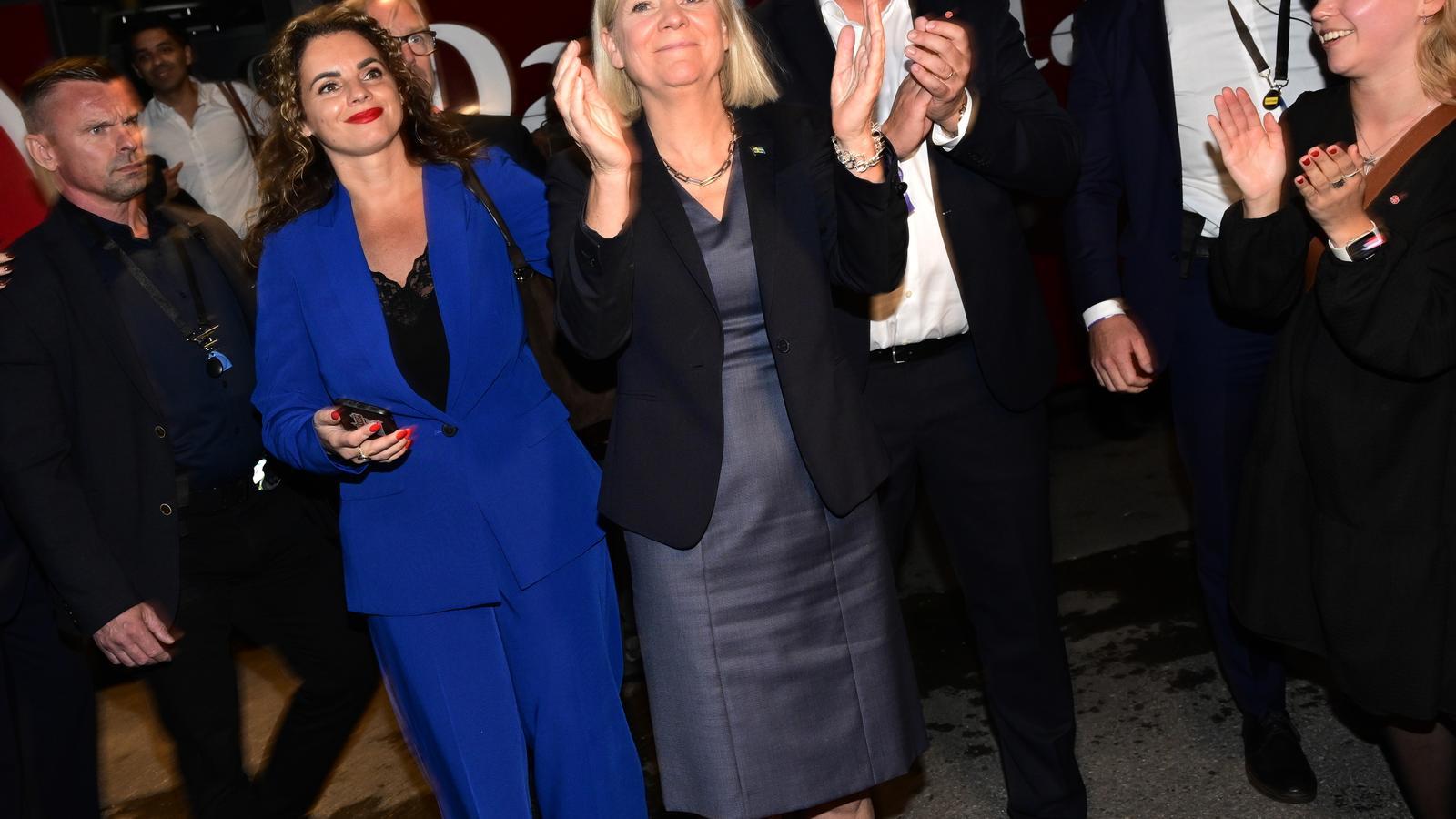
CopenhagenThe count for Sunday's general election in Sweden is taking a very long time. The Social Democrats have won, but the result is so close that it is unclear whether they will be able to form a government with other left-wing parties or if the right-wing coalition, which includes the far-right, will be able to form a majority. Voter turnout exceeded 80%.
With 94% counted, the left-wing coalition would obtain 176 seats and the right-wing one, 173. The Social Democratic Party obtained 29% of the votes and 100 seats, followed by the Moderate Party (19.8%), with 70 seats, and, in third place, the far-right Sweden Democrats (17.6%), which would have 62 seats. The parties of the progressive bloc would obtain a very narrow majority with 49.3% of the votes, compared to the parties of the conservative bloc, which have obtained 49.1%. The final outcome of the election may depend on the count of the external vote, which will not be known until next Wednesday. According to public television SVT, the difference between the two blocs, the progressive and the conservative, is only 20,000 votes.
Despite having won the elections, Magdalena Andersson's Social Democrats have obtained the worst result in their history, with a drop of 2.7% compared to the 2022 general elections, which already represented a blow to the party. Nevertheless, the group is once again the most voted in Sweden, and if the result is confirmed, it will have the opportunity to lead a new government, in a European context where social democratic parties have been losing weight and power. For its part, the far-right, which aspires to obtain a place in the government if the parties of the conservative bloc manage to re-edit the majority, has for the first time seen its results remain stagnant compared to the last elections.
The elections have been marked by the debate on the state of public services, immigration, and the economy, but also by the possibility that the Sweden Democrats will enter the government for the first time and become part of the country's executive.A possible entry of the extreme right into the executive would culminate the transformation of the Sweden Democrats, a party that for decades has been a pariah of Swedish politics and is now considered by the conservative bloc a legitimate and reliable governing partner. Prime Minister Ulf Kristersson (62 years old) was elected to the post in 2022, leading a coalition with the Christian Democrats and the Liberal Party. This majority was made possible thanks to the support of the SD, which, although it remained outside the government, has managed to exert great influence over the executive, especially in immigration and security policies, which have been one of the main factors in the conservative shift that Sweden has experienced in recent years.Closed door
One of the main obstacles for Andersson would be to manage to form a government majority among the parties of the progressive bloc, since during the campaign they have shown themselves to be quite divided among themselves. This bloc has four formations in addition to the Social Democrats: the Centre Party (of agrarian and centrist tradition), the Green Party and the Left Party (feminist and environmentalist, the furthest to the left in Parliament). During the campaign, the Centre Party has been firmly opposed to incorporating the Left Party into a possible coalition government. At the same time, the formations located further to the left have questioned the restrictive migration policy of the Social Democrats. Beyond that, Andersson has expressed concern about incorporating the Left Party into a possible government after the scandal caused during the campaign when some of its members expressed their support for the Palestinian organization Hamas, which is considered a terrorist group. For all these reasons, analysts do not rule out that the Social Democrats might seek to form a centre-leaning majority, although that will also be difficult.
The other side of election night was the decline of the far-right Sweden Democrats party, which had improved its results in every election since it entered Parliament in 2010. Beyond the decline of the Social Democrats, the ultra-rightists are the party that has worsened its results the most compared to the 2022 elections.
In the last four years, the formation led by Jimmie Akesson has been a key piece in sustaining the conservative governing coalition, which this time has not achieved re-election. The ultra-rightists have clearly influenced the executive of Ulf Kristersson, especially regarding immigration and security policies. In the previous four years, the Nordic country has made a clear turn in its migration policy.
The SD had been considered a pariah party for decades due to its ties with white supremacist and neo-Nazi groups, but in recent years Akesson has managed to transform the party until turning it into a legitimate and reliable partner for the parties of the conservative bloc. Last year, the party published an extensive report on its origins, detailing its past ties with fascist organizations and pointing out the anti-Semitic and xenophobic opinions that some of its members had expressed, for which Akesson apologized publicly.
Immigration and security
In these elections, analysts have warned that immigration and security, two of the issues that the SD has exploited electorally in recent years, have lost weight among voters' main concerns. This fact coincides with the decrease in the number of shootings and violence carried out by gangs in the last year. According to police data, firearm incidents have been reduced by half in this 2026, with 48 shootings and 12 deaths from firearms, data that paradoxically highlights the extent to which gang violence has been a serious problem in the Nordic country.
The leader of the Moderates, Kristersson, attributes this decrease in violence to the action of his government, although the problem of organized crime persists. His executive has toughened penalties for violent crimes and has given greater powers to police forces to act against organized crime, in addition to lowering the age of criminal responsibility to 14. The Moderate Party has also claimed in the campaign that in the last legislature it has boosted economic growth with measures such as lowering energy and food prices, while the arrival of asylum seekers has been reduced to historical lows.
