Israelis legitimize the war, but feel tired
Despite minority protests, the majority of Israelis continue to support the offensive against Iran
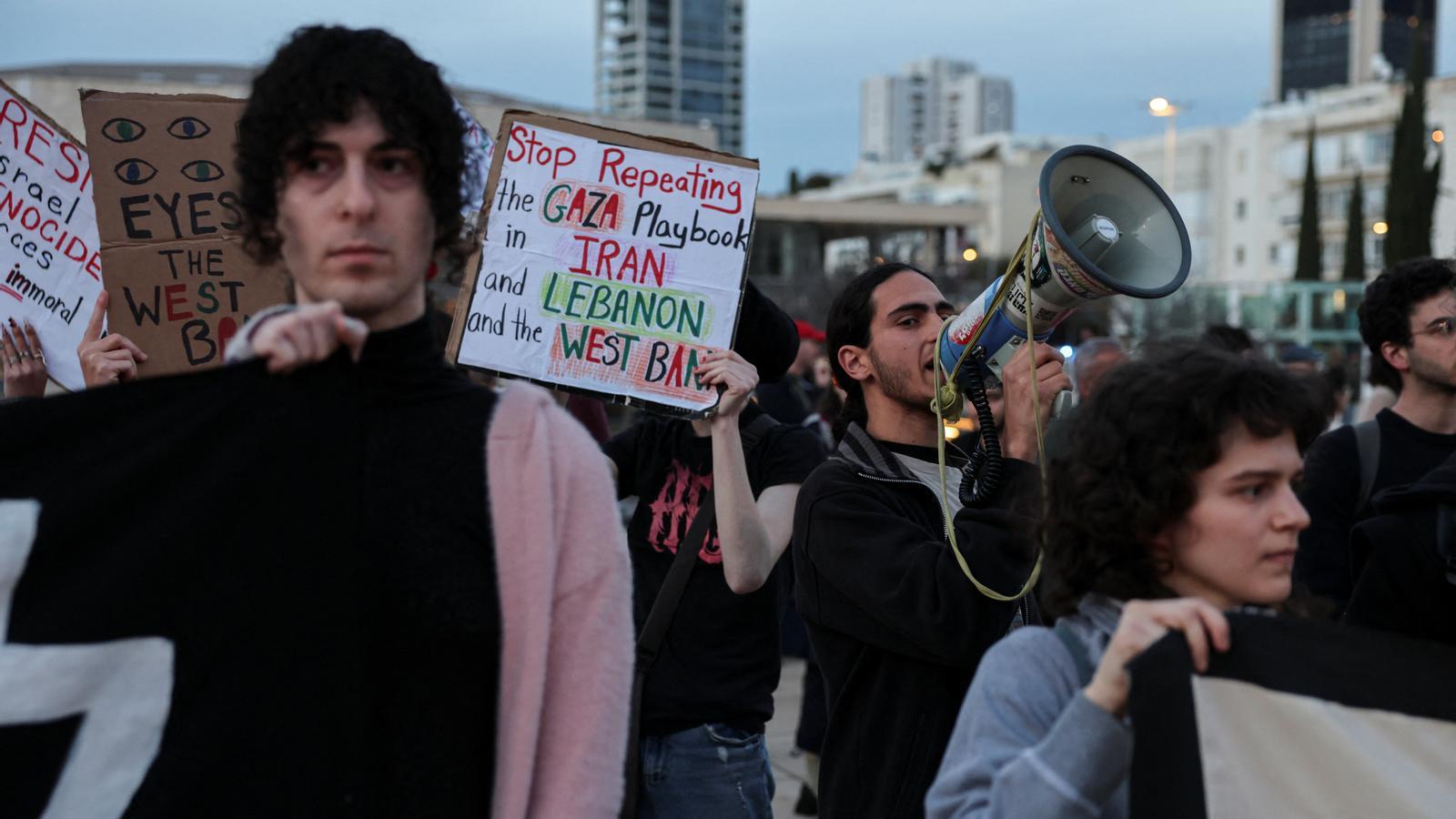
JerusalemIn the heart of the city of Jerusalem, in Paris Square, very close to the official residence of the Prime Minister, Benjamin Netanyahu, a scene that is becoming usual has been repeated: a small demonstration against the war with Iran and the Netanyahu government. Less than seventy people, two drums marking the rhythm, and a giant banner trying, without much success, to attract the attention of passers-by.“We don’t want any more war, we are fed up”, says Caroline, a 65-year-old retired teacher, as she holds a purple sign. “Only Netanyahu wanted this war.” She doesn’t finish the sentence when four young men wearing kippahs –the small cap that we Jews wear on our heads as a religious symbol– interrupt the conversation and confront her. “You are traitors, you should be ashamed of yourselves!” one of them snaps before spitting on the ground.Next to him, Joseph, a former piano teacher, holds a poster with the faces of Benjamin Netanyahu, Security Minister Itamar Ben-Gvir, and Finance Minister Bezalel Smotrich, and the phrase: "It's their war, they are the instigators." “There is no strategy, there is no clear objective why we are in this war again – he explains –. They tell us we are winning, but for us, being at war is already losing. We shouldn't be here.” Another poster, in English, reads: “End Israel’s thuggery, hypocrisy and brutality” (Put an end to Israel's abuse, hypocrisy, and brutality).Almost from the start of the war with Iran, similar concentrations have been repeated throughout the country. Now they seem to be more frequent, but they continue to be a minority. They contrast with the indifference –or even hostility– of a large part of society. During the demonstration, some drivers lower their windows and begin to insult them. A white pickup with two Israeli flags attached to the trunk honks insistently as it passes. The driver, a man in his forties, raises his fist through the window. “We will win!”, he shouts. All this under a police deployment that almost matches the number of demonstrators.While these dissident voices try to make themselves heard, the urban landscape tells another story. Blue and white flags wave from balconies, and in some shop windows, posters appear with the message “Thank you, Mr. President”, aimed at both Benjamin Netanyahu and Donald Trump. In a souvenir shop, Elias, a young clerk, places kippahs with the slogan: “Make Israel great again”. “They sell a lot”, he says without looking up much. “People want to feel that someone is in control”.
A few meters away, in Independence Park, there is a completely different scene. Groups of young people stretched out on the grass, couples sharing coffees at the Deja Bu bar, laughter and low music. “These are strange times”, says Matam, an engineering student, leaning on an elbow as he watches the concentration from afar. “After October 7th, many of us have stopped believing in diplomacy. We don't like war, but we see it as necessary. It's as if we have no alternative”. Beside him, Noa, a journalist, nods. “The world can criticize us, but we live here –she says–. When you have this constant feeling of threat, you end up accepting things you wouldn't have accepted before. We live in a constant déjà-vu”, she says smiling as she points to the name of the bar behind her. War continues to be legitimate for the majority of the population. An opinion marked by the perception that Iran is an existential threat to the State of Israel.
Tiredness emerges
Despite daily attacks with Iranian missiles, which have caused at least eighteen deaths and have forced the population to regularly take shelter in bunkers, daily life remains relatively stable. The economy is functioning, essential services have not been interrupted, and shops remain open. "Yes, we are afraid, but we are also used to it," says Julia, owner of a clothing store near the old city. "Children miss school, we sleep poorly... but the country is moving forward. I just want to see us get rid of the ayatollahs and be able to live in peace."This sentiment has a solid basis. According to the latest survey by the Institute for National Security Studies, dated March 19, 78.5% of the population continues to support attacks against Iran. However, support for prolonging the war until the regime's fall has decreased from 63% to 54%. Similarly, according to preliminary data from the Israel Democracy Institute, only 50% of the population expresses firm support for the war, a significant drop from the initial 74%. Analysts interpret this as a natural evolution: support remains high, but fatigue is beginning to emerge.However, even among those who have never supported Prime Minister Benjamin Netanyahu, confidence remains, for now, surprisingly solid. “Now is not the time to talk about his alleged corruption”, says Rivka, a civil servant, as she walks with a shopping bag. “I’ve never been a fan of his, but I think he’s doing well now. We’ll judge him later… but if this ends well, we’ll have to give him credit.”
