Aina Clotet: "Desire and sex are part of life and we must claim it"
The actress premieres 'Viva', her first feature film as director, at Cannes Critics' Week

-
CAT -
CAST
Special correspondent to CannesIn the first scene of Viva, the opera prima by director Aina Clotet, who also stars in it, the actress appears uncomfortable and naked in the hospital, where the character she plays is undergoing the final test to complete her breast cancer treatment. The close-up of the mastectomy scar is the first sign that Clotet is going all out in this film about the intense desire to live of Nora, a scientific researcher who, after seeing death up close, feels the need to shake up her life and, as one must start somewhere, cheats on her husband with a much younger man with a sculpted physique.
“I wanted to explore the fear of death, but contrasted with the bonds that romantic love generates and the heteropatriarchal structures we have inherited about how a woman should be at a certain age”, explains Clotet from the private beach of the Semaine de la Critique, the parallel section of the Cannes Film Festival where the film premiered this Thursday. “I am amazed at how we have been received, they only have seven films in competition and they take great care of them”, says the director, for whom Cannes brings luck: in 2024 she won the award for best actress at the Canneseries festival for Esto no es Suecia. And competing in the Semaine has already brought her good news: Viva will be released in France in October.
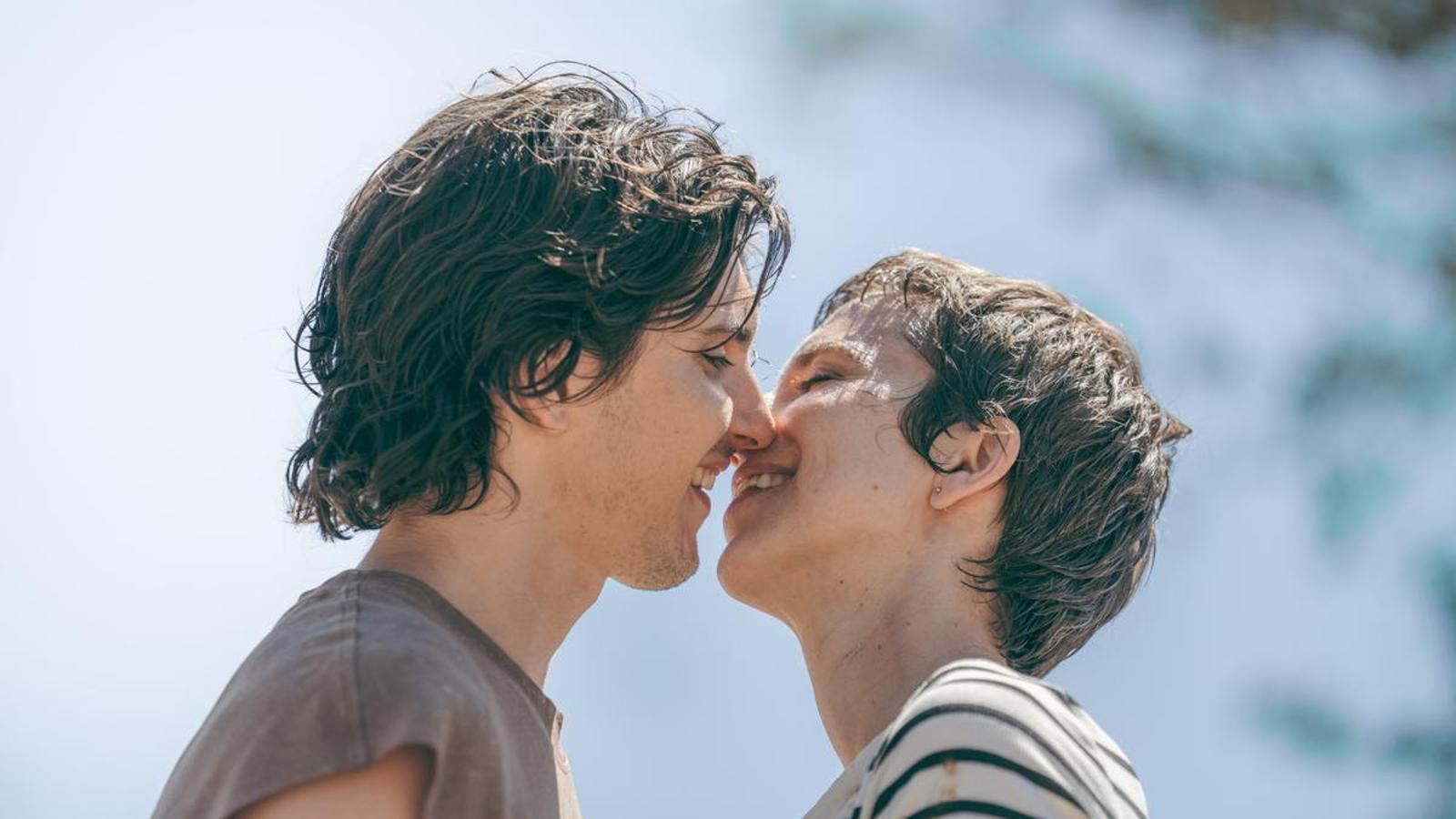
In Viva, Clotet portrays the protagonist's romantic adventure with a tone very close to comedy, showing frankly and amusingly how the sexual attraction to the young man disrupts Nora's balance and seeking friction between the character's self-imposed prejudices and the youthful lightness of her lover, a dancer who lives in the immediate and without plans for the future. The camera's gaze is very physical and direct, because sex has great narrative weight in Nora's personal journey. “I wanted to show women's sexual desire, and in this sense, it was important to show the emotional and physical mark of the illness –explains Clotet–. And also to reclaim that this different body had an opportunity to be loved and desired. In the end, it's like a second loss of virginity, a reappropriation of one's own body”.
Interpretive reproach
Aina Clotet, screenwriter and director, has not made it easy for Aina Clotet, actress, who to play a woman who has just lost a breast had to spend two hours a day "pressing her chest to put on the prosthesis", a "very laborious" job in which the director, as a good daughter of scientists, thoroughly researched the type of mastectomy and reconstruction that Nora undergoes to "take care of every last detail". Furthermore, Clotet had to face some of the most sexual and explicit scenes of her career since her film debut, Joves, she was the victim of a rape. "There were moments when I thought: 'Oh my God, when did I write this?' – she admits –. I've never been a person very interested in showing myself naked in movies, and when something didn't seem right to me, I said: 'Not this.' But I felt it was necessary to shoot these scenes. After all, desire and sex are part of life and must be reclaimed."
For Nora, the affair with the young lover will take an emotional toll, especially regarding her marriage to Tom, who according to Clotet "is a fantastic guy who loves her and has taken great care of her, but with whom she feels she has buried herself alive". Clotet was already exploring couple relationships in the series "Això no és Suècia", but here she does so more profoundly and directly. "Deep down, it's about thinking about where we relate to others from, whether it's from the desire to be with someone freely – she explains –. It's important to be well with oneself to generate quality bonds, but Nora, especially at the beginning, is a character dominated by the fear of not being alone." In summary, it was about reflecting on the always complicated art of loving well. "Sometimes we trap ourselves and it's difficult to generate healthy relationships from the need to be saved," she says.
Despite the happiness of having debuted as a director with Viva. The culprit for the title change was, by the way, a filmmaker whom Clotet greatly admires: Sean Baker. “Viva, the only Catalan film in this edition of Cannes in its original Catalan version, will arrive in our cinemas on June 19. But it almost premiered with another title: Oh Nora. The culprit for the title change was, by the way, a filmmaker whom Clotet greatly admires: Sean Baker. “Oh Nora falls at the moment when Anora appears – reveals the director–. At first, I said, 'It's okay, maybe it will pass without fanfare.' But when it triumphed at the Oscars, we started looking for alternative titles, and a communications agency in Madrid proposed Viva, which I now like even more, because it conveys the protagonist's feeling very well.”
