Nasser Kamel: "If Europe wants to be a peace actor and an economic power, it needs the southern neighbours"
Former Secretary General of the Union for the Mediterranean
-
CAT -
CAST
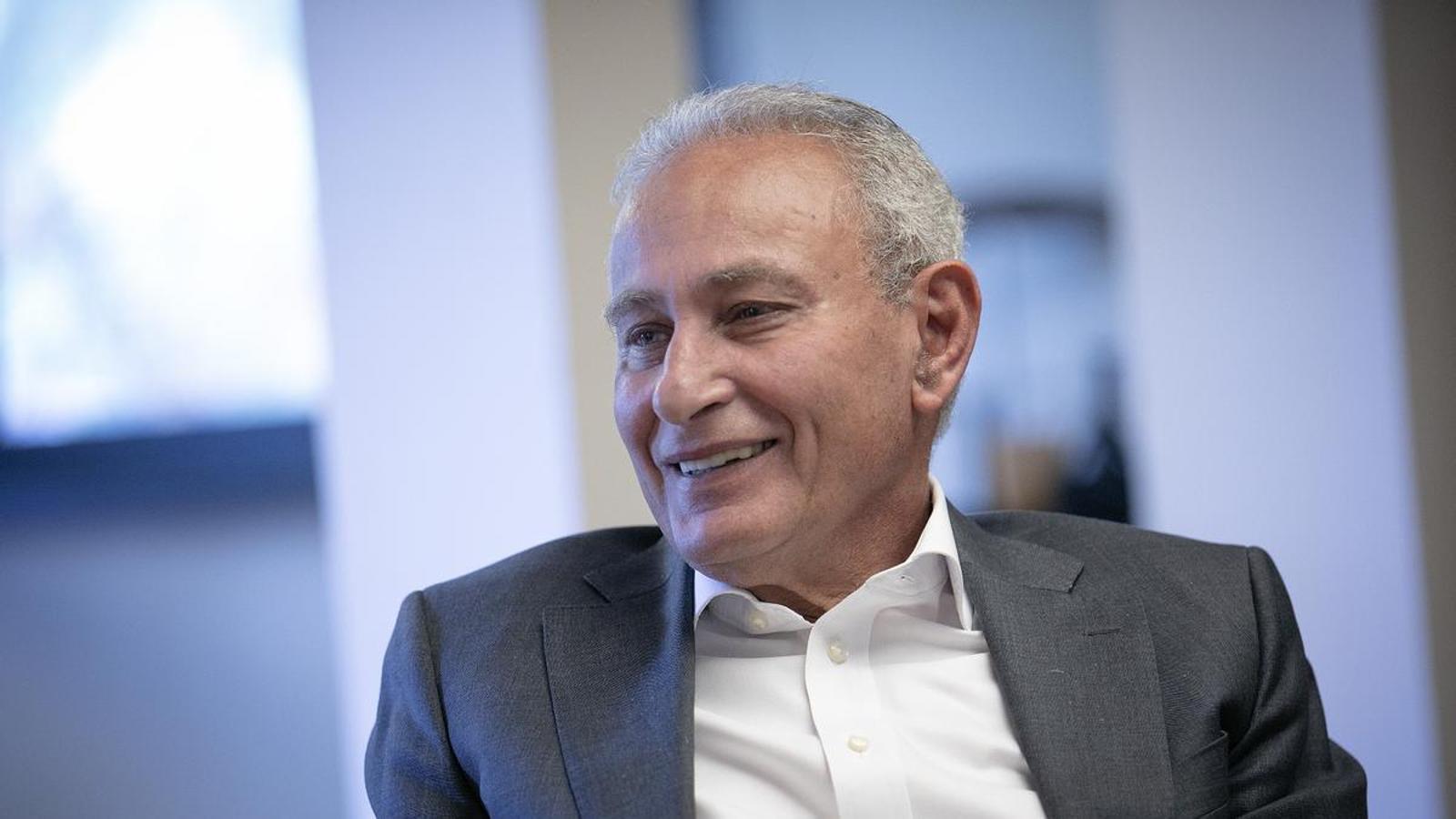
BarcelonaThe Egyptian diplomat Nasser Kamel (Cairo, 1959) has been the Secretary-General of the Union for the Mediterranean (UfM) for the last eight years, the only forum that brings together the 43 countries of the region (including Palestine and Israel), under a European and Jordanian co-presidency. The organization, based in Barcelona, navigates in a very difficult context to try to facilitate cooperation between the two shores of a Mediterranean marked by political, social, and climate crisis. He has agreed to speak to ARA in the final days of his mandate, before retiring.
His mandate has been marked by the pandemic, the war in Ukraine, the genocide in Gaza, the climate emergency, the 30th anniversary of the Barcelona Process, and the third Gulf War. Does he still believe that the Mediterranean is a space for cooperation or has it become just a big fracture?
— The question is whether all the region's challenges – geopolitical, economic, environmental – can be faced by each state or if we should address them collectively. And the answer is obvious: the problems we face are regional or global in nature. We live in a region that is warming 20% faster than the rest of the planet, with rising sea levels or the problem of microplastics... The migratory challenge is also regional: in the south of the Mediterranean we have a galloping demography, in the north birth rates are declining, and we must resolve this imbalance without breaking the social and cultural fabrics of our societies, both in the north and in the south. Even geopolitical hotspots will not find solutions without a broad regional effort that guarantees the self-determination of the Palestinian people and allows us to manage the impact of this conflict on other countries, such as Lebanon or Syria. Nor are there national solutions to economic challenges in a world that is once again tending towards blocs and shortening supply chains. Working collectively is a strategic necessity for the region. We are not doing enough.
The 43 UfM countries can only make decisions by consensus, and this often means paralysis. In which areas do you think progress can be made?
— When it comes to issues of a more political nature, it is more complicated. But when we talk about the environment and climate, economic development or the green transition, I have seen a willingness from member states to put aside their bilateral problems and get positively involved in projects. There is a growing understanding of the need to work together. We just need to roll up our sleeves, commit ourselves, and put the necessary resources behind good intentions.
Can there be a common and credible Mediterranean agenda while the genocide in Gaza continues?
— Undoubtedly, this war has had an impact on perceptions on both sides of the Mediterranean. But we must also differentiate. When public opinion in the south looks at the position adopted by the Spanish government, it completely agrees with it. They see how Spain has acted, and also Ireland, Slovenia, and even France. Yes, they look at other EU member states that have not been so clear, so brave, and they see double standards. Especially when it is evident that Europe, with good reason, passionately defends Ukraine. In the south, there are voices calling for the same rule to be applied to Palestine. In the case of Ukraine, the principle is simple: the acquisition of territory by force is unacceptable. And in the Middle East, the acquisition of territory by force has been happening for 60 years, not for three or four years. But we also know that, beyond the positioning of some countries, European public opinion is in favour of an order based on rules, justice, respect for human rights, and the self-determination of the Palestinian people.
The UfM has recently approved its strategic vision, which is based on the idea of connecting economies, societies, and countries.
— So far, with very few resources, we have managed to mobilize more than 1 billion euros for blue economy projects: a wind farm in Morocco, the restoration of coral reefs in Jordan or Egypt, and wastewater treatment projects. These are things that give people hope. We have been able to convince countries like Denmark and Sweden, and countries like Egypt, Mauritania or Jordan, to agree on a framework on gender equality – on violence against women, on the role of women in the economy and politics, on stereotypes about women – and we have created a monitoring mechanism to which everyone adheres. During the pandemic, we proposed large programs that created jobs, we financed the development of the digital economy and e-commerce. All this has benefited tens of thousands of people. But the reality is that this needs to be multiplied by thousands. This is what needs to happen if we want to change the situation in the region. The perception is that the South needs Europe, and it is true. But Europe also needs the South. If Europe wants to be a force for peace, a force for stability, and an economic power, it needs its southern neighbors.
Not everyone thinks the same.
— Let's take the example of energy. If Europe wants to achieve energy autonomy, it must look towards the southern Mediterranean, where there is sun and land. But it's not just about building solar power plants or wind farms in the south. Interconnection is needed. A regulated market is needed. Harmonization is needed. A lot of work is needed. It's not just a matter of principles, it's also a matter of interests. And the more prosperity this cooperation brings to both shores, the more geopolitical tensions will be reduced.
The EU has just approved a new migratory pact that tightens the conditions for migrants.
— Today, migration comes mainly from outside the Mediterranean and uses the Mediterranean as a transit route. And most migrants stay in the southern countries: in Jordan, in Turkey, in Egypt, in Morocco. The more economic opportunities are created in the southern Mediterranean countries, the more positive economic impact this will also have for the citizens of the north. The south has cheaper energy and can host labor-intensive industries that cannot be established in Europe.
What should Barcelona do to truly be the capital of the Mediterranean?
— This city has built itself, and its wealth has also been partly linked to the Mediterranean, to trade. Barcelona believes in its Mediterranean identity and acts accordingly. All the actors in this city have been true believers in Euro-Mediterranean cooperation. In fact, I have seen them as frustrated as I am by the lack of progress.
A tip for your successor?
— He has a huge task ahead of him. The road is still very long and there are many things left to do. I would tell him to keep fighting, to keep complaining, to insist that countries get more involved; to keep demanding more resources, proposing new initiatives and defending an idea that is obvious, but that sometimes needs to be repeated: that our future is intertwined and that our well-being depends on how capable we are of working together.
