ICE kills a man in Maine and admits he was not the person they were looking for
This is the second victim at the hands of anti-immigration agents in less than a week, and the second time that officers have mistaken the individual

-
CAT -
CAST
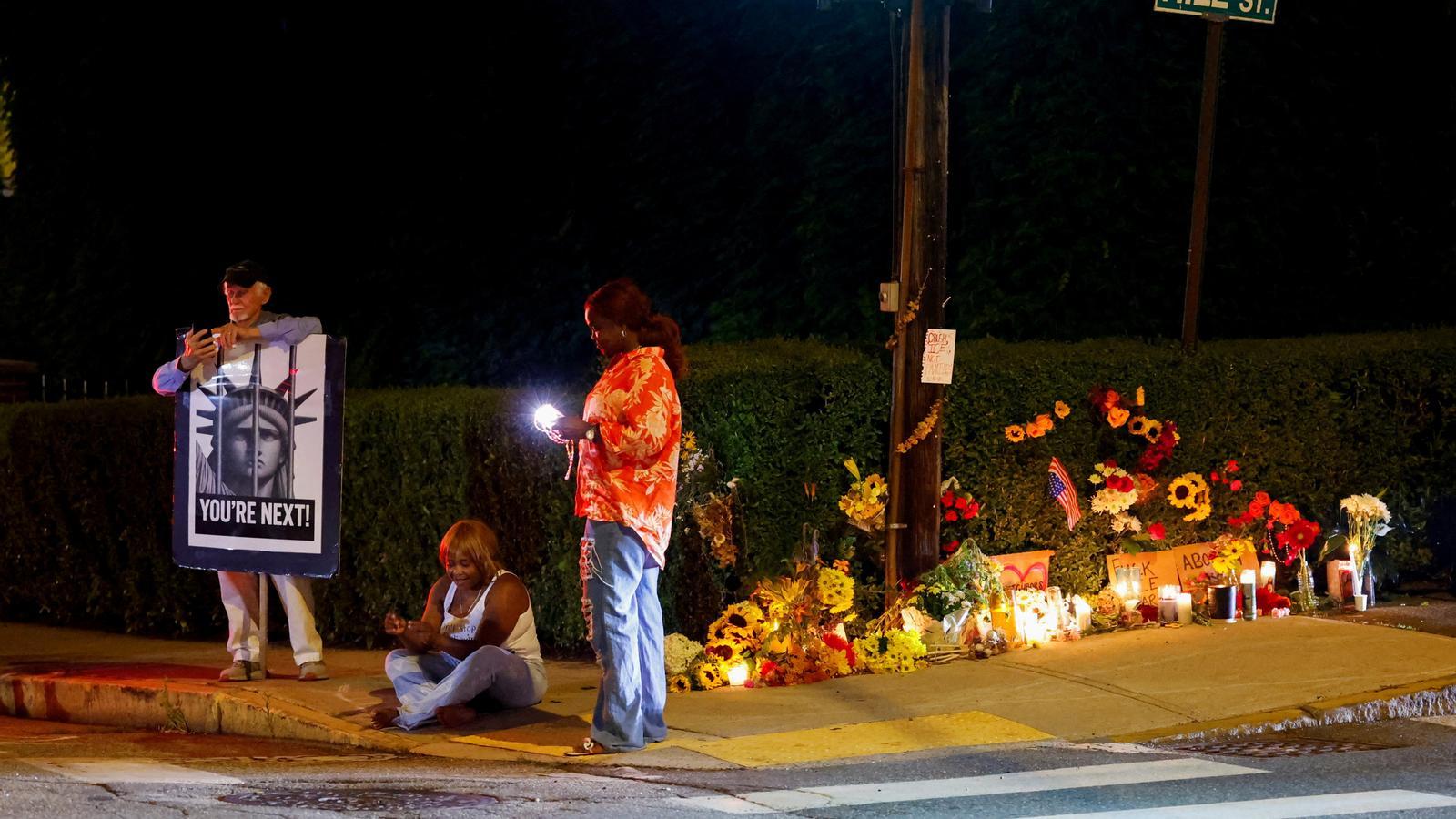
WashingtonIn less than a week and at two different points in the United States, ICE agents have shot and killed two Latin American individuals: Lorenzo Salgado Araujo, on July 7 in Houston (Texas), and Joan Sebastian Guerrero, this Monday in Biddeford, Maine. In both cases, the officers mistook the victims for two other people they were looking for. Sebastian, 26, was a young Colombian with legal status in the country who was on his way to work when two officers intercepted him. The man was identified thanks to neighbors and migrant support groups – such as the Maine Immigrant Rights Coalition and Presente! – since after 24 hours of the event, the Department of Homeland Security (DHS) still had not identified him. In fact, in the brief statement issued, he is only referred to as an "illegal immigrant" ("illegal alien", in English).
Despite the Donald Trump administration restored the mandatory use of body cameras for agents to appease the outrage caused by the mass raids in Minnesota, in neither case did the agents carry any. The main evidence for the moment consists of recordings from surrounding buildings and eyewitness accounts. The DHS is once again using the official version it already used for try to justify the murder of Renee Good, a US citizen, in Minneapolis: the officers acted in self-defense against the victim's alleged attempt to use the car as a weapon.
"The vehicle attempted to flee the scene and, fearing for public safety, an agent fired his weapon," reads the text that the DHS published on X on Monday evening about Sebastian's death. The arguments continue to be repeated, even though the White House changed the direction of the DHS. After ICE killed two American citizens in Minnesota, Trump dismissed the then Secretary of Homeland Security, Kristi Noem. In her place, he appointed Senator Markwayne Mullin, who is now the current head of the DHS. Despite the change, six months later there are still deaths and agents continue to wear balaclavas.
For the moment, the administration's first reaction to the incident has been to suspend most of the traffic checks they carry out during operations. But this does not mean that raids, door-to-door checks, or appearing in other spaces such as schools or restaurants should stop.

Various associations fighting for civil and migrant rights have already condemned the events and are demanding a "transparent" investigation. The Maine delegation of the American Civil Liberties Union (ACLU) recalls how "at least eleven people have died during interactions with ICE, including immigrants, visa holders, and US citizens." Before the cases of Renée Good and Alex Pretti made headlines, in the fall of 2025 during ICE's mass raids in Chicago, anti-immigration agents also killed a person during a traffic stop. A large portion of the shootings involving ICE have occurred precisely in this context.
Along the same lines, the group Presente! has also condemned the events and reported that Sebastian had a family. Information that has also been corroborated by the Colombian embassy, which has requested a report from the DHS "on the circumstances surrounding this regrettable death".
The details about the killings
It was Monday, just after 7 a.m., when the residents of Biddeford, a small coastal town of just over 24,000 inhabitants, were surprised by the sound of gunfire. Several people went out into the street, alerted by the shots, and saw federal agents chasing a white car with bullet holes in its windshield. The man was already dead. Some of the recordings recovered from nearby houses show the car slowly circling, probably at a time when Sebastian was already dead. A security camera video shared by the group Project Relief Maine shows two agents running after the vehicle until they stop it and pull the body out. The independent senator for Maine, Angus Kings, reported shortly after that he had been confirmed that Sebastian was not the individual the ICE agents were looking for and against whom they had a deportation order.
In last week's case in Houston, an eyewitness told the New York Times that ICE agents approached Salgado's car without identifying themselves. The agents were in an unmarked Nissan, another practice that continues despite the collective terror it caused in Minneapolis. From the recordings of the surrounding area, it cannot be deduced whether the agents had identified themselves, as the DHS version claims, or not. Both the murder of Salgado last week in Houston and that of Sebastian on Monday in Maine have caused several protests and rallies in different cities across the country.
Arrests based on racial profiling endorsed by the Supreme Court
The last two incidents, in which the victim has been mistaken, occur after last year a Supreme Court ruling opened the door to arrests based on racial profiling and the DHS shortened the training of new ICE agents to have more personnel on the ground. The reduction in training received by officers coincides with the recruitment campaign launched last year by the DHS, which concluded with 12,000 new agents, 120% more than those in the corps until then.
The recruitment campaign was designed with a narrative that called for defending the country "from the invasion". As the former head of ICE, John Sandweg, explained to ARA in January,"ideological recruitment is a recipe for disaster" because it could serve as a lure for people more motivated by animosity towards immigrants than by a desire to make the country safer. The officer who opened fire on Sebastian was one of these new recruits incorporated during the last year, according to the magazine revealed "}The Atlantic.
The attorney for the Center for Constitutional Rights (CCR), Samah Sisay, also expressed herself along very similar lines. "We have already seen these patterns in both police departments and ICE. Many of their members are known to be part of white supremacist groups. In fact, here in New York this is a problem; in one of the local jails I worked with ICE there were officers who had been child members of white supremacist groups and they applied racial profiling, as well as harming the people who were detained," she told ARA.
