Germany's ambitious plan to make its army super-powerful by 2030
Facing the threat of Putin and Trump, Chancellor Merz wants to be the most powerful conventional force in Europe and assume a leadership role in NATO
-
CAT -
CAST
BerlinThe British general and diplomat Hastings Ismay, first NATO Secretary General (1952-1957), said that the Atlantic Alliance had been created to "keep the Russians out, the Americans in, and the Germans down". This famous phrase well summarised NATO's objectives during the Cold War: to prevent Soviet expansion, to guarantee the United States' commitment to European security, and to keep the Germans under control after the Nazi defeat in World War II, in order to avoid a resurgence of German nationalist militarism. Seven decades later, Russia continues to be a danger to Europe, the President of the United States, Donald Trump, threatens to reduce its military presence on the Old Continent and Germany is rearming. To do so, however, it sacrifices part of the welfare state.
The Minister of Defence, Boris Pistorius, presented at the end of April the first military strategy in the history of the Bundeswehr, the armed forces of the Federal Republic of Germany created in 1955, shortly after West Germany joined the Atlantic Alliance. The 40-page document, titled "Global Concept of Military Defence. Military Strategy and Plan for the Armed Forces. Responsibility towards Europe", defines for the first time in 71 years the military objectives of the Bundeswehr and identifies Russia as the main threat to the security of the country and of Europe.
, Berlin is already taking measures to achieve this goal.
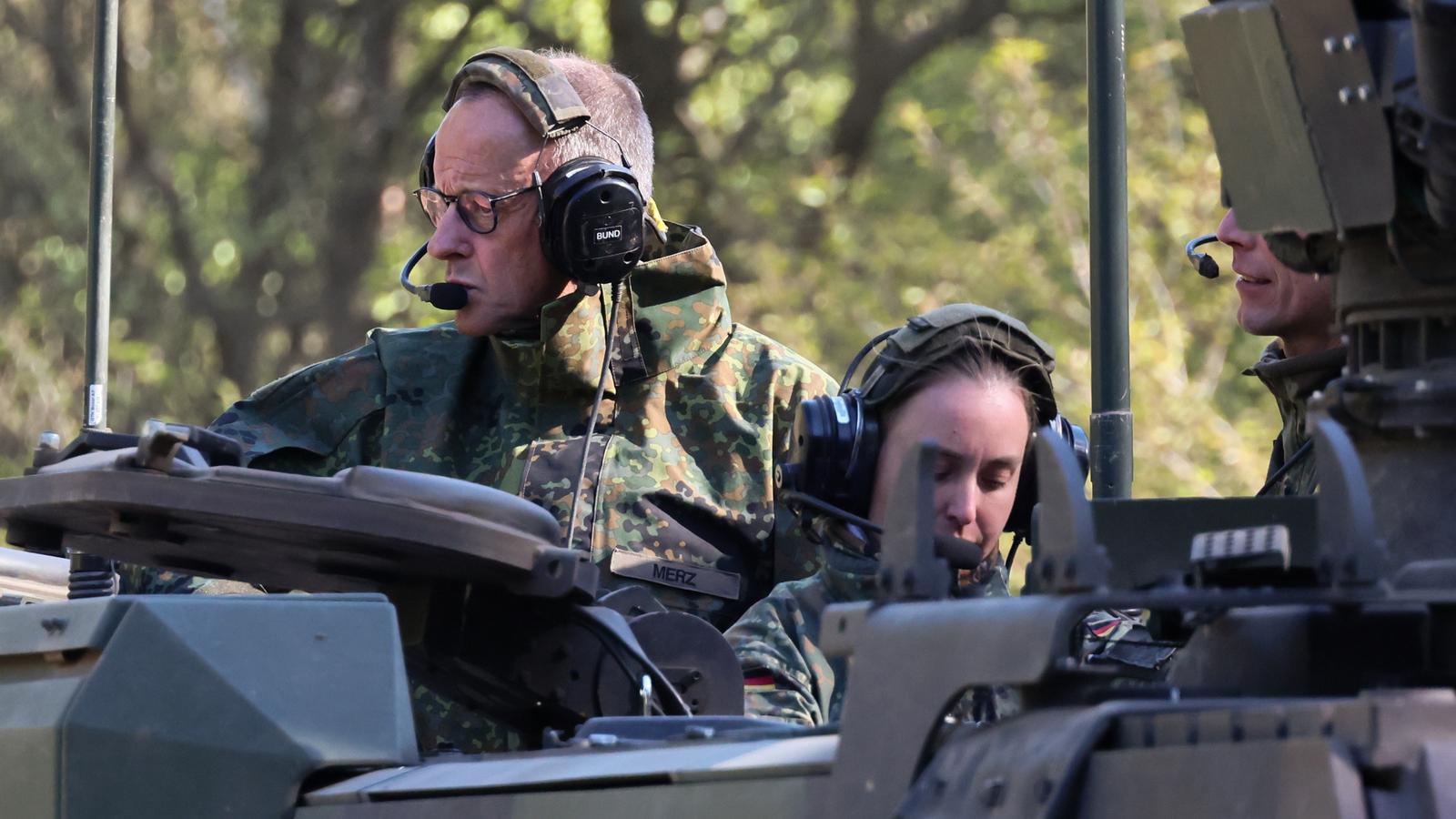
The German Chancellor, the Christian Democrat Friedrich Merz, has set himself the goal of transforming his army into the strongest conventional force in Europe, for deterrent purposes and to be able to face possible threats. One year after his arrival at the chancellery, Berlin is already taking measures to achieve this objective.

Germany's defense spending surged 24% in 2025 to reach $114 billion, according to a report by the Stockholm International Peace Research Institute (SIPRI). Germany is the fourth country in the world with the highest defense spending. Only the United States, China, and Russia spend more.
Germany's military spending last year exceeded the NATO benchmark of 2% of GDP for the first time since 1990 – before Donald Trump capriciously imposed the 5% figure –, reaching 2.3% in 2025, according to SIPRI. Berlin wants to increase its military spending to 3.5% by 2029, in view of the persistent threat from Russia and the perception that Trump's US is no longer a reliable partner. "We want to be able to defend ourselves so that we don't have to defend ourselves," Merz repeats, in a context of a sharp increase in European military spending, four years after the start of the Russian invasion of Ukraine, and of growing instability in the Middle East.
The European problem of soldiers
Germany needs not only more weapons, but also more soldiers. The increase plan personnel of the Bundeswehr aims to go from the current 186,000 soldiers to 260,000 by mid-2035. In parallel, an increase in reserve forces is planned, from 70,000 to 200,000 military personnel. The goal is to have, in the next decade, at least 460,000 soldiers ready for national and Alliance defense, composed of active-duty soldiers and reservists. "The Bundeswehr of tomorrow will not emerge at any moment. It is emerging now," according to Pistorius.
Berlin has accelerated rearmament and soldier recruitment with Merz in the face of Russia's threat, which has intensified its hybrid attacks in various European countries through drones, sabotage, and disinformation.
The new reality demands a new military service. In 2011, compulsory military service was suspended in Germany, and the Bundeswehr became a professional one. Last January, the new law for the "modernization of military service" came into effect, with the aim of increasing the reserve. The new German conscription is, for the moment, voluntary and paid, although the law provides for the possibility of resorting to "compulsory recruitment in case of need".
72% of Germans support the federal government's desire to double defense spending in the next ten years, according to a survey by the Körber Foundation. However, 61% continue to reject their country assuming a military leadership role in Europe, 81 years after the defeat of Nazi Germany and the end of World War II.

