European leaders distrust NATO and are already preparing for a Trump withdrawal
The European bloc is preparing to "revive" the EU's collective defense clause and replace Article 5 of the Atlantic Alliance

-
CAT -
CAST
BrusselsDonald Trump has threatened NATO allies since returning to the White House. The President of the United States, who de facto controls the Atlantic Alliance, has not stopped humiliating European partners and has even recurrently questioned whether he is willing to comply with Article 5 of the entity's treaties. The point states that an attack on an ally is an attack on the entire alliance and, therefore, a joint response must be made, which is one of the main reasons for the military alliance's existence.
Trump's threats against the Atlantic Alliance partners have been increasing after European allies criticized and refused to get involved in the war the Pentagon has initiated in the Middle East. This very Friday, for example, the Reuters news agency reported that the US administration is considering suspending Spain from the military organization.
In this context, the distrust of European leaders towards the United States, already greatly affected lately, has increased even further. One of those who has been most forceful has been the Polish Prime Minister, Donald Tusk. Despite leading one of the most pro-Atlantic member states in the bloc, he has shown himself surprisingly critical of the Atlantic Alliance and the Pentagon, and in an interview with the British newspaper Financial Times he has questioned whether they are "loyal" to their commitment to Article 5 and whether they defend Europe against a possible Russian attack. "Europe's most important question is whether the United States is prepared to be as loyal as described in our [NATO] treaties," said the also former President of the European Council.

The vast majority of leaders have avoided being so tough on Trump and NATO at the European summit this Thursday and Friday in Cyprus, but they have spoken in the same vein as Tusk in calling for the European Union to finally gain military autonomy and stop depending on the interests of the United States. "The EU must become a real defense alliance, with real tools and power," the Polish leader has advocated.
The cornerstone of military independence
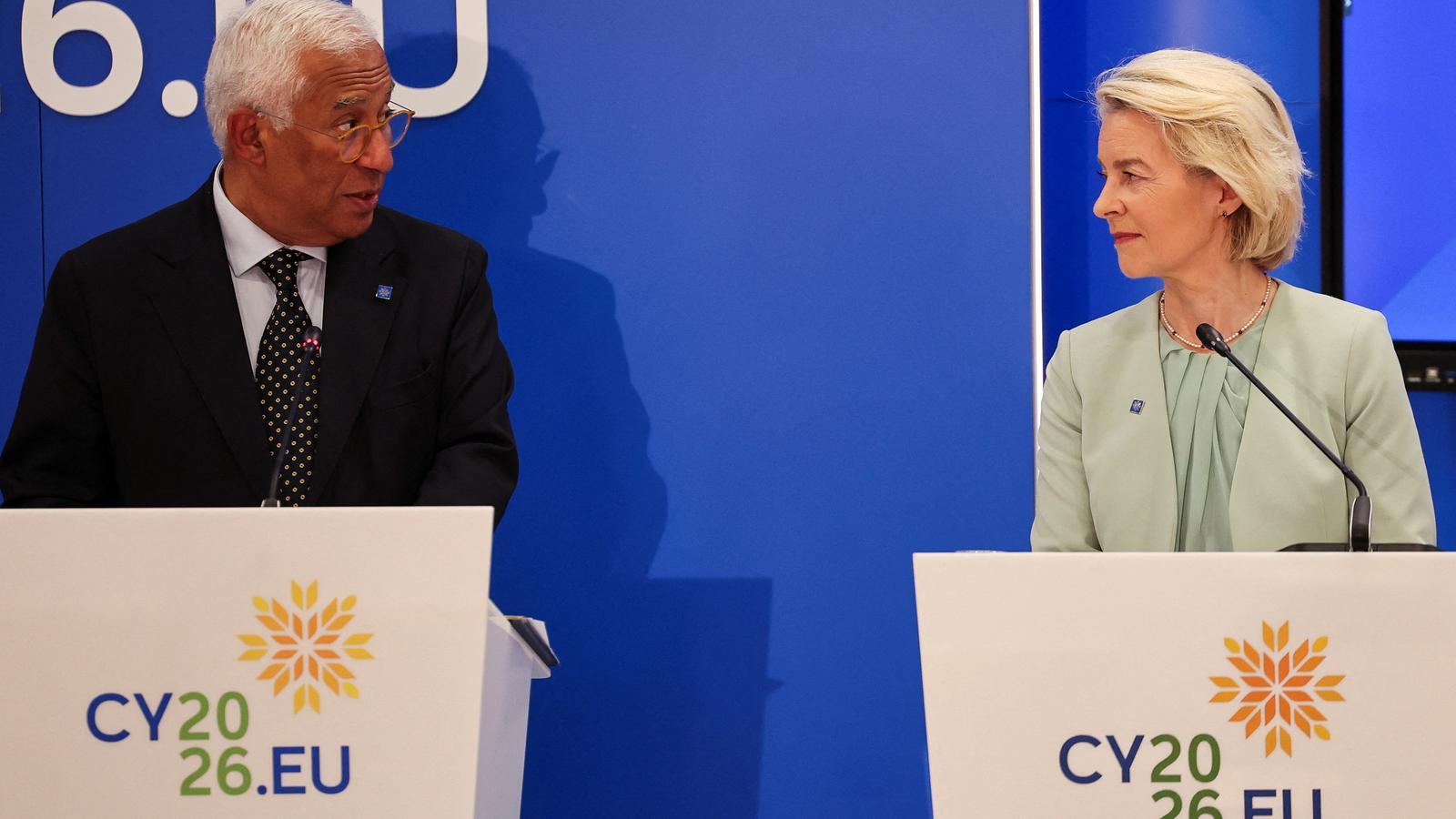
The consensus among European leaders to move towards military independence from the United States is almost absolute and, to get closer to it, the European Union agrees in pointing out that one of the first steps is to "revive" –in the words of the President of the European Commission, Ursula von der Leyen– Article 42.7 on collective defense of the community treaties, which is the equivalent of Article 5 of NATO. "The mutual assistance clause is already in the treaties, but now we need to know how to activate it and use it. We are already finishing the definitive manual on how to activate it," announced the President of the European Council, António Costa, at the press conference of the leaders' summit.
The first stone of military independenceOptimism with Ukraine
The departure of Viktor Orbán, who lost the elections after 16 consecutive years in power, has been a breath of fresh air in the European Union, especially with initiatives concerning Ukraine. Budapest has already lifted the veto on the approval of the 90 billion euro macro-loan from Brussels to Kyiv and the approval of the twentieth package of sanctions against Russia. And, now, both Von der Leyen and Costa have indicated that the next step is to open the negotiation files for Ukraine's accession to the European bloc and accelerate its entry into the community club.
However, there is a certain division among member states regarding the pace of accession. The German Chancellor, Friedrich Merz, advocated this Friday for an express process and for granting Ukraine a kind of "pre-accession" to the European Union. That is, that it has a seat in European leaders' meetings, in the European Commission, or even representation in the European Parliament, albeit without voting rights.
This haste, however, does not please other European partners. Countries like France or Poland, which receive large aid for their primary sector and fear that Ukraine will take part of the pie, are usually placed in this bloc, and they ask to go step by step, as with the rest of the candidate countries to join the EU. One of those who was clearest at the summit this Friday was the Prime Minister of Croatia, Andrej Plenkovic. "I am honest because I know all that the Ukrainians are suffering and we cannot give them false expectations. [...] Accession will not come in January 2027," warned the Croatian leader.
