Erdogan's Turkey: from Putin's friend to NATO's arms factory
The Turkish and American presidents make common cause to avoid European "protectionism" and remain the main arms suppliers to the European Union
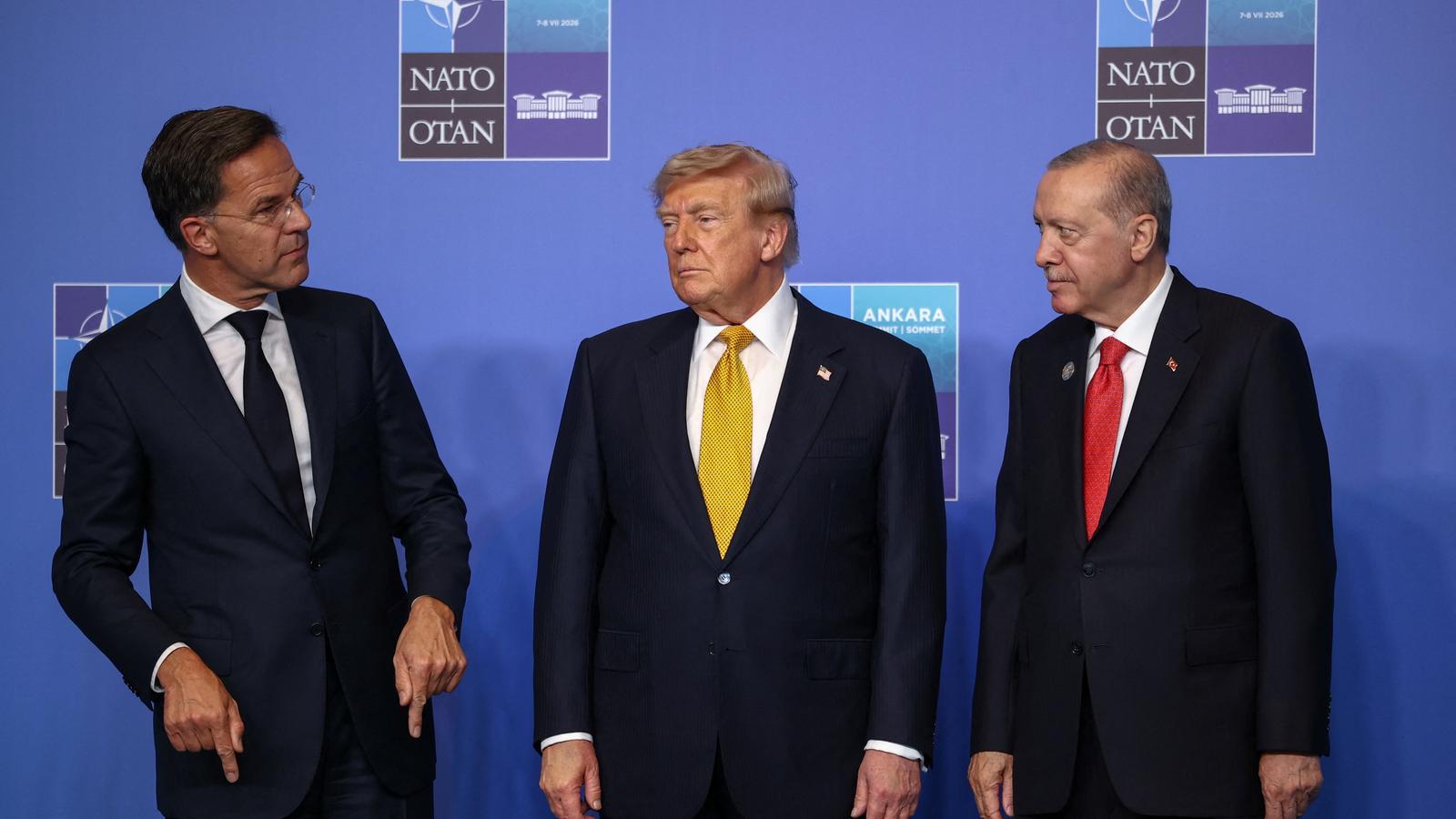

BrusselsNATO's memory is selective. None of the leaders wanted to recall the good relations between Recep Tayyip Erdogan and Vladimir Putin despite the invasion of Ukraine, Ankara's blackmail of Sweden to allow it to join the Atlantic Alliance, or the country's authoritarian drift, which has preemptively repressed and detained dissident activists and journalists before and during this week's summit. Three reasons why, in the past, allies set aside the hard core of the organization in Turkey, and some even suspended or restricted arms sales to the country.
Erdogan is no longer seen as the pariah of the Atlantic Alliance. No leader has reminded him of his past and, on the contrary, the vast majority have advocated for his return as a key NATO partner. He has ceased to be Vladimir Putin's ally to become – as Donald Trump himself defined him – a "great friend".
The fact that Turkey hosted this year's annual summit is already a clear message that its role within the military organization has changed. It seems that Erdogan is no longer playing a double game – between Moscow and Brussels – and has decided – at least for now – for the Western side, where he has interests, especially in the arms industry.
The NATO summit has once again focused on Europe's major rearmament demanded by Trump and which spurs Putin's expansionism. In ten years, allies must go from allocating just over 2% of their gross domestic product (GDP) to 5%. According to the Secretary General of the Atlantic Alliance himself, Mark Rutte, last year European allies spent 20% more than the previous year, and in 2025 and 2026 they achieved an extra expenditure of 258 billion dollars.
However, despite the desire for rapid rearmament, European allies see that their industry is currently unable to manufacture all the technology at the speed they want. And, on the other hand, Turkey has a very powerful arms industrial fabric, with great manufacturing capabilities and highly advanced in key equipment for the European Union and NATO, such as drones. In fact, Ankara has already sold drones to Kyiv and is a major exporter.

In this context, Erdogan wants to take advantage of Turkey's powerful war industry and the needs of European allies to profit from it. And, on the other hand, European companies cannot cope with producing all the military equipment that states want and see in Turkey an opportunity to accelerate rearmament. A win-win for both sides that has led them to want to forget past tensions, although many European allies remain reluctant to buy arms outside the European Union and to increase the arms dependence on an ally of dubious reliability like Turkey. One of the European partners most opposed to this rapprochement is Greece, with whom it maintains a historical dispute with Ankara.
Despite the doubts of European allies, Trump has been Erdogan's great godfather for him to regain a key role in NATO. During the summit, the US president described him on several occasions as a "great friend" —while humiliating the rest of the European leaders— and said that he only attended the North Atlantic Alliance meeting thanks to him. "Sometimes you get along with the tough people and, on the other hand, you don't get along with the weak and pathetic people. Maybe it's because you don't respect them," said the New York magnate.

Even, the US president promised that he will lift the United States sanctions against Turkey and allow Ankara to acquire the latest generation US F-15 fighter jets. The White House vetoed the purchase when in 2019 Ankara acquired Russian anti-missile systems. Erdogan's change of position, however, has made Washington want to lift the restrictions.

It is not only the interest in the arms industry that they share. Erdogan and Trump are also jointly pressuring to prevent European allies from spending the money from the great rearmament in the factories of the European Union states. Both Ankara and Washington want to avoid what they call European "protectionism" and continue to be the main suppliers of arms to their community partners, a message that the Turkish president symbolized by gifting his NATO counterparts a real pistol with bullets. However, the reaction of European leaders to this gift was also symptomatic. The vast majority do not know what to do with it — just as they distrust Erdogan and the fact of increasing Turkey's arms dependency — and they have not taken them to the European Union.
