Cuts to the welfare state to invest more in defense: Merz presents Germany's new budget
The German government will allocate 133.3 billion euros to defense while cutting the public health system
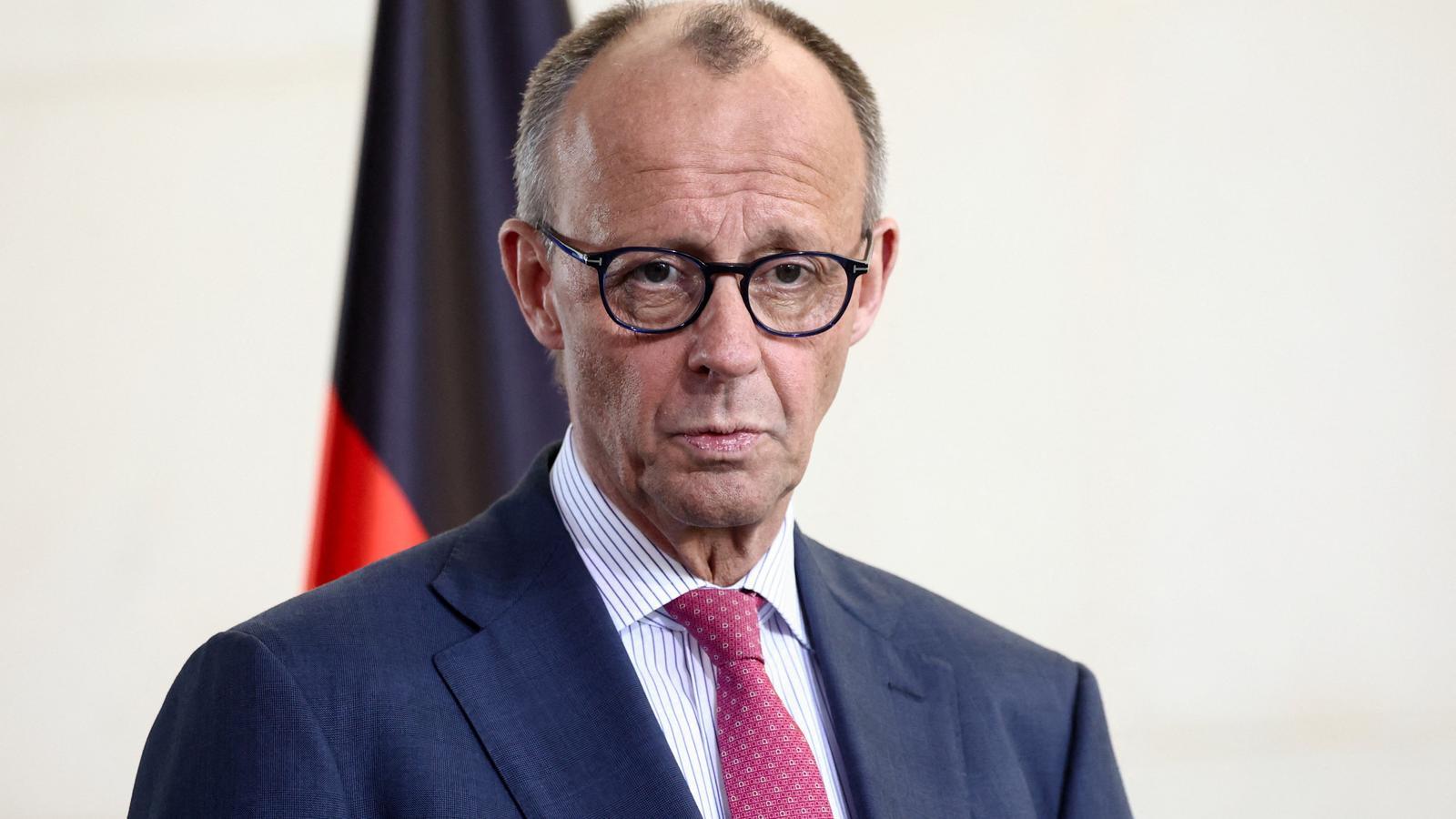
BarcelonaThe government of Friedrich Merz has presented Germany's budget for 2027, with a historic figure: Berlin will once again allocate a record amount to the defense budget in a turbulent international context, marked by the war in Iran and also in Ukraine. According to the accounts presented this Wednesday by the Minister of Finance and Vice-Chancellor, Lars Klingbeil, this year the German state foresees a total expenditure of 543.3 billion euros, 3.6% more than in the 2026 budget, while total revenues will be 398.4 billion euros.
The accounts also include new debts worth 110.8 billion euros, which will be allocated, mostly (58.2 billion), to a special fund for infrastructure and, in a smaller amount (27.5 billion), to cover the rearmament of the Armed Forces created in 2025. This second item, added to the ordinary defense budget of 105.8 billion, will allow the German Ministry of Defense, led by Boris Pistorius, to have 133.3 billion euros for the military sector in 2027, an unprecedented figure.
"My goal is that we can defend ourselves from Russian aggression, that Europe and Germany have the capacity for deterrence and defense, and that is precisely what we guarantee with these spending ceilings and financial planning" until 2030, Klingbeil stated at a press conference. The Bundestag, the lower house of the German Parliament, approved a reform of the Constitution last year to make debt more flexible in the country, which had traditionally been fixed at 0.35% of GDP, and to allow the government to incur more debt.
Klingbeil argued that, with more investment, the executive will be able to cope with the crisis derived from the war in Iran. "Trump's irresponsible war against Iran and the global energy price crisis have caused our growth to be reduced," he said, adding: "We are noticing the consequences of the war at the gas stations, companies are noticing the high energy prices and the interruption of supply chains. Once again, a crisis is hitting us very hard." 2027 "will be the third consecutive year with record investments", totaling 118 billion euros, stated the German Finance Minister regarding public spending that, he assured, will contribute "to making Germany stronger".
But while going into debt is no impediment to investing in defense for the social democratic executive, in the health sector it does seem to be a problem. The German cabinet approved a "historic" reform of the public health system this very Wednesday with the aim of cutting 16.3 billion euros and avoiding an increase in contributions. The bill, which is to reform the statutory health insurance system, is proposed as a way to avoid a deficit of 15.3 billion euros in 2027. According to a commission of experts warned in March, failing to carry out this reform would imply accumulating a deficit of 40 billion euros by 2030.
