Berlin has woken up, and this can change everything

BarcelonaPortuguese fado, a European music, recurrently speaks of a feeling that now makes us think of Europe's political moment with the United States: an old love, which has turned into pain, into mistreatment, but which is hard to let go of. In essence, geopolitics is also a story of loves and dislikes and, therefore, of divorces.
The dispute between Washington and Berlin over the war in Iran is the most serious diplomatic crisis that can exist between the United States and the European Union. Of Pedro Sánchez, the first European Union leader who openly defied Donald Trump, the strategy of condescension, of fear, of not angering him does not workGermany has undergone a visible change of chip in recent weeks. Merz's government skillfully mastered the art of genuflecting before Trump: remember that it was he who remained silent, and even nodding, while Trump harshly attacked Sánchez – and, therefore, the European Union – from the Oval Office. The Spanish president said he knew the German had defended him afterwards, off-camera. But what was seen on television is part of the long list of humiliations that Trump has gifted his European allies. It has taken them a while, but the leaders of the Old Continent have finally learned a basic lesson from the survival manual in the face of trumpism: the strategy of condescension, of fear, of not angering him does not work.
But the problem is the usual one. Europe sinned out of naivety, did not do its homework when it should have, and has found itself in a position of too vulnerable dependence on Washington – and on Moscow and, probably, on Beijing. Europe's current condemnation is primarily European.
Now Trump has ordered the withdrawal of 5,000 soldiers deployed in bases in Germany, a surprising decision – although nothing surprises us anymore–. Strategically, it is bad news for Europeans: American protection continues to be necessary because strategic autonomy is a utopia for now, and war has been installed on the continent for four years. But symbolically, the interpretation can be positive: if it is maintained - this is not guaranteed -, Berlin's awakening is the clearest sign that Europe's awakening is irreversible. With microphones off, relevant voices from Brussels have long admitted that the United States' threats to invade Greenland represented an irreversible ideological break for most capitals in the community club. Even if Trump leaves the White House in three years, Washington will hardly be seen as a reliable partner again in a world that has mutated to become unpredictable. On this path, Europe's problem has always been time and will: it needs years and consensus among all partners to free itself. But the first step is usually always mental emancipation.
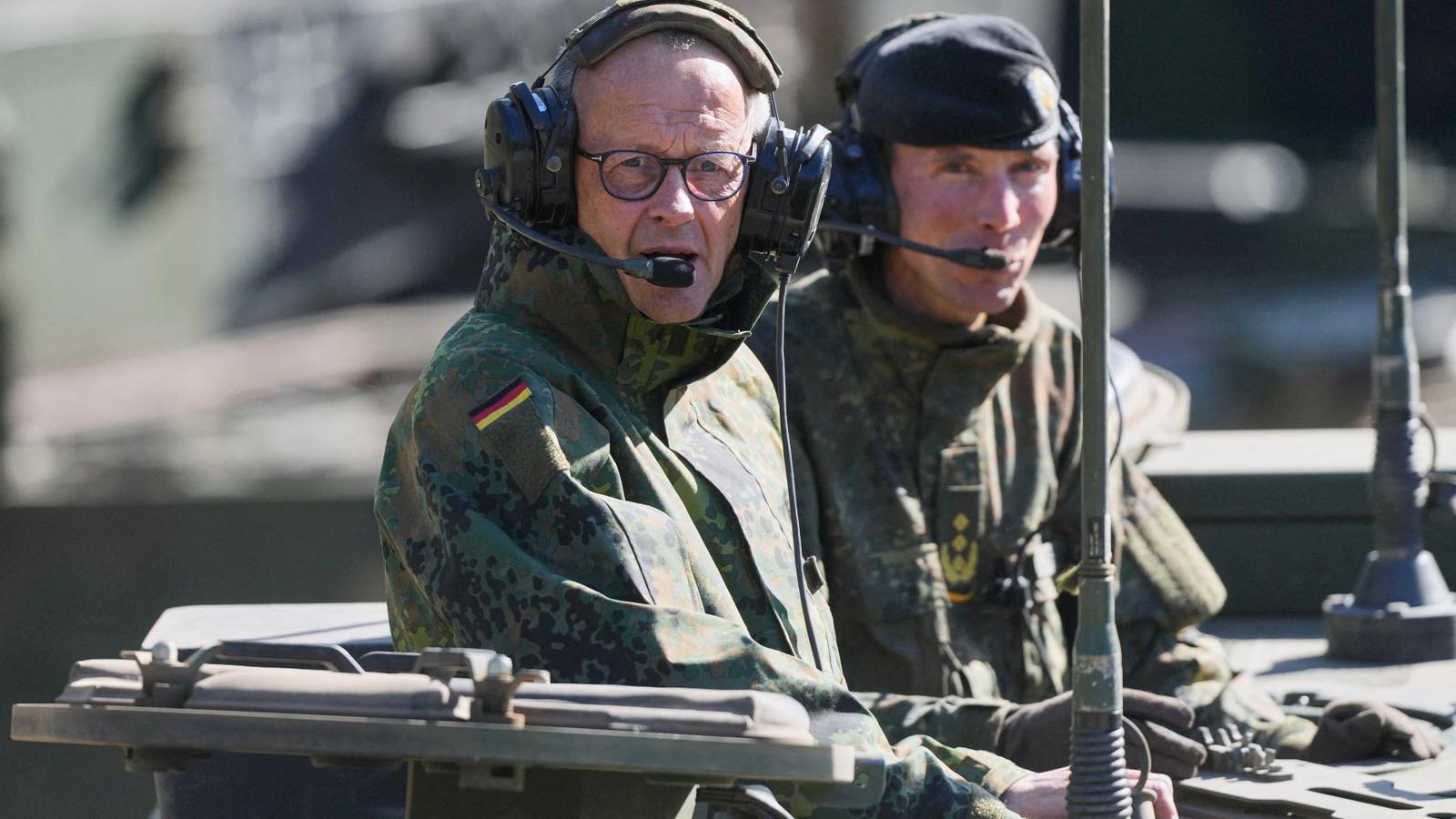
Precisely this week, Chancellor Merz appeared dressed in military uniform – what an image in Berlin!– and his government announced a massive rearmament to turn the army into a superpower. Germany wants to be the largest conventional force in Europe and establish a leadership role in a NATO that is once again wounded. More clues of the change of mindset in Berlin, which carries many taboos from past eras.
. The refrain will hardly sound familiar to Trump. On more than one occasion, he has confessed that he almost only listens to American music.
has one of the best – and most modern– armies in the world. If analyzed in purely military terms, the entry of Ukrainians into the community club would mean a significant leap in quality for Europe's capabilities.
At the origin of the tension between Berlin and Washington are Tehran and Germany's criticism of how the US has managed the war in Iran. Also, Merz's need to find an external culprit for the profound structural crisis Germany is experiencing, but that's another topic for now. The consequences for the United States of the very poorly calculated third Gulf War will be diverse and profound. It is paradoxical that it has been in Iran – and not in Ukraine or Gaza – where Europe has decided to hint at divorce with Trump, denying support to Hormuz and openly calling the joint operation by Washington and Tel Aviv illegal. If the war in Iran – now on hold but pending escalation – has been a relevant chapter in the European awakening, it would be good for the effect not to dissipate when Trump changes his mind and says that his German friends are indispensable partners. After all, after Iran, Cuba may come, but also Greenland or the definitive blow to Ukraine.
"Speak to me of today's hours. Don't speak to me of the past anymore. / Today I follow other paths. I made your arms a prison", sang Amelia Rodrigues, queen of fado, in Aquela rua. The stanza will hardly sound familiar to Trump. On more than one occasion, he has confessed that he almost only listens to American music.
