948 drones and 34 missiles: Russia launches its most massive attack against Ukraine since the start of the war
The Kremlin seeks to exhaust the war-stressed air defenses in Iran, and Kyiv tries to prevent it from benefiting from high oil and fertilizer prices.

-
CAT -
CAST
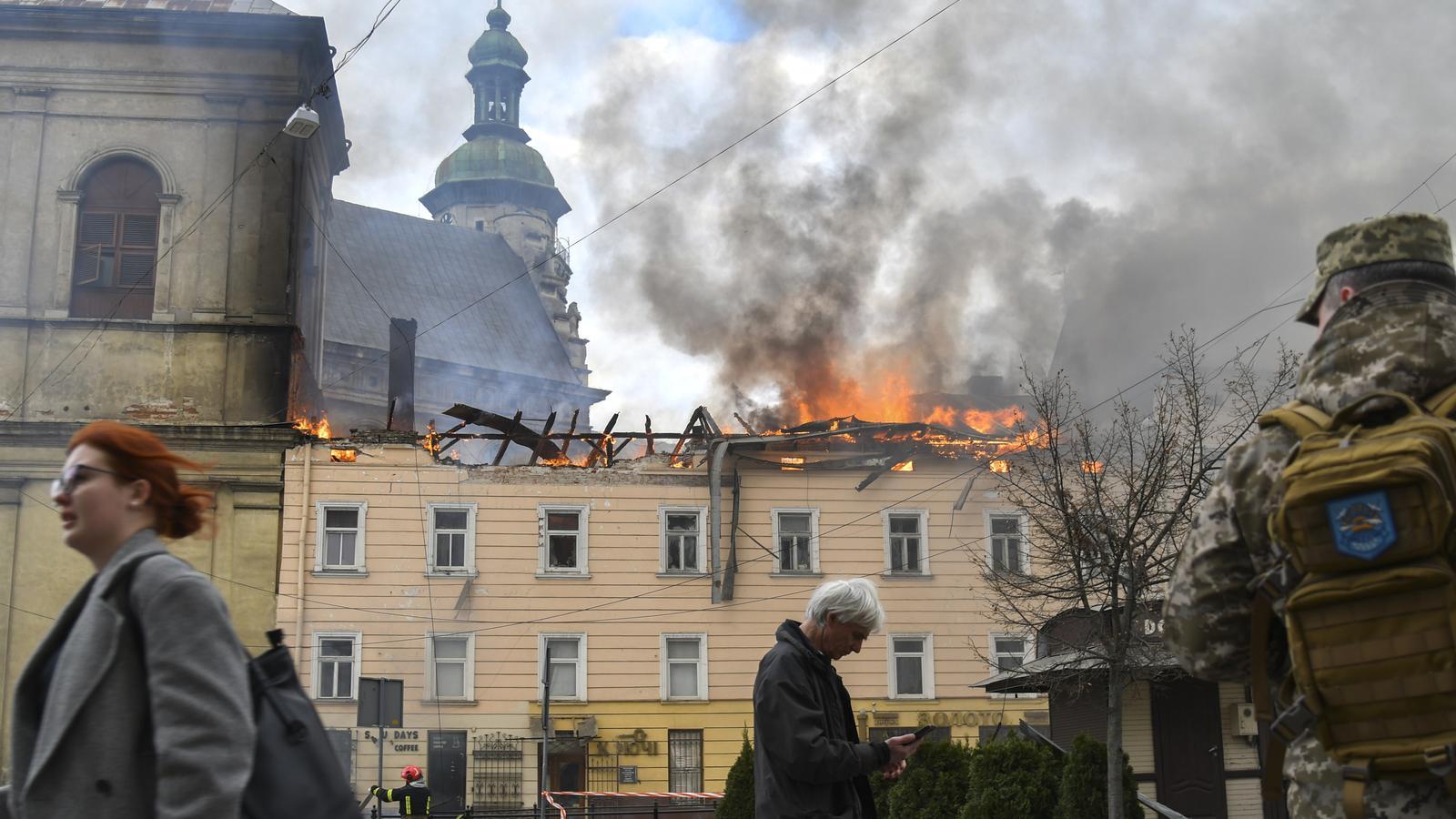
MoscowThe Russian military has carried out its most massive attack on Ukrainian cities since the start of the war. In 24 hours, it launched 948 drones and 34 missiles, killing at least four people and wounding around 40. The bombardment is aimed at weakening Kyiv's air defense systems, which rely on US Patriot missiles, now more difficult to replace due to the Middle East war. Meanwhile, Ukraine has again struck one of Russia's main export terminals, the Baltic port of Ust-Luga, in an attempt to stifle the Kremlin's growing revenues from oil and fertilizer sales.
The combined figure of 982 drones and missiles is approaching the thousand that Ukrainian commanders had warned Moscow would be capable of firing in a single day as early as the fall of 2025. The Russian army has launched the same number of drones and missiles as it would in every month of the war until August 2024. Furthermore, unlike most attacks, which take place at night, Russia has opted this time to extend the bombardment into daylight hours as well. Thus, in broad daylight, on Tuesday afternoon, a spectacular impact occurred against a UNESCO World Heritage Site in Lviv, one of the hardest-hit cities in western Ukraine. It was the Bernardine Monastery complex in the city center, where a fire broke out, and the damage is still being assessed.

Ukrainian military authorities point to a change in Russian strategy, which allows them to threaten more areas of Ukraine for longer periods and disproportionately affect civilian areas. As happened this time, Russian forces have been holding back missiles for several days to launch them suddenly amidst large waves of drones, hoping to more easily overwhelm air defenses. This tactic also offers the possibility of identifying vulnerabilities in protection systems for future attacks.
The timing is also not accidental. The Kremlin is aware that the United States is going all out against Iran and that The supply of Patriot interceptor missiles is becoming more complicated for Volodymyr ZelenskyFurthermore, a common pattern is repeated in the massive Ukrainian bombings: they take place on the eve of or immediately after peace negotiations, with the aim of influencing Donald Trump's position. In this case, it occurred just hours after talks between US and Ukrainian representatives in Florida.
Ukraine, against Russian oil
Kiiv is also aware of the global situation, and has therefore intensified its campaign against the Russian oil sector. After the US Treasury Department partially lifted sanctions on crude oil from Russia To address the global energy crisis, Ukraine has intensified attacks on enemy oil facilities. The aim is to prevent the Kremlin from profiting from rising hydrocarbon prices and using these unexpected revenues to finance its war effort. This is despite the fact that, for the time being, Moscow can only sell oil that was already in transit, stored on ships at sea.

The bombing of the port of Ust-Luga, in the Leningrad region, occurred early Wednesday morning. Russian authorities claim to have shot down 56 drones, but were unable to prevent the terminal from catching fire. This marks the second attack on a key infrastructure for the distribution of oil, coal, and fertilizers in four days. On Sunday, a drone also caused a fire at the port of Primorsk, on the opposite shore of the Gulf of Finland. The damage and the drone strikes forced the temporary halt of shipments at both Baltic facilities and affected 40% of Russia's crude oil export capacity.
In total, Ukraine has launched 386 drones in retaliation against 14 Russian regions in recent hours. In Leningrad, the regional government has opted to cut off mobile phone service to citizens as a security measure, and flights have been canceled at major airports around St. Petersburg. Meanwhile, Latvia and Estonia reported that two drones violated their airspace. Both crashed in their territory without causing injuries, although one of the devices collided with the chimney of an Estonian power plant. According to investigations, they were two Ukrainian drones heading towards Russian targets in the Baltic region.
