Air-raid shelters: spaces of memory and climatic breathing
The air-raid shelters of the Children's Gardens and La Carbonera in Girona allow you to get to know historical memory spaces and at the same time protect yourself from the heat

-
CAT -
CAST
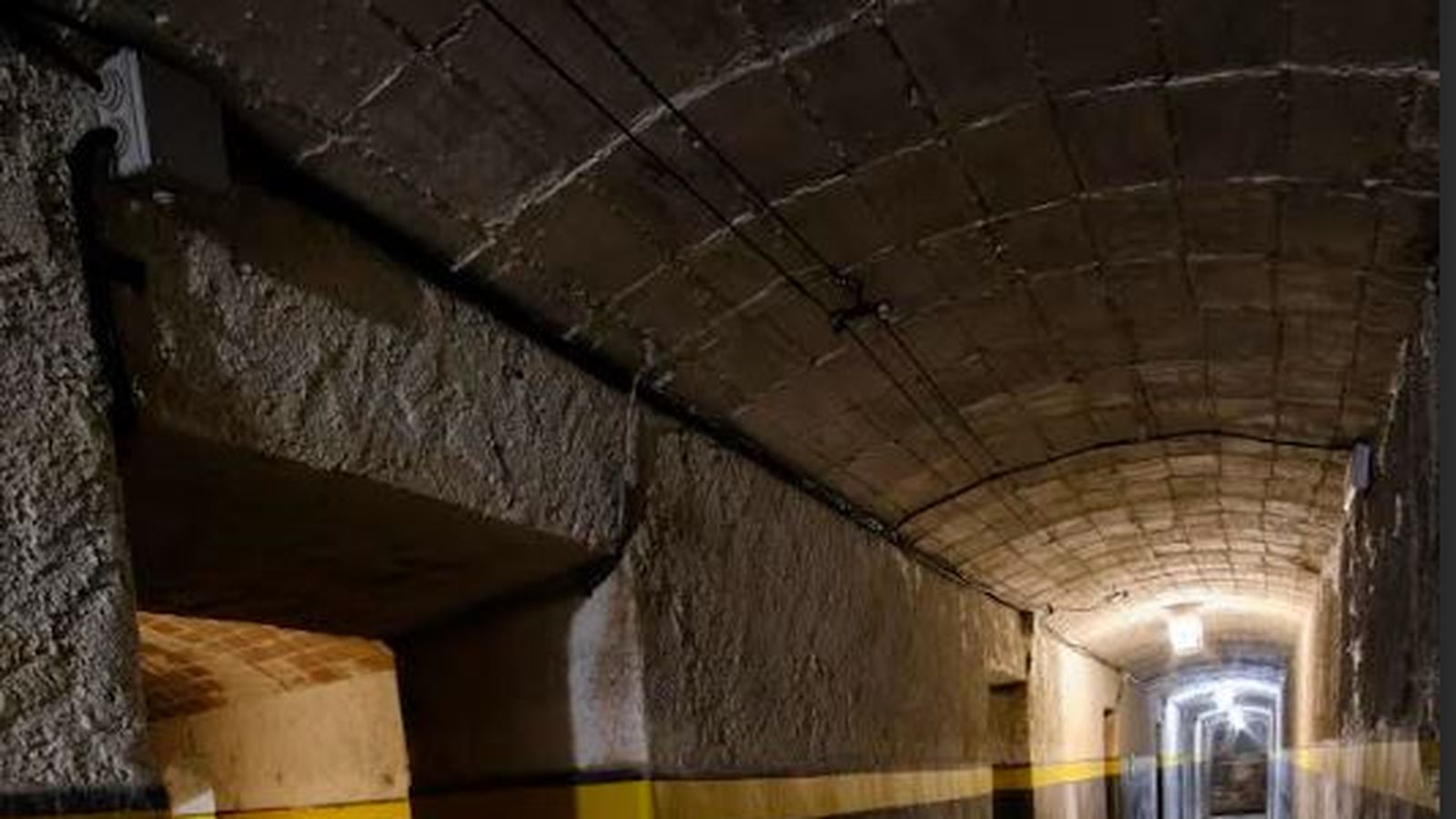
GironaThe dampness that seeped through the walls and the darkness that filled the narrow corridors and rooms of the air-raid shelter in the Jardins de la Infància in Girona were forever etched into the memory of the citizens who hid there when planes flew over and bombed the city during the Civil War. On days of inclement heat waves, visiting this basement, reconverted into a Democratic Memory Space of the Girona History Museum, allows one to learn how the people of Girona protected themselves against aerial attacks and, at the same time, enjoy the much-desired climatic comfort on days of suffocating temperatures.
The air-raid shelter in the Jardins de la Infància is open to the public every first Sunday of the month from 11 am to 1 pm, and also during guided tours, such as those that will take place on July 22 and August 19 under the title Bombed Girona, which also includes a tour inside the La Carbonera Cistern, also used as a shelter during the Civil War.
With electricity but very cold and damp
Located below the square that bears the same name, the Jardins de la Infància shelter occupies a useful area of 357.86 square meters, including corridors and stairs. It is the first shelter that was built and the only one preserved of the three that were created in Girona in 1938 to protect the population from aerial bombardments which, for the first time in history, were carried out systematically on the civilian population in the rear. Built with reinforced concrete, it could accommodate more than 700 people and was prepared to withstand the direct impact of a bomb weighing up to 100 kg. It was the only shelter in the city that had electric light, but it was a very cold and very damp place because rainwater filtered into it.
"When we heard the sirens announcing bombings, everyone ran desperately towards the shelter," recalls Montserrat Dalmau in the audiovisual Hidden underground, which is shown in one of the shelter's rooms. "When we arrived at the shelter door, we couldn't get in because there were so many people, everyone was pushing down the stairs, and when you got there it was full of people lying on the ground, it was chaos," recounts Leonarda Masset. The former official chronicler of the city, Enric Mirambell, remembers in the documentary that he resisted entering that shelter because he was afraid of it, but he dared one day when planes were flying over the sky of Girona and bombs began to fall. "That impressed me, the narrow corridors, the darkness..." recalls Mirambell in the documentary.

The same conditions of dim light, humidity, and water leaks are maintained at La Carbonera, in the old convent of Capuchin friars of Sant Antoni de Pàdua, which during the Civil War was adapted as an air-raid shelter due to its peculiar construction characteristics: barrel vault and very thick walls, partly excavated in the rock itself. It is also part of the Girona History Museum and opens to the public when guided tours are organized and when exhibitions are set up, such as the one opening on July 9th about the coast of Cadaqués.
