The comic strip is everyone's heritage

-
CAT -
CAST
No society can survive without respecting and preserving its heritage. That is why heritage is always controversial, always provokes tensions, is always disputed, claimed and, when there is conflict, eliminated. It is what defines us as a people and what makes us universal, what ties us to our past and what allows us to glimpse the future. Of heritages, however, there are many types. It makes no sense today to relate it only to stone, buildings, archives or classical arts such as painting or sculpture. Cinema, photography, video and, of course, comics have been part of it for many years. In fact, in the digital world we live in, some may wrongly think that they are also part of the past.
The newspaper you hold in your hands today wants to celebrate this heritage and at the same time vindicate the role of paper as a format that allows for a type of reading, and meta-reading, that is hard to find in the digital environment. The narrative of comics is closely linked to paper, to turning one page after another, to looking at the panel or the page as a whole. At the same time, the printed newspaper has a distribution that orders sections and news, sets hierarchies and establishes relationships, sought or sometimes occasional. When, as is the case today or in other newspapers we have made in collaboration with artists or museums, this internal order of news according to its relevance is combined with comic images that in principle are not designed for that specific context, the clash allows for multiplying readings. Not only those that the editorial team may have made when selecting them, but also those that each reader makes.
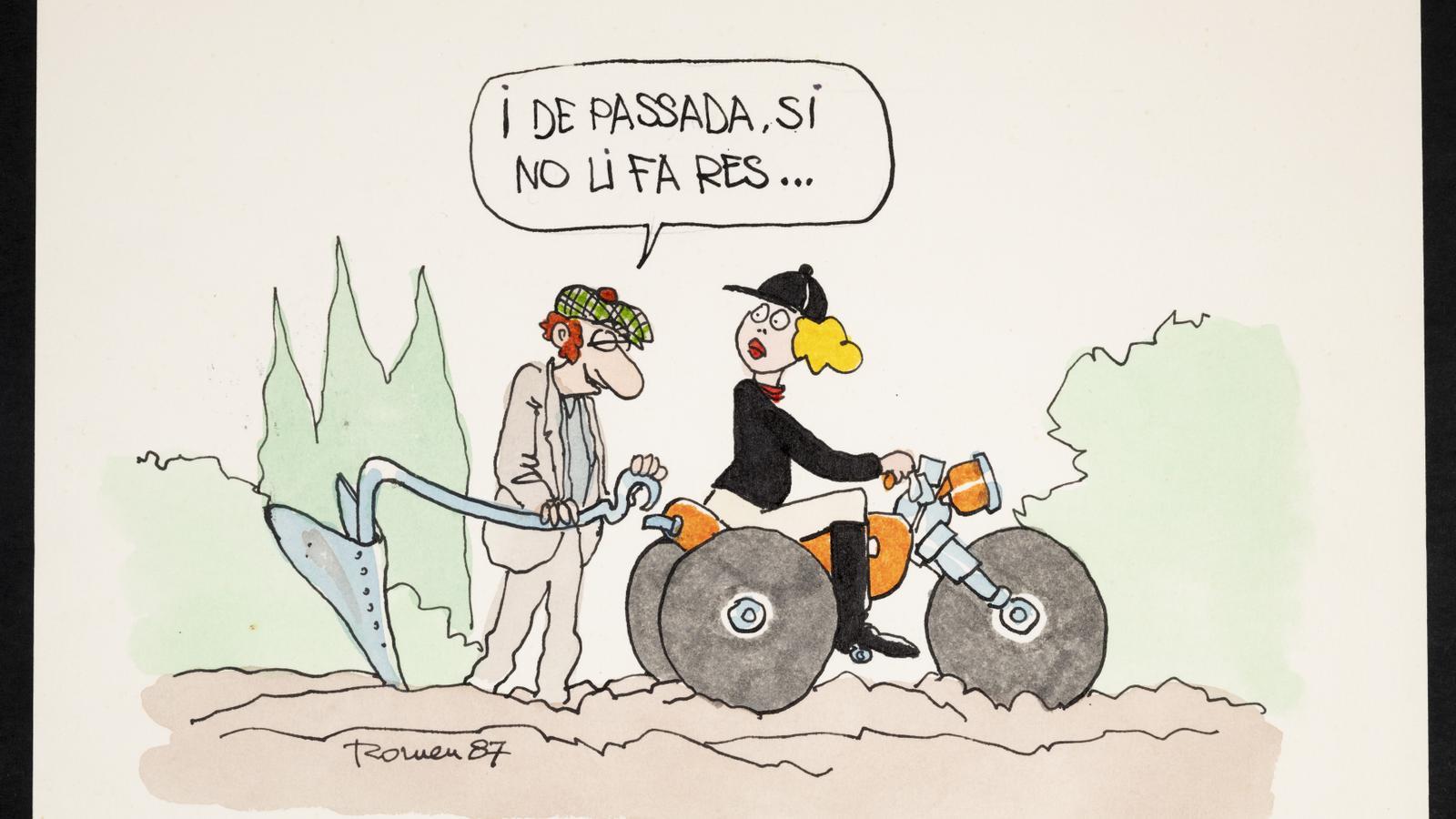
Indeed, if on other occasions we have celebrated comics by collaborating with active cartoonists who illustrated the newspaper live, on this occasion we have focused on the heritage of Catalan comics. In collaboration with the Generalitat de Catalunya, we have wanted to make known a small part of the increasingly extensive collection of national comics and illustration.
Since the 19th century, Catalonia has been an important center of the comic industry. From La Campana de Gràcia to El Jueves, from En Patufet to TBO, through all the magazines of Bruguera, El Víbora or Cairo, among many others. We have top-level cartoonists, from the historic Junceda or Apa to the current Raquel Gu or Manel Fontdevila, through classics like Coll, Perich, Cesc, Romeu or Gallardo. With all of them, every day, on the back cover of El ARA, the uncombustible Miquel Ferreres connects.
It is good news that there is finally a national comic collection and that it is intended to be given relevance. Since 2019, the Generalitat has had various commissions dedicated to comics and makes annual purchases that, according to the requests and needs of the various museum centers, serve to complement the collections. For years, comic lovers had been demanding more attention to the discipline, and for a time there was talk of creating a separate museum that did not materialize: many archives of the great Catalan cartoonists disappeared or were acquired by collectors from abroad. As a result of that alarm, work began with the aim that comics would not be a fungus in a separate museum, but rather integrated with equal conditions into the discourse and collections of various museums. This collection that has been acquired, which recovers classic cartoonists and adds current authors, is complemented by purchases made by the centers themselves, which, for example, in the case of both the Museu Nacional de Catalunya and the Biblioteca Nacional, have been going on for a long time. All in all, then, we are succeeding, step by step, in safeguarding an important part of the country's comic heritage, which is like saying a part of our history.
