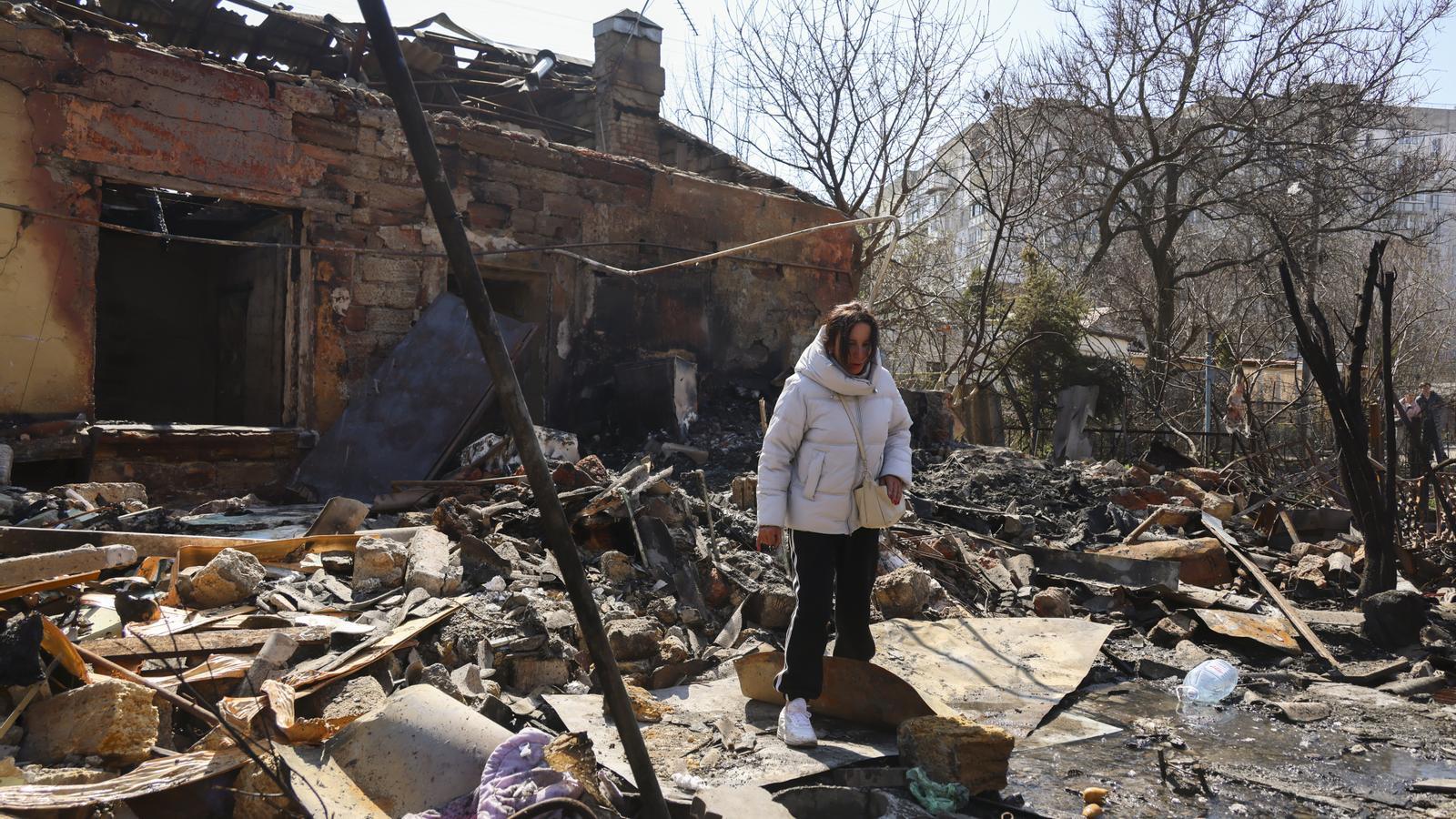

Vladimir Putin has launched his spring offensive in Ukraine. Taking advantage of a dry March after a brutal winter, the Russian army has intensified attacks against the last major Ukrainian-controlled cities in Donbas, Sloviansk and Kramatorsk, with assault operations exceeding 600 attacks in four days and battalions of up to 500 soldiers. The objective is clear: to conquer what the military calls the Donetsk fortress belt before the diplomatic path, if it ever materializes, freezes the conflict map.
It is no coincidence that Putin has chosen this moment. While Donald Trump is bogged down in a war against Iran that was supposed to be short and its duration is still unknown, Ukraine has disappeared from Washington's agenda. Peace negotiations are stalled. And the economic consequences of the conflict in the Middle East – the rise in oil prices, the lifting of sanctions on Russian crude – have given oxygen precisely to Putin's Russia. The Kremlin breathes thanks to the chaos Trump generates.
However, that Putin has a window of opportunity does not mean he is successfully seizing it. The Russian army suffers more than 1,500 casualties daily, and recruitment is becoming increasingly difficult: the salaries and bonuses that until recently attracted more than a thousand volunteers a day are no longer sufficient. The weariness of war is evident. Elon Musk's veto on the Russian military use of Starlink has deprived Moscow of real-time intelligence and has allowed Ukraine to recapture more than 400 square kilometers in the south. And even Putin's latest major propaganda conquest, Kupiansk, is showing cracks. Pro-Russian bloggers admit that the city is lost.
But the attrition is mutual and Ukraine's situation is also not hopeful. Without the prospect of negotiation, without a firm commitment from the United States and with Europe still hesitating about how far it is willing to go, Zelensky holds on with a defense that is unsustainable in the long term. Ukrainian society is increasingly tired and does not have the same possibilities of sending cannon fodder to the front. The war of attrition is not won by those who advance, but by those who resist the longest. And resisting, when you are the smaller of the two parties in conflict, requires support.
This is where Europe must look in the mirror. It can no longer be trusted that Trump will mediate anything: the United States, under his leadership, has gone from possible arbitrator to destabilizing factor, to agent of chaos. The rise in the CPI to 3.3% year-on-year this March (according to provisional data released by the INE), uncertainty in air transport, volatility in fuel prices: all this already affects Catalan citizens. And, meanwhile, if Europe does not assume a central role in resolving the Ukrainian conflict, Putin will continue to take advantage of every American distraction to try to advance positions and consolidate faits accomplis that hardly any peace agreement will be able to reverse. The window of opportunity is not just for the Kremlin. It is also for Europe. And it is closing.
