A summer of climate records
The hottest month and day in history, or the lowest Antarctic sea‑ice extent: some of the milestones left by the climate emergency in 2023


-
CAT -
CAST
BarcelonaIt’s not a race, but if it were, the climate emergency wouldn’t just be winning—it would be doing so with one feat after another. “It’s as if every year a new runner appeared and broke a record, and did so by a wide margin, and the following year it was broken again—that wouldn’t be normal,” says Francisco Doblas, head of the Earth Sciences Department at the Barcelona Supercomputing Center (BSC), in a vivid analogy. The paradox is that, in this case, record highs are not achievements to applaud, let alone celebrate.
Summer isn’t over yet, but we have already broken several historic records that confirm—if more evidence were needed—the severity of the climate crisis. The hottest month on record, the lowest extent of Antarctic sea ice, and the highest temperature in the North Atlantic are some of the milestones that have left climate scientists alarmed, though not entirely surprised. “What’s surprising is that the projections are conservative. According to IPCC models [UN climate scientists], this was expected to happen, but not so soon,” notes Jordi Solé, a professor at the University of Barcelona and an associate researcher at CREAF.
Solé also points to the historic heat peak recorded in Figueres on 18 July, at 45.3°C—the highest temperature ever measured in Catalonia. “Projections place the worst-case scenarios in Catalonia at temperatures of 50°C by the end of the century, and above 40°C from 2035–2040 onwards,” he says. The Figueres spike is an early preview of what scientists had projected for later: “We didn’t expect such high temperatures so soon,” Solé stresses. Doblas also notes that the BSC published its forecasts in March for the next ten years, which stated “that many records would be broken over that period.” Only a few months have passed, and they are already here.
Yet despite the speed at which the worst-case scenarios are materializing, scientists also insist that there is still time to avoid climate catastrophe. All that is needed is to “reduce greenhouse gas emissions to zero,” the experts agree. Ideally, we should also remove part of the CO2 already in the atmosphere. The charts from the summer of 2023 could not be clearer.
Global temperature
Anys més freds que la mitjana
Anys més calorosos que la mitjana
17 ºC
2023
16,8
16,6
16,4
16,2
16,0
15,8
15,6
15,4
15,2
1940
1950
1960
1970
1980
1990
2000
2010
2020
Anys més freds que la mitjana
Anys més calorosos que la mitjana
2023
17 ºC
16,8
16,6
16,4
16,2
16,0
15,8
15,6
15,4
15,2
1940
1950
1960
1970
1980
1990
2000
2010
2020
Anys més freds que la mitjana
Anys més calorosos que la mitjana
2023
17 ºC
16,8
16,6
16,4
16,2
16,0
15,8
15,6
15,4
15,2
1940
1950
1960
1970
1980
1990
2000
2010
2020
The hottest month in 120,000 years
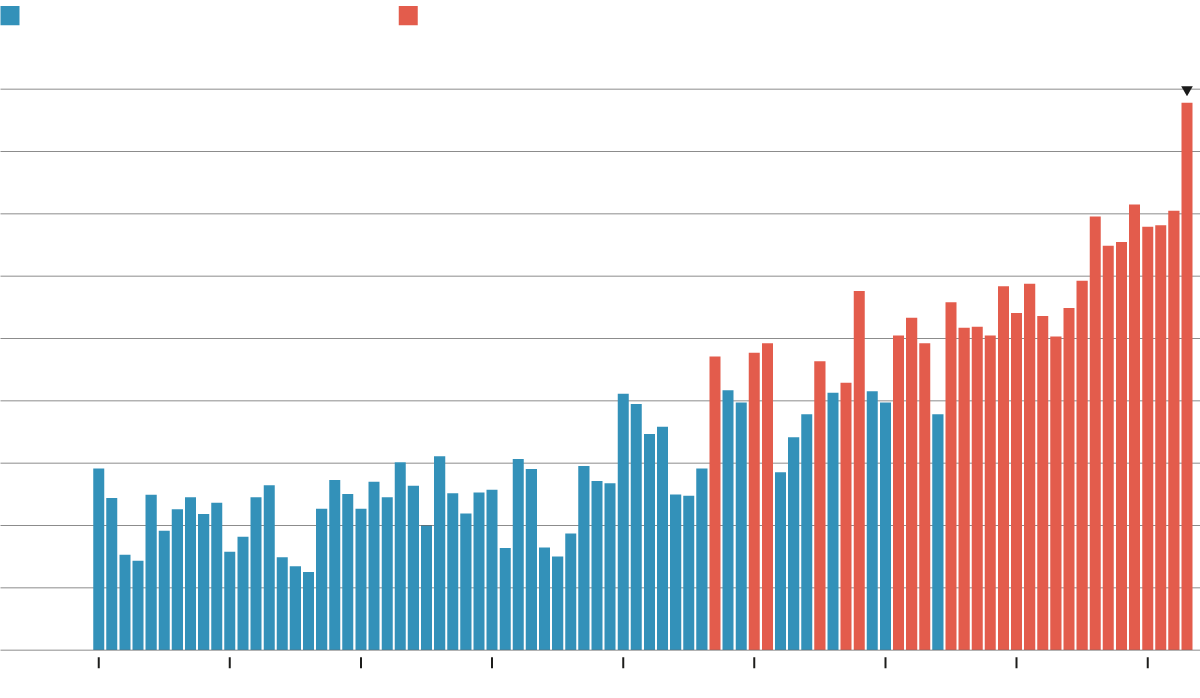
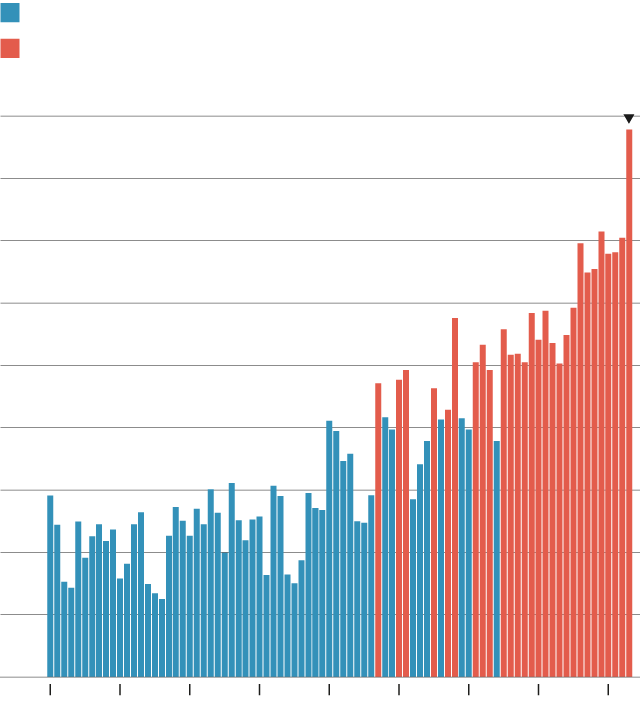
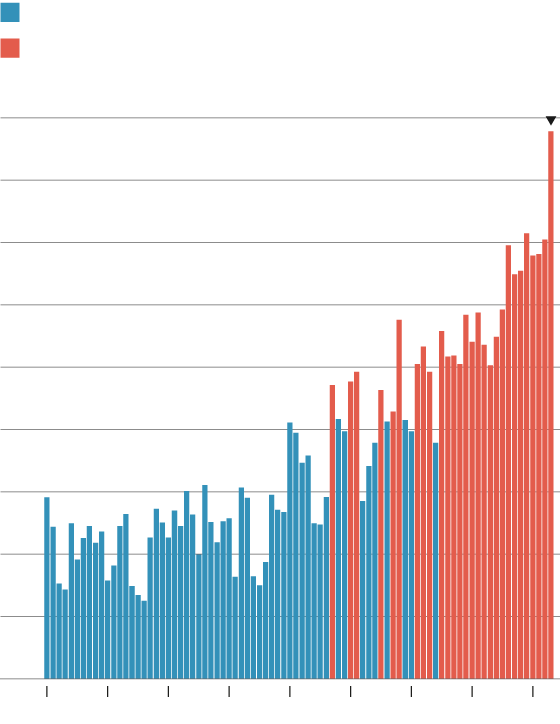
The July we’ve just left behind is the hottest month ever recorded. After also setting the record for the warmest June earlier in 2023, July became not only the hottest July but the hottest month in history. The global monthly average came very close to 17°C, above the previous record set in July 2019, at just over 16.6°C. In fact, the first three weeks of July temporarily exceeded the 1.5°C global warming threshold (1.5°C above the average temperature of the pre-industrial era, between 1850 and 1900). This does not mean the Paris Agreement has already been breached: to do so, that 1.5°C threshold would need to be exceeded as an average over several consecutive years.
This is confirmed by data from the Copernicus Climate Change Service and the World Meteorological Organization (WMO), which led UN Secretary-General António Guterres to speak of “the era of global boiling.” But a study led by the University of Leipzig went further, adding that “one would have to go back as far as the Eemian period, around 120,000 years ago, to find similar conditions” to those of this July, according to Karsten Haustein, a researcher at the university and lead author of the study.
Although the WMO and the BSC had already warned at the start of the year that this could happen, and cautioned that the El Niño phenomenon would worsen the climate crisis, Doblas notes that El Niño had little to do with July’s record. “In terms of both land surface temperatures and sea surface temperatures, this July has been extraordinary—especially considering that El Niño has not yet fully developed. The peak of this phenomenon will come next December and January,” he explains.
Ice at the South Pole
22 milions
20
18
Cada línia mostra un
cicle anual de gel marí
16
Juliol 2023
L’extensió de gel de l’Antàrtida està molt per sota del que ho estaria normalment a l’hivern
14
La línia de punts és la mitjana de 1979 a 2010
12
10
8
6
4
2
0
gener
febrer
març
abril
maig
juny
juliol
agost
set.
octubre
nov.
des.
Juliol 2023
Concentració mitjana de gel marí
0%
100%
Extensió més habitual del gel del 1981 al 2010
mar de
Weddell
Antàrtida
mar de Ross
El gel marí no s'endinsa tant al mar de Ross com habitualment
22 milions
Cada línia mostra un
cicle anual de gel marí
20
18
16
14
La línia de punts és la mitjana de 1979 a 2010
12
Juliol 2023
L’extensió de gel de l’Antàrtida està molt per sota del que ho estaria normalment a l’hivern
10
8
6
4
2
0
abril
nov.
des.
març
maig
juliol
agost
set.
octubre
gener
febrer
juny
Juliol 2023
Concentració mitjana de gel marí
0%
100%
Extensió més habitual del gel del 1981 al 2010
mar de
Weddell
Antàrtida
mar de Ross
El gel marí no s'endinsa tant al mar de Ross com habitualment
22 milions
Cada línia mostra un
cicle anual de gel marí
20
18
16
14
La línia de punts és la mitjana de 1979 a 2010
12
Juliol 2023
L’extensió de gel de l’Antàrtida està molt per sota del que ho estaria normalment a l’hivern
10
8
6
4
2
0
abril
agost
set.
octubre
nov.
des.
juny
gener
febrer
març
maig
juliol
Juliol 2023
Concentració mitjana de gel marí
0%
100%
Extensió més habitual del gel del 1981 al 2010
mar de
Weddell
Antàrtida
mar de Ross
El gel marí no s'endinsa tant al mar de Ross com habitualment
The lowest Antarctic sea-ice extent on record
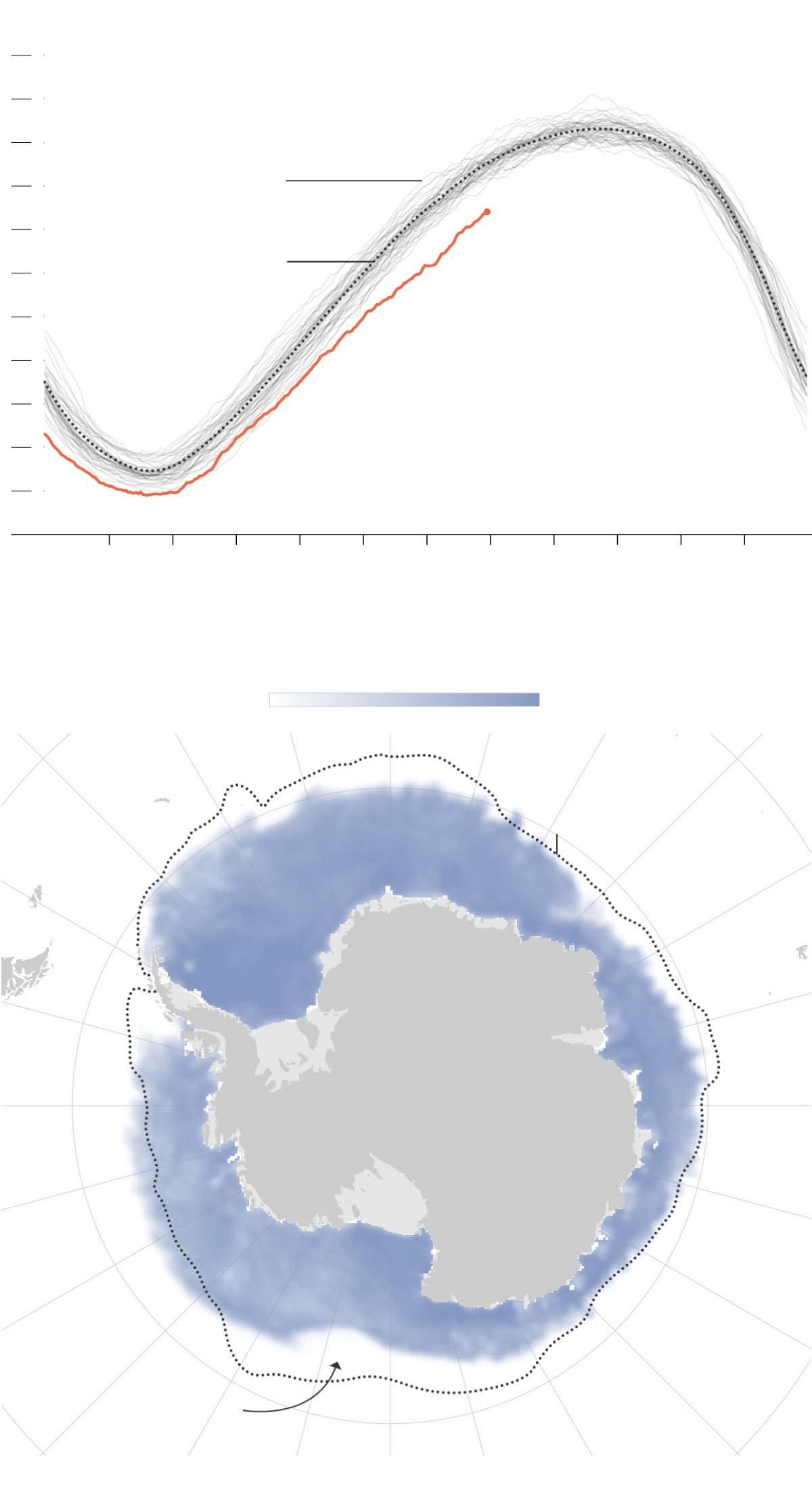
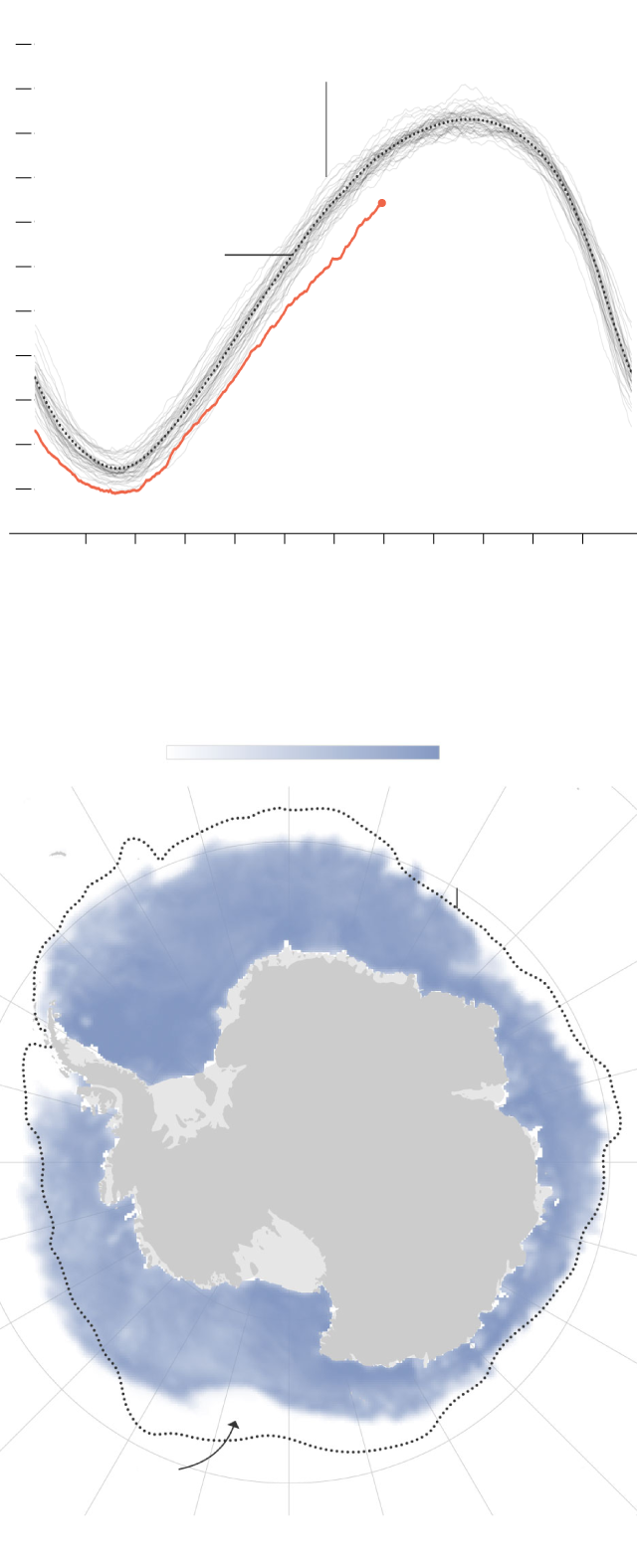
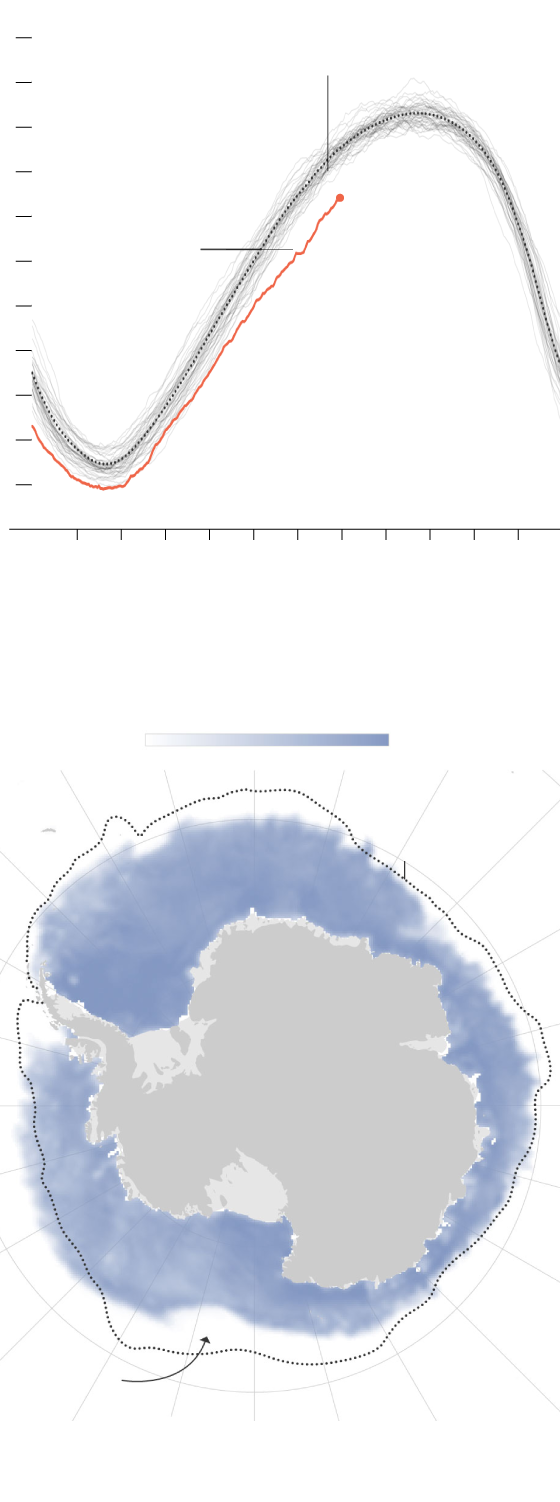
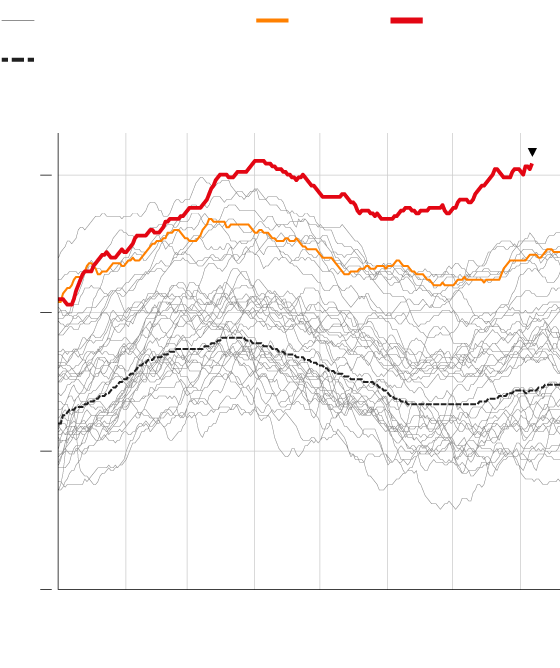
If summer in the Northern Hemisphere is breaking records, winter in the Southern Hemisphere is not far behind. In Antarctica, specifically, by the end of June sea ice covered 11.7 million square kilometres—almost one million fewer than is typical for this time of year (the 40-year observational average), according to the US National Snow and Ice Data Center (NSIDC). In fact, the figure is nearly 800,000 square kilometres below the previous record, set in 2022.
“This is very worrying, because polar ice is melting at a much faster rate than was thought a decade ago. And this ice acts as a mirror (the albedo effect) for the sun’s energy; if ice declines, the ocean absorbs more solar radiation, creating a feedback effect,” explains Solé. The melting of Antarctica—along with Greenland—is also the main driver of another critical consequence of the climate crisis: rising sea levels.
Oceans
2022
2023
Mitjana del període 1982-2011
Del 1981 al 2021
ºC
9 d’agost
21
20,5
20
19,5
gener
febrer
març
abril
maig
juny
juliol
agost
set.
octubre
nov.
des.
2022
2023
Del 1981 al 2021
Mitjana del període 1982-2011
ºC
9 d’agost
21
20,5
20
19,5
maig
agost
gener
febrer
abril
juliol
març
juny
2022
2023
Del 1981 al 2021
Mitjana del període 1982-2011
ºC
9 d’agost
21
20,5
20
19,5
febrer
març
abril
maig
juny
juliol
ag.
gener
2016
2023
Del 1970 fins al 2020
ºC
31 de juliol
21
20,5
20
19,5
gener
febrer
març
abril
maig
juny
juliol
agost
set.
octubre
nov.
des.
2016
2023
Del 1970 al 2020
ºC
31 de juliol
21
20,5
20
19,5
gener
febrer
març
abril
maig
juny
juliol
2016
2023
Del 1970 al 2020
ºC
31 de juliol
21
20,5
20
19,5
gener
febrer
març
abril
maig
juny
juliol
The highest ocean temperature ever recorded
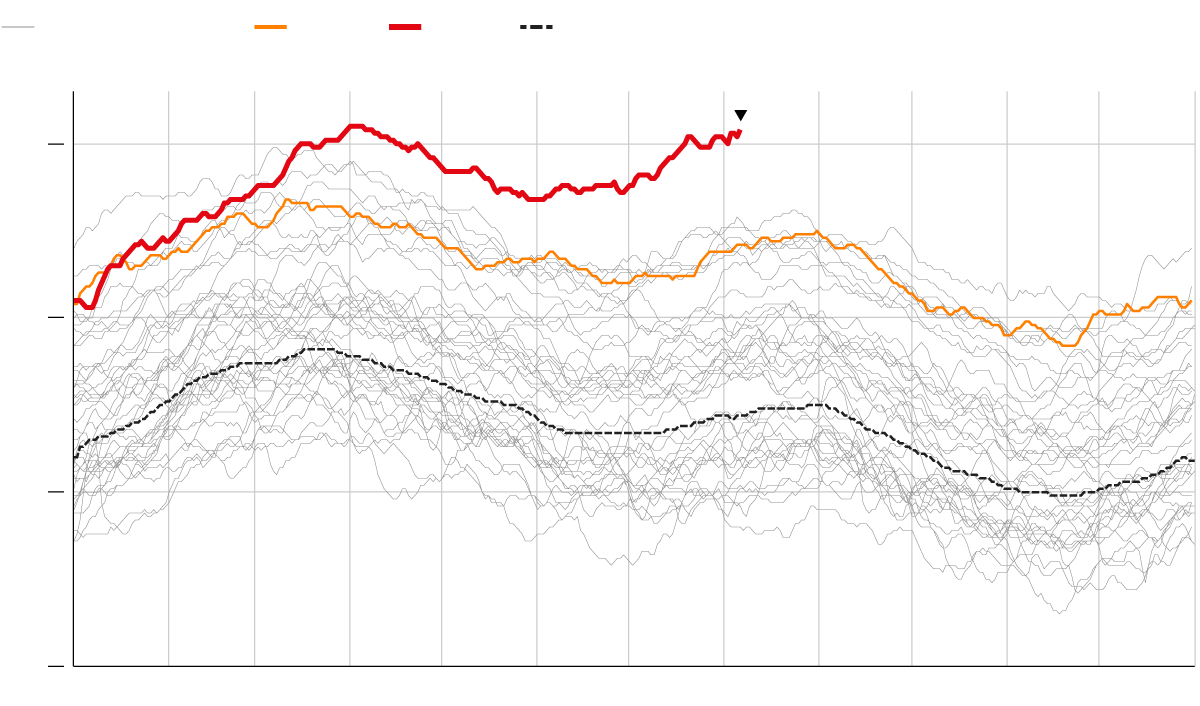
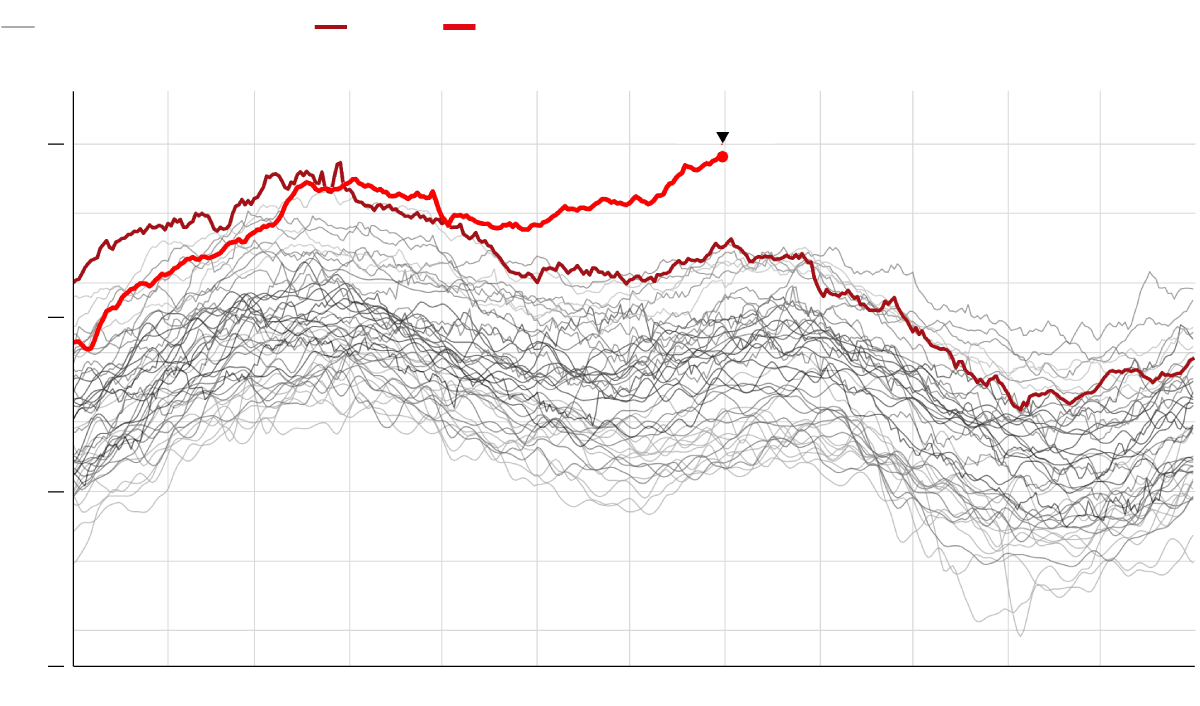
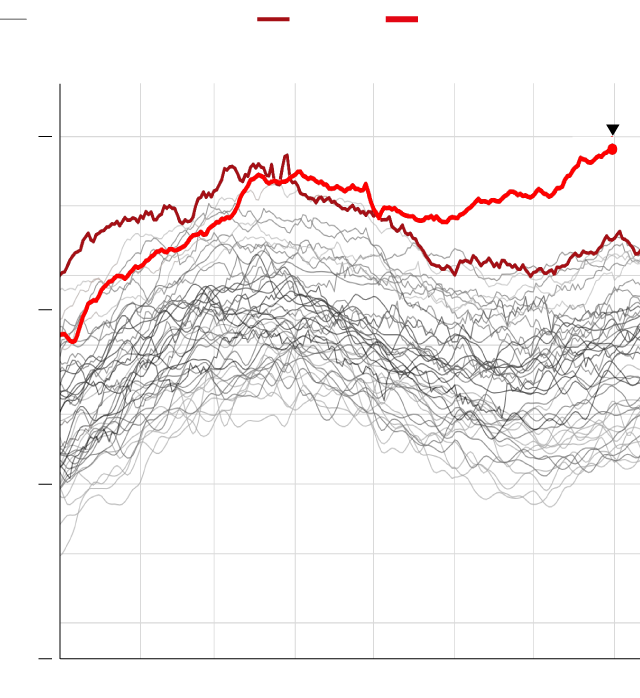
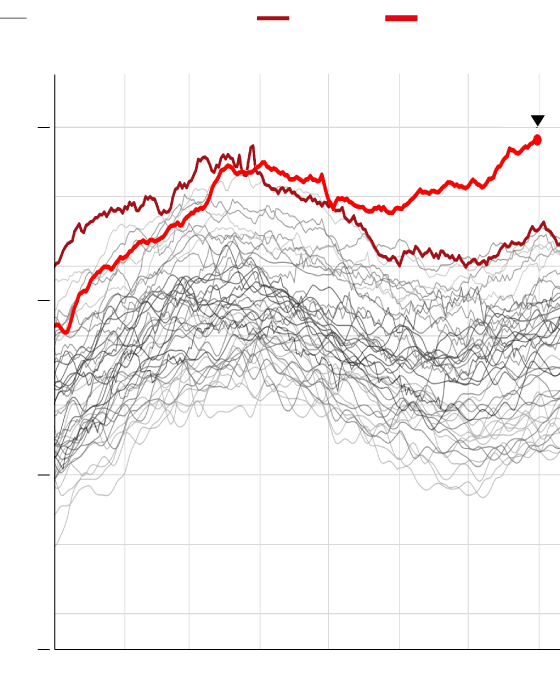
Sea‑surface temperature also broke records this summer. According to data from Copernicus, the European Union’s Earth observation programme, the historical record for global ocean temperature was surpassed on 31 July, reaching 20.96°C (0.01°C higher than the previous record, set in March 2016, at 20.95°C). The monthly global ocean average was also 0.51°C above the usual temperature for the 1991–2020 reference period.
European figures, however, differ slightly from those produced in North America, yet both place the record ocean‑temperature peak in 2023. The US National Oceanic and Atmospheric Administration (NOAA) detected a global average sea‑surface temperature of 21.1°C on 3 April, assigning the historical record to that date, with a figure higher than Copernicus’s. “Different datasets are produced in different ways and, therefore, will not give exactly the same estimates for individual months or years,” a Copernicus spokesperson explains in this newspaper. But whether in April or July, at 21.1°C or 20.96°C, one thing is clear: global ocean temperature has never been this high.
The Mediterranean has also broken its record for the past four decades: this July the average reached 28.4°C, exceeding the previous peak, recorded in August 2003, of 28.25°C. And these are only monthly averages, meaning that in some spots the water was extremely hot. “This is an additional problem, because the Mediterranean acts as a climate buffer in our region,” says the CREAF researcher, who clearly sees a "trend towards tropicalization" of the Mediterranean climate.
Atlantic
+1,75
2023
2000-09
2020-22
1990-99
+1,50
2010-19
1979-89
+1,25
+1
+0,75
+0,50
+0,25
0
-0,25
-0,50
-0,75
-1
-1,25
-1,50
gener
febrer
març
abril
maig
juny
juliol
agost
set.
octubre
nov.
des.
+1,75
2023
2000-09
2020-22
1990-99
+1,50
2010-19
1979-89
+1,25
+1
+0,75
+0,50
+0,25
0
-0,25
-0,50
-0,75
-1
-1,25
-1,50
gener
febrer
març
abril
maig
juny
[retall de la primera meitat de l’any a la versió mòbil del gràfic]
+1,75
2023
2000-09
2020-22
1990-99
+1,50
2010-19
1979-89
+1,25
+1
+0,75
+0,50
+0,25
0
-0,25
-0,50
-0,75
-1
-1,25
-1,50
gener
febrer
març
abril
maig
juny
[retall de la primera meitat de l’any a la versió mòbil del gràfic]
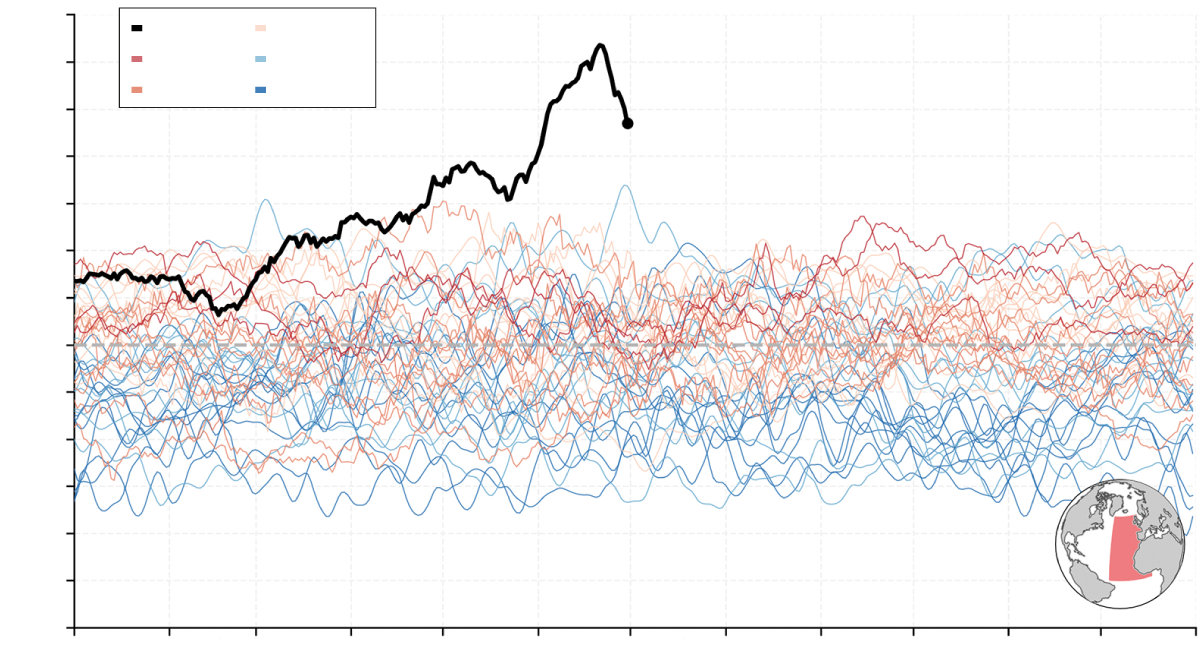
The warmest North Atlantic on record
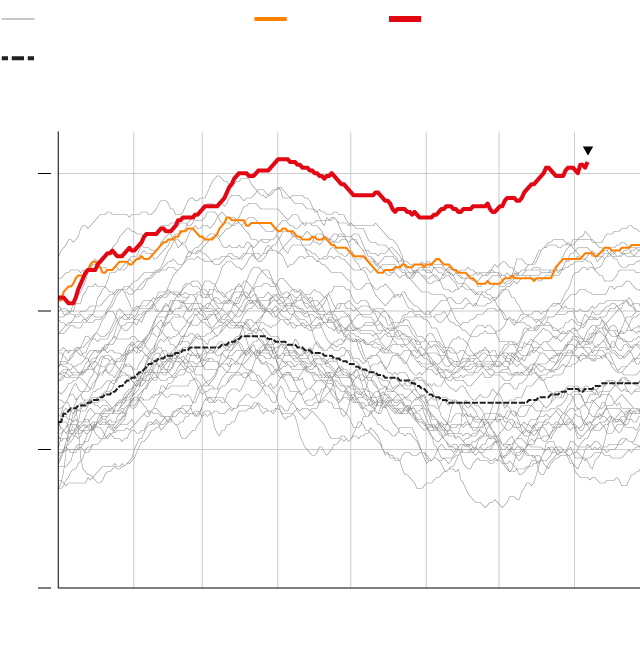
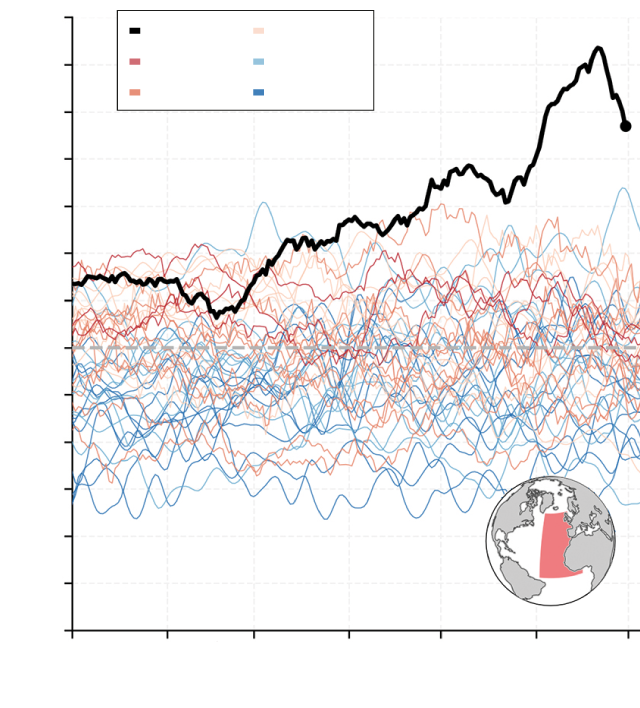
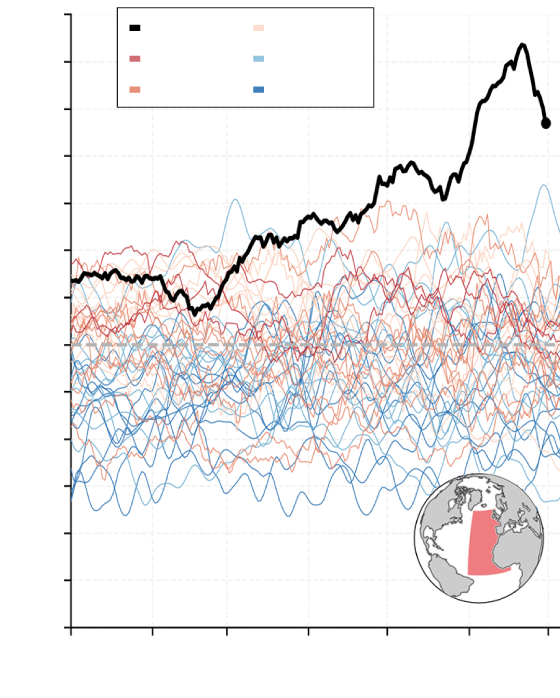
Yet another piece of data that has particularly surprised and alarmed scientists is the temperature of the water in the North Atlantic. At the end of June, an unusual and intense heat anomaly emerged in the part of the North Atlantic closest to Europe, where sea‑surface temperatures reached more than 1.5°C above the usual level. In July, the anomaly remained at about 1.05°C above the long‑term average. “This has two important impacts,” explains Solé: “one on the circulation of ocean currents that redistribute energy across the planet, and another, more immediate, on the biosphere—that is, on all marine organisms, some of which cannot survive such high temperatures, like corals.”
A study published that same summer warned that [the shutdown of the Atlantic ocean currents could arrive much sooner than previously expected]. For Solé, this summer’s anomaly in the North Atlantic may be the most worrying of all, given how crucial these Atlantic currents are for regulating global climate. Even so, he stresses that even if the most pessimistic projections of that study materialise, the outcome would not be anything like the scenario depicted in the film The Day After Tomorrow, a fictional story that hinges precisely on this scenario but without strict scientific rigour.
Heatwaves and spikes
6 de juliol
17,08 °C
Rècord de temparatura mitjana global
18 de juliol
Alt Empordà, Catalunya
45,4 ºC
16 de juliol
Sanbao, Xina
52,2 °C
25 de juliol
Kuçovë, Albània
44 ºC
22 de juny
Ashvaz, Iran
54 ºC
(Empata amb el rècord del 29 de juny de 2017 a Dashte Lut)
6 de juliol
17,08 °C
Rècord de temparatura mitjana global
18 de juliol
Alt Empordà, Catalunya
45,4 ºC
25 de juliol
Kuçovë, Albània
44 ºC
22 de juny
Ashvaz, Iran
54 ºC
16 de juliol
Sanbao, Xina
52,2 °C
(Empata amb el rècord del 29 de juny de 2017 a Dashte Lut)
6 de juliol
17,08 °C
Rècord de temparatura mitjana global
18 de juliol
Alt Empordà, Catalunya
45,4 ºC
25 de juliol
Kuçovë, Albània
44 ºC
22 de juny
Ashvaz, Iran
54 ºC
16 de juliol
Sanbao, Xina
52,2 °C
(Empata amb el rècord del 29 de juny de 2017 a Dashte Lut)
The hottest day in history and some record-breaking peaks
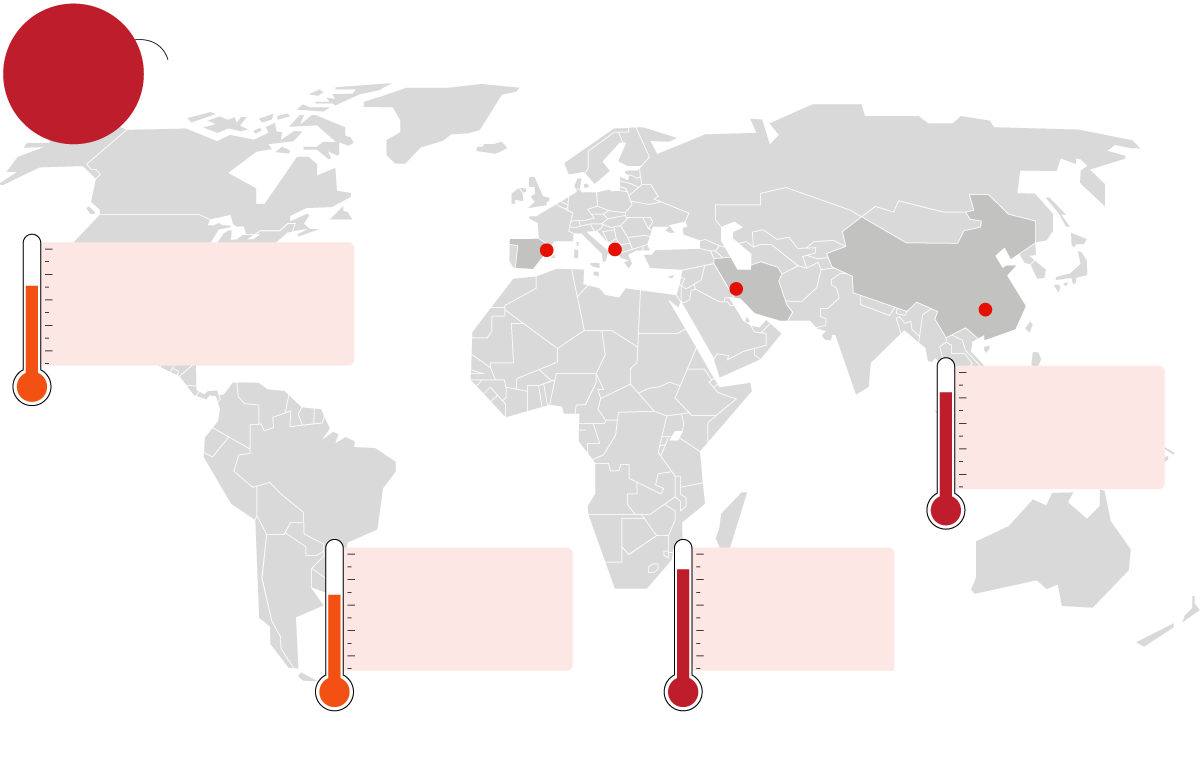
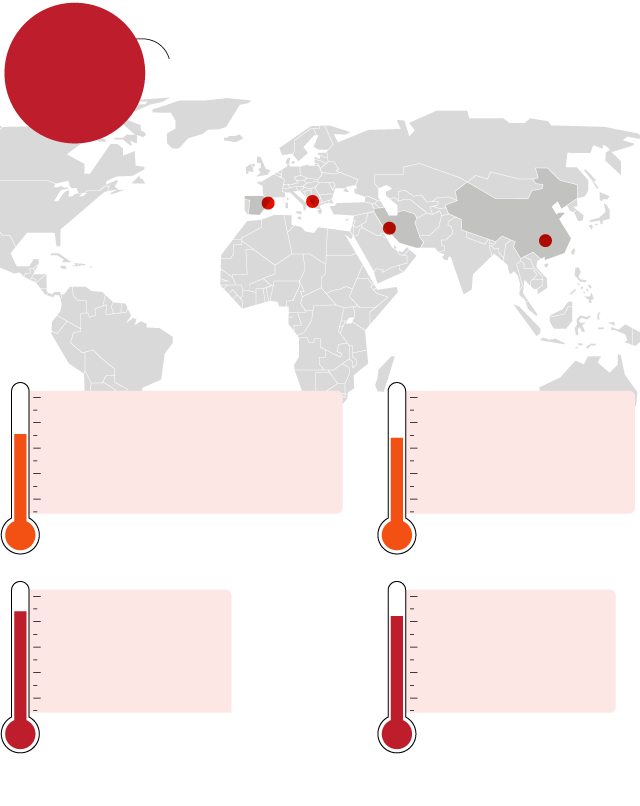
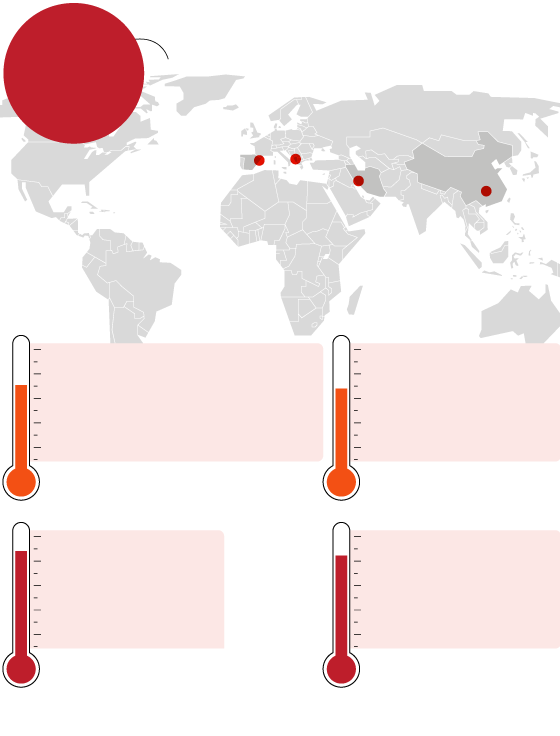
This summer of 2023 also has the dubious distinction of recording the hottest day in human history, at least according to the scientific record we have so far: on 6 July, the global average surface temperature reached 17.08°C, according to Copernicus. This was accompanied by several other record‑breaking peaks, such as the one in Catalonia on 18 July. In China as well a national record was broken: the 52.2°C measured in Sanbao on 16 July is the highest temperature ever recorded in the Asian giant.
The world’s all‑time record for a single‑day maximum still belongs to Death Valley, California, in 1913, at 56.7°C, although some meteorologists question that figure. This same location is the only point on Earth to have exceeded 54.4°C more than once, including in 2020. But not in 2023, at least according to official data. A historic 54°C was reached instead in an Iranian city on 22 June, a value that had only occurred once before in the country, in 2017. It should be noted, however, that in Iran even higher figures have been recorded for the heat index or “feels‑like” temperature, which combines air temperature and humidity.
“Although the absolute heat record in Europe has not been broken [the historic peak still belongs to Sicily, with 48.8°C in 2021], the most striking thing is the sheer number of simultaneous heatwaves that have occurred across the northern hemisphere, as well as marine heatwaves, which have been highly unusual in June and July,” Copernicus adds. The agency also highlights the intense marine heatwaves that this summer have affected southern Greenland and the Labrador Sea, the Caribbean, and the Mediterranean. And regarding the land‑based heatwaves in China, Europe, and North America, a scientific study published in the same month in July confirmed that they are an [unequivocal consequence of the climate crisis].
“It feels like we’re in a car: the driver is blind, and the co‑driver, who is a neoclassical economist, is short‑sighted and can only see 500 metres ahead. The scientists in the back seat can see one or two kilometres ahead, and we’ve long been warning that we’re heading for a cliff—but the co‑driver keeps insisting on accelerating,” Jordi Solé sums up vividly. “And the driver, the politician, keeps pressing the accelerator.”

