The workers of Seat, waiting for how the Volkswagen cutbacks will affect them
The German car manufacturer plans to eliminate up to 100,000 jobs worldwide

-
CAT -
CAST
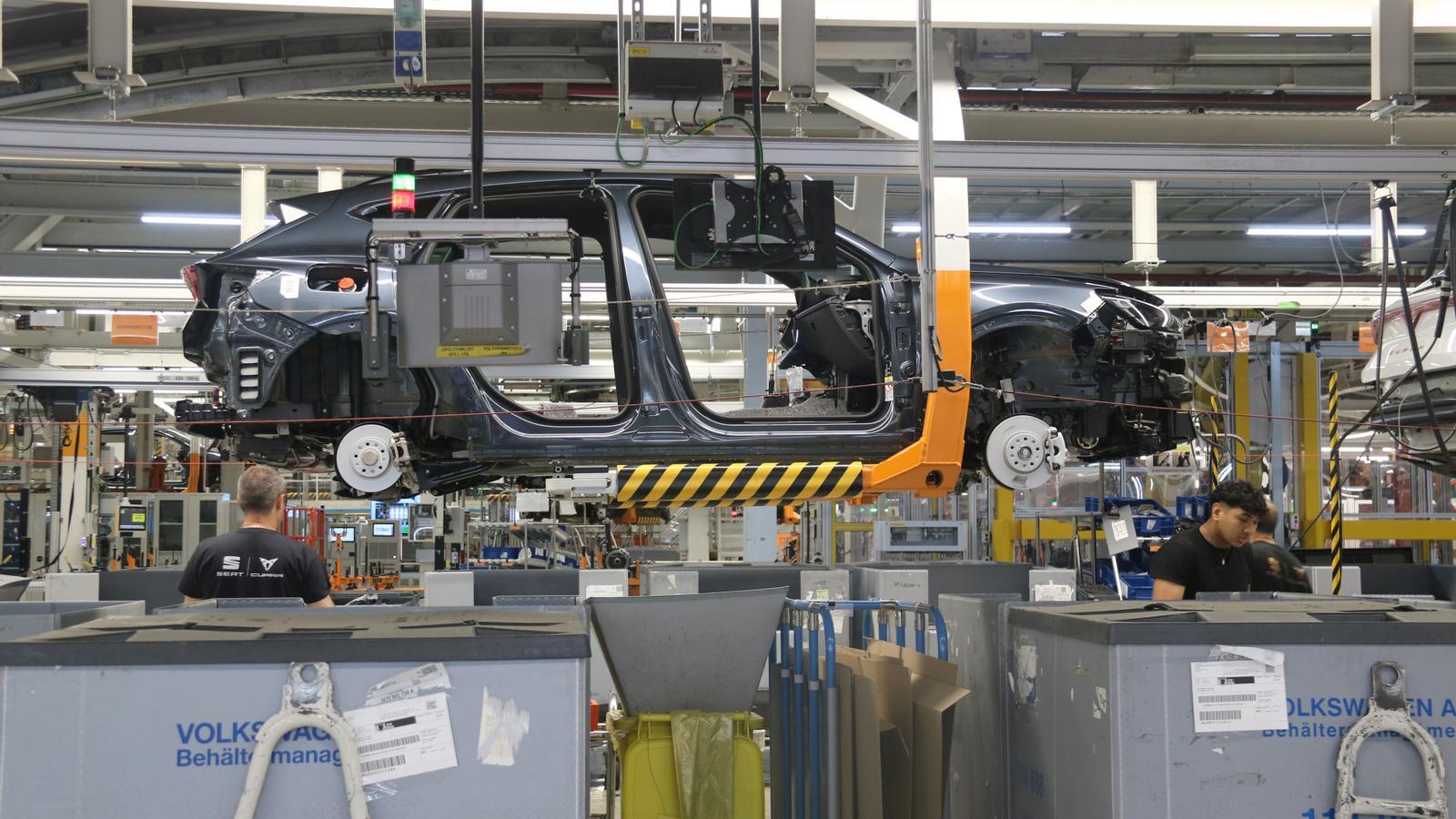
BarcelonaThe automotive sector is undergoing a major transformation in Europe, and its effects are shaking the continent's major companies. Faced with this scenario, the giant Volkswagen has begun to draw up a restructuring plan that foresees cutting up to 100,000 jobs worldwide and also includes the closure of four plants located in Germany, as reported last week by the German media "Manager Magazin". This situation has set off alarms in Martorell: the Seat plant – a subsidiary of the German multinational – could be affected and, as company sources explain to the ARA, there is a feeling among the workforce that this will be the case, whether directly or indirectly.
Restructuring plans within the group are not new. In fact, last March the company announced up to 50,000 layoffs in Germany due to falling profits and strong competition from Chinese brands. The decision, however, was not to affect workers on a global scale, and was limited to the German borders themselves; although this plan will now be revised upwards. The details of which and how the impacts will be are expected for next July 9, when the group's supervisory board will meet.
That said, in recent years – since the pandemic – there has also been a reduction in workers in our country. As company sources specify, between 1,300 and 1,400 jobs have been reduced through early retirement plans and departures that have not been replaced. Specifically, the staff that has not been covered has been located more in offices than on the production line, where many resources have been invested. These impacts had already given rise to concern in the Catalan branch about a progressive loss of strategic sovereignty for Seat. And, in the face of the new restructuring process, this concern has grown.
To understand the situation, it is necessary to distinguish between the parts that make up Seat: on the one hand, there are the production plants, where vehicles of brands from the entire Volkswagen group are manufactured. The Martorell factory is one of the group's main plants in Europe in terms of production. But on the other hand, there is the part of the workforce that makes up the Seat and Cupra brands, sales, marketing, and design departments, among others. These branches are what give Martorell decision-making capacity within the group and, therefore, are strategic for having a certain independence from the German parent company.
An example of this loss of weight in decisions was the restructuring at the beginning of the year of the group's brand top management. Volkswagen decided to cut three vice-presidencies – production, purchasing, and R&D – from each brand in order to integrate them into a single one.
The second platform
Currently, the main demand of the Martorell workforce is to unblock the assignment of a second platform that will allow the factory to produce a large-segment electric car. This request is considered a strategic element for the future of the factory. As the CEO of Volkswagen explained in a meeting with journalists after the start of electric car production in Martorell, it is expected to be resolved in the coming months. start of electric car production in Martorell, it is expected to be resolved in the coming months.
However, union sources express their concern to ARA that the restructuring process may end up halting the assignment. The situation, as they explain, is that due to the closure of four factories in Germany, the German part of the supervisory board may demand that the vehicles manufactured in the affected factories remain in their country and request that a significant volume of future investments also be located there.
However, there are also reasons for optimism: Martorell is vital for the group's production, and many investments have recently been allocated there, both for the adaptation of one of its lines to produce electric vehicles and for the creation of a battery assembly plant. It should also be noted that, a few months ago, with the approval of the previous restructuring plan that foresaw 50,000 layoffs, Volkswagen reiterated its commitment to Seat and distanced it from potential impacts. In this regard, it is worth mentioning that, last week, after an agreement between the company and the unions (UGT and CCOO), Seat has incorporated 450 workers into its workforce who until now came from temporary employment agencies (ETT).
And does the start of electric car manufacturing not affect employment? According to company sources, although it is true that an electrified vehicle line employs fewer people than a combustion engine vehicle line, this has not yet impacted the Martorell workforce. The situation is that the workers who are no longer needed on the line have been retrained for other jobs. In fact, a large part of them have been relocated to the battery assembly plant for electric vehicles.
