The Spanish government's fight against the European PP to lead the FAO
Planas will face Irish and Italian candidates to lead the UN's food and agriculture agency

-
CAT -
CAST
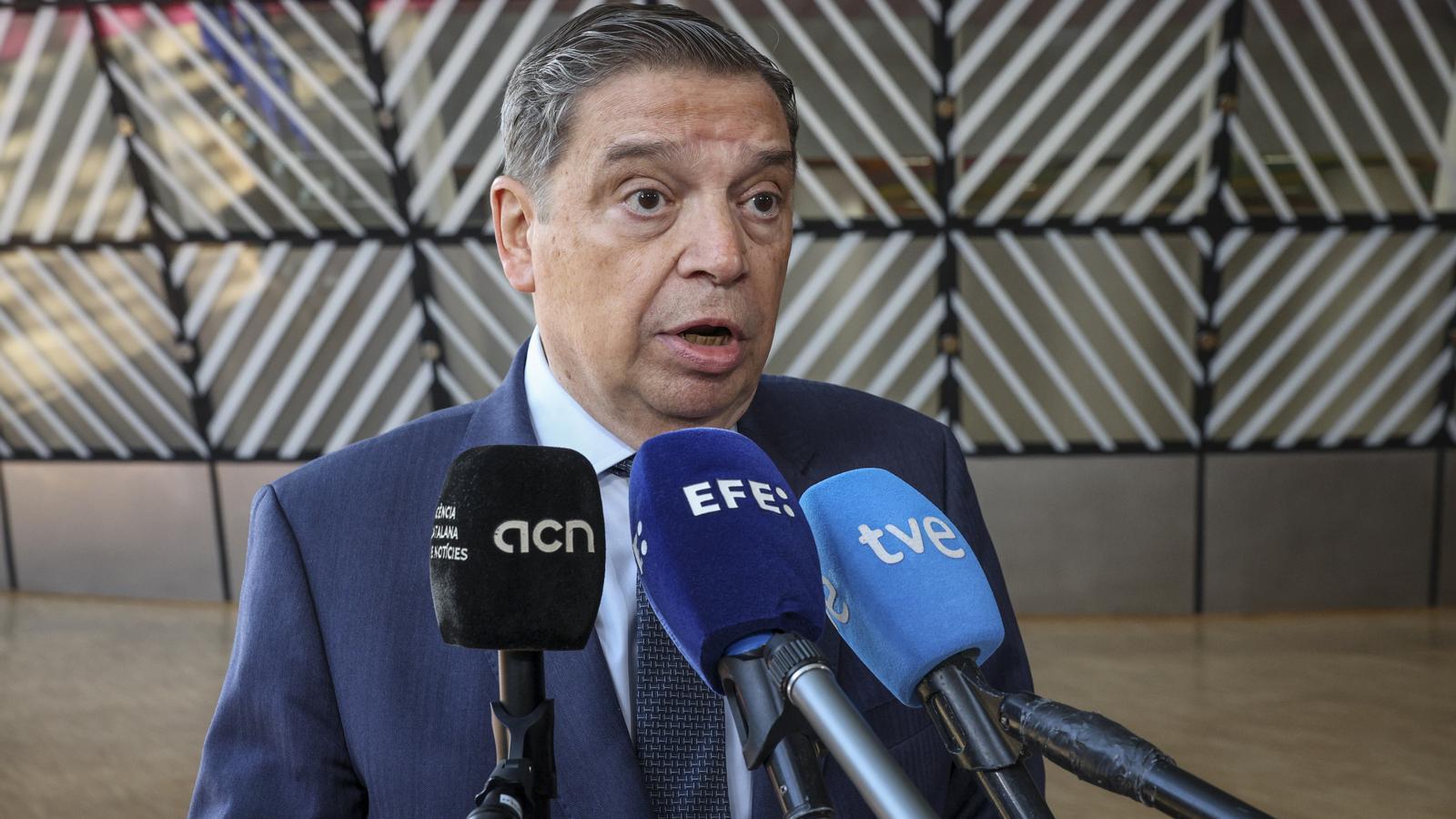
BrusselsThe government of Pedro Sánchez maintains his bet on a Spanish socialist leads an international organization in a context of right-wing growth. The Minister of Agriculture and Fisheries, Luis Planas, will fight to be the next Secretary-General of the United Nations Food and Agriculture Organization (FAO), but will have to face complicated candidacies to defeat, especially that of Irishman Phil Hogan.
This candidate was European Commissioner for Agriculture between 2014 and 2019, and for Trade between 2019 and 2020, and resigned because in the midst of the pandemic he went to play golf with a group of about 80 people, when in Ireland gatherings were limited to a maximum of 15. Nevertheless, one of the most determining factors in this type of race plays in Hogan's favor: he is part of the European People's Party (EPP), the political family with the most governments in the European Union and with the most power in the community institutions.
Furthermore, the Irish government holds the rotating presidency of the Council of the EU during this second half of the year. However, Dublin assures that it will play a neutral role and will not use this influence to benefit the conservative candidate.
Hogan, however, is not the only European candidate vying to lead the FAO. Shortly after the Irishman stepped forward, the Italian Maurizio Martina also made public his desire to become the new secretary-general of the international body. Although he was Minister of Agriculture in the social democratic governments of Matteo Renzi and Paolo Gentiloni, he has the support of the current Italian executive, led by Giorgia Meloni, and is already deputy director of the FAO.
The lack of European unity
The majority of European countries always advocate for agreeing on a joint candidacy at the European Union level and promoting a single name to avoid competing with each other. However, it is most common for talks to fail and for several European candidates to be presented. This time has not been an exception either. It should be remembered that the vote of all countries is worth the same, regardless of their demographic and economic weight. The election will take place at the end of November next year.
Nevertheless, sources from the Ministry of Agriculture and Fisheries advocate for signing a pact between the three European candidates and for the two who obtain fewer votes in the first round to withdraw from the race. The same sources, however, are confident that Planas —who has an extensive professional career as a senior civil servant, diplomat, and minister— can obtain support from other parts of the world. Beyond the three Europeans, Turkey, Angola, and Uganda are also promoting a candidate.
