The judge charges the president of SEPI and 24 more people in the Leire Díez case
The Public Prosecutor's Office for Corruption points to the crimes of criminal organization, influence peddling, embezzlement, prevarication, and insider trading

-
CAT -
CAST
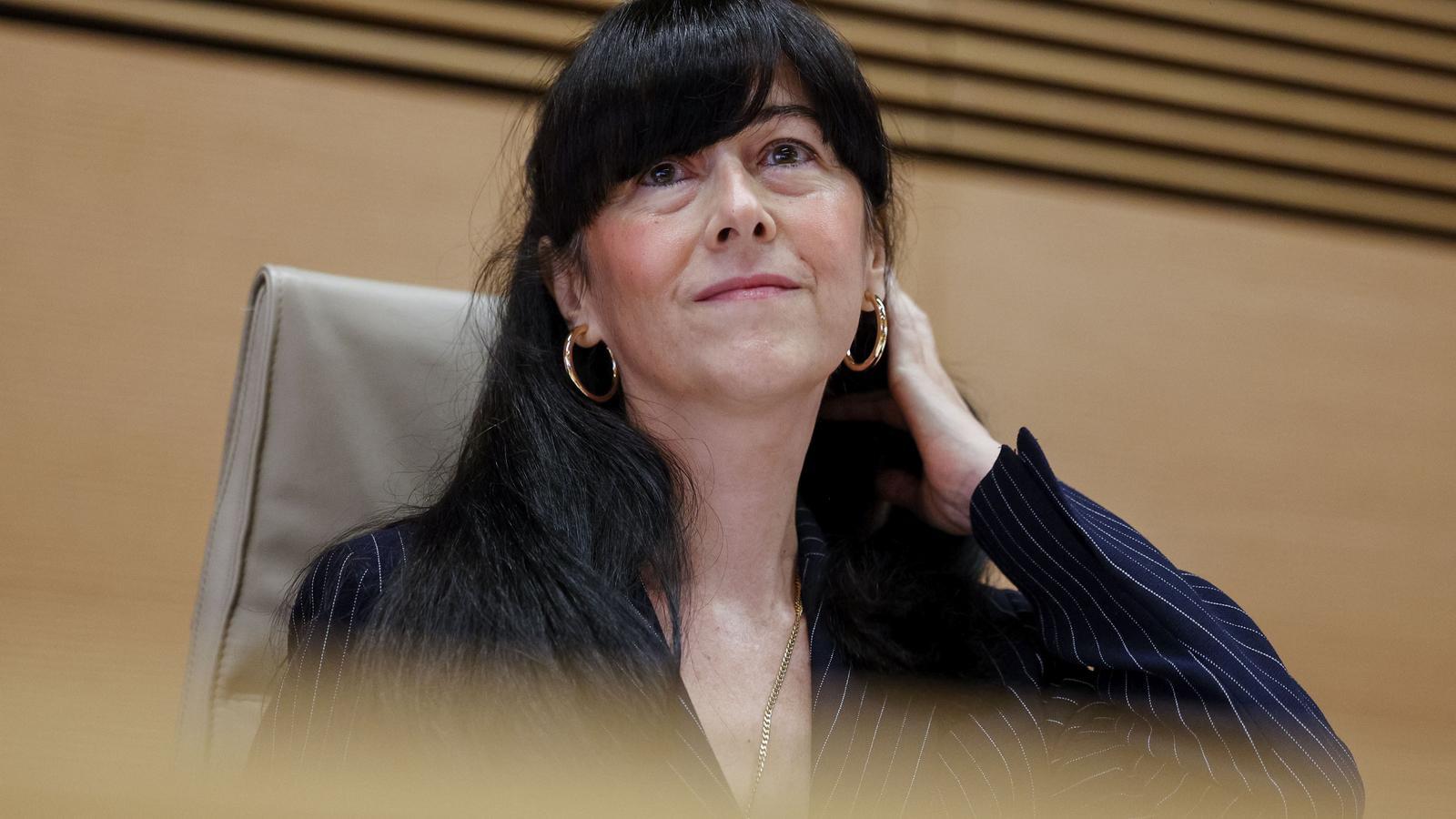
MadridThe judge investigating the Leire Díez case at the Audiencia Nacional has added 25 new investigated individuals to the proceedings. In a brief order, which ARA has accessed, Santiago Pedraz has summoned – among others – the current president of SEPI, Belén Gualda, as an investigated person in the investigation relating to alleged irregularities in the awarding of public contracts. So far, Vicente Fernández – former president of SEPI –, Antxon Alonso – a businessman from Navarre close to Santos Cerdán – and Leire Díez had been indicted. The magistrate's decision comes at the request of the Anti-Corruption Prosecutor's Office, which points to the crimes of criminal organization, influence peddling, embezzlement, prevarication, and insider trading. The Spanish government "maintains" its "confidence" in Gualda – SEPI, as the State's investment arm, is an agency that depends on the Ministry of Finance –, government sources indicate, defending that in the proceedings "no element appears that compromises the current president".
Throughout 39 pages, in a document consulted by ARA, the two prosecutors describe five operations that allegedly formed a "continuous dynamic of illicit intermediation in public contracting" in which Fernández, Alonso, Díez, and Cerdán allegedly acted as an "influence nexus" between "private interests and public decision-makers" and allegedly influenced "the adoption of administrative resolutions", the outcome of "public procurement procedures", or the "channeling of financial aid". All this, according to the public ministry, was done with the "necessary and illicit cooperation" of third parties from the public and private sectors, who are now being summoned by the judge as investigated persons. The vast majority of the evidence comes from the chat of the Hirurok group on the Threema application, the emails exchanged by the investigated individuals, and the documents they exchanged. All of this has been analyzed by the Central Operational Unit (UCO) of the Guardia Civil in three reports.
The Anti-Corruption Prosecutor's Office considers that there was a "repeated, coordinated and structured pattern of action" by the investigated parties that operated on different fronts. It had a "common scheme" characterized by the "detection of intervention opportunities" in different procedures, the use of "personal relationships" and "access to privileged information" to "influence" their processing, the eventual "manipulation or conditioning" of public decisions or contracting processes, and the obtaining of "economic compensation", which – according to the Prosecutor's figures – would amount to almost 700,000 euros.
The name Belén Gualda appears related to the rescue of Tubos Reunidos, a Basque company. According to the Civil Guard, the alleged scheme would have received 247,000 euros to facilitate it. What are the indications? In a document found by investigators, for example, the commitment of the president of SEPI to the CEO of Tubos Reunidos that public aid would receive the green light was reflected. And this despite the fact that the Ministry of Economy had expressed doubts about the operation. The Prosecutor's Office points to "political-level meetings" in which she would have participated to "expedite the processing" of the rescue, and the Civil Guard noted a message sent by Vicente Fernández relating the maneuvers of the investigated parties to a meeting of Belén Gualda at La Moncloa: "I do not rule out that it was the product of the conversation with Sabin Etxea [in allusion to the PNB]". Likewise, the public ministry also puts under the spotlight the public companies Mercasa and Enusa, the Principality of Asturias Business Park (PEPA), and the Forestalia group.

Mercasa
The first thing under suspicion are the movements of the three investigated individuals in the context of Mercasa's headquarters relocation. According to the Prosecutor's Office, they would have obtained a profit of 18,000 euros. How did they do it? Thanks to a "preferential treatment of favor", Servinabar –Antxon Alonso's company– would have received the commission to prepare an assessment of the headquarters' renovation costs and would have issued a report with a figure "significantly higher" than the real one to justify the relocation. Furthermore, all three "would have projected" a 20% commission to manage the rental of a temporary headquarters.
Enusa
Secondly, they would have used their "capacity for influence" to maneuver to "favor the interests" of Acciona – a company under scrutiny in the Cerdán case regarding public works tenders – which was interested in acquiring Enusa's stakes in the Melilla incinerator and the Cervera del Maestrat Urban Waste Treatment Center (Valencian Community). They carried out a "direct and coordinated follow-up" of all the procedures and, in return, would have received 17,500 euros. "We have the procedure under control," Vicente Fernández even said.
Parc Empresarial Principat d'Astúries
The group would also have intervened in a "constant and multidirectional" manner in the awarding of the demolition of the coke batteries in Avilés (Asturias), processed by the Principality of Asturias Business Park. First, they would have devised a strategy to annul the tender – in Leire Díez's words – in which Erri Berri had not been awarded the contract. Subsequently, in the second file, they would have pulled the strings through "direct contact" with the contracting body and would have ended up meeting with the President of the Contracts Tribunal to "favor" – according to the Prosecutor's Office – the award to Erri Berri. They succeeded and, as consideration, would have received 201,000 euros.
By the way, this operation marked the beginning of the relationship between Erri Berri and Antxon Alonso's companies. The Civil Guard detected other actions in which Erri Berri could have intervened thanks to its "illicit influence", such as demolition work linked to the Camp Nou and other Barça infrastructures.
Forestalia
Finally, the three investigated parties allegedly agreed on a commission of 200,000 euros – which is not recorded as having been paid – to contribute to SEPIDES approving an investment of 17 million euros in a company belonging to the Forestalia group. On the other hand, Antxon Alonso bought shares previously linked to Forestalia for 140,000 euros and, two and a half years later, sold them for more than 6.8 million euros to an entity that would have a relationship with the wife and children of the then president of this company.
