The Fed maintains interest rates and favors Trump a week before the elections
The decision has been taken with the opposing vote of two governors, who believed that they should be increased

-
CAT -
CAST
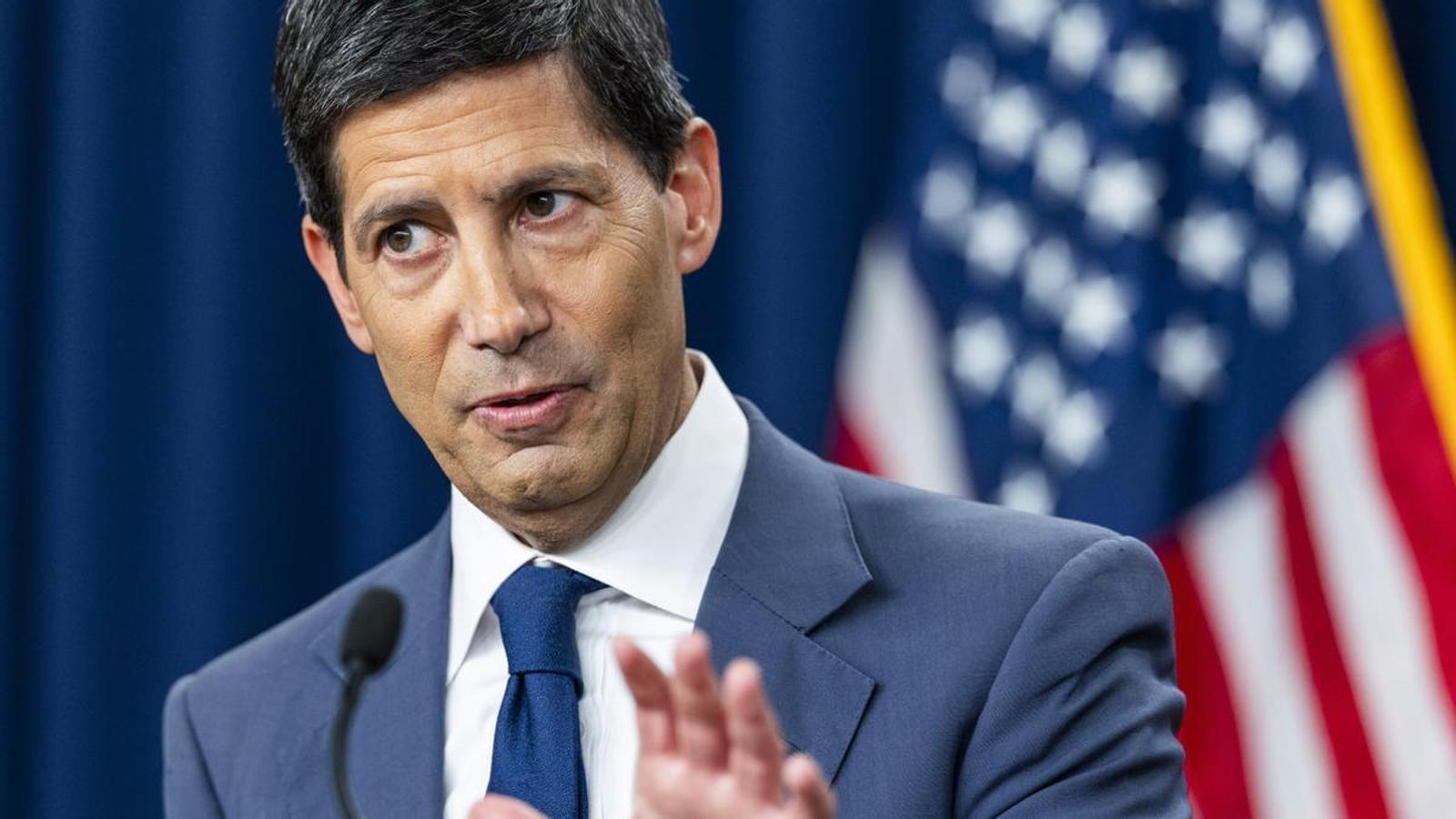
WashingtonThe latest Federal Reserve (the Fed, the United States central bank) meeting could not have come at a worse time, both for Donald Trump and for its chair, Kevin Warsh. One week before the elections, the Fed has decided to keep interest rates in the same range of between 3.75% and 4% after having decided to raise them at the previous meeting for the first time since 2023.
The decision, unlike the last session, was not unanimous. Voting against it were Governor Lisa Cook –whom Trump continues to harass to force out of the Fed– and Beth M. Hammack, who preferred to raise interest rates by 0.25 points.
Although it is not the ideal scenario for the US president –which would be lowering the price of money–, it is at least an attempt not to shake the country's economic hornet's nest further. Warsh's great challenge will be to explain why the organization has decided to keep interest rates unchanged, when inflation has worsened even more since the last meeting.
During the subsequent press conference, Warsh acknowledged that inflation has made very little progress toward the Federal Reserve's 2% target since he took command of the central bank in May. Even so, he assured that "we are working on it." "Controlling inflation does not consist of setting a specific date on the calendar, just as it is not about clinging to a single piece of data," he told reporters. Warsh denied that today's decision to freeze rates—instead of raising them—discredits the Fed's priorities to lower inflation: "What I can say is that there is no less demanding inflation target.".
When, in September, the Fed finally decided to raise rates, it was because inflation was already hovering around 3.4% (far from the 2% target) and Warsh presented it as a necessary measure to try to contain the figure. Now, despite the rate hike, inflation has already reached 3.7% and the US central bank's reaction has been different. The Federal Reserve can take measures to try to alleviate inflation, although it is clear that right now, what is pushing the figure up is the blockade of the Strait of Hormuz, a consequence of the war in Iran, and the resulting increase in oil prices.
Higher unemployment in the US
The labor market data do not help either. The unemployment rate rose to 4.2% in September, slightly higher than the 4.1% in August. Furthermore, it seems that one of the great fears of the former Fed chair, Jerome Powell, is beginning to emerge on the horizon: that the economic growth the country is showing – which does not fully square with the labor market trend – is the result of a bubble generated by the high growth of the artificial intelligence (AI) industry. This Monday, Anthropic, the company behind the chatbot Claude, announced that it has filed the paperwork to go public on the US stock market. The reason: losses of more than 80 billion dollars.
Warsh, who was appointed to the position by Trump, finds himself in a particularly delicate position. Just because the US president has dedicated himself to publicly redirecting his attacks against other Fed members does not mean that, internally, he does not continue to expect his chosen one to act according to his requests.
