The debt forgiveness to the autonomies dodges the veto of Vox and the PP in Congress
The measure, agreed between the PSOE and ERC, provides for the forgiveness of 17,104 million euros to the Generalitat

-
CAT -
CAST
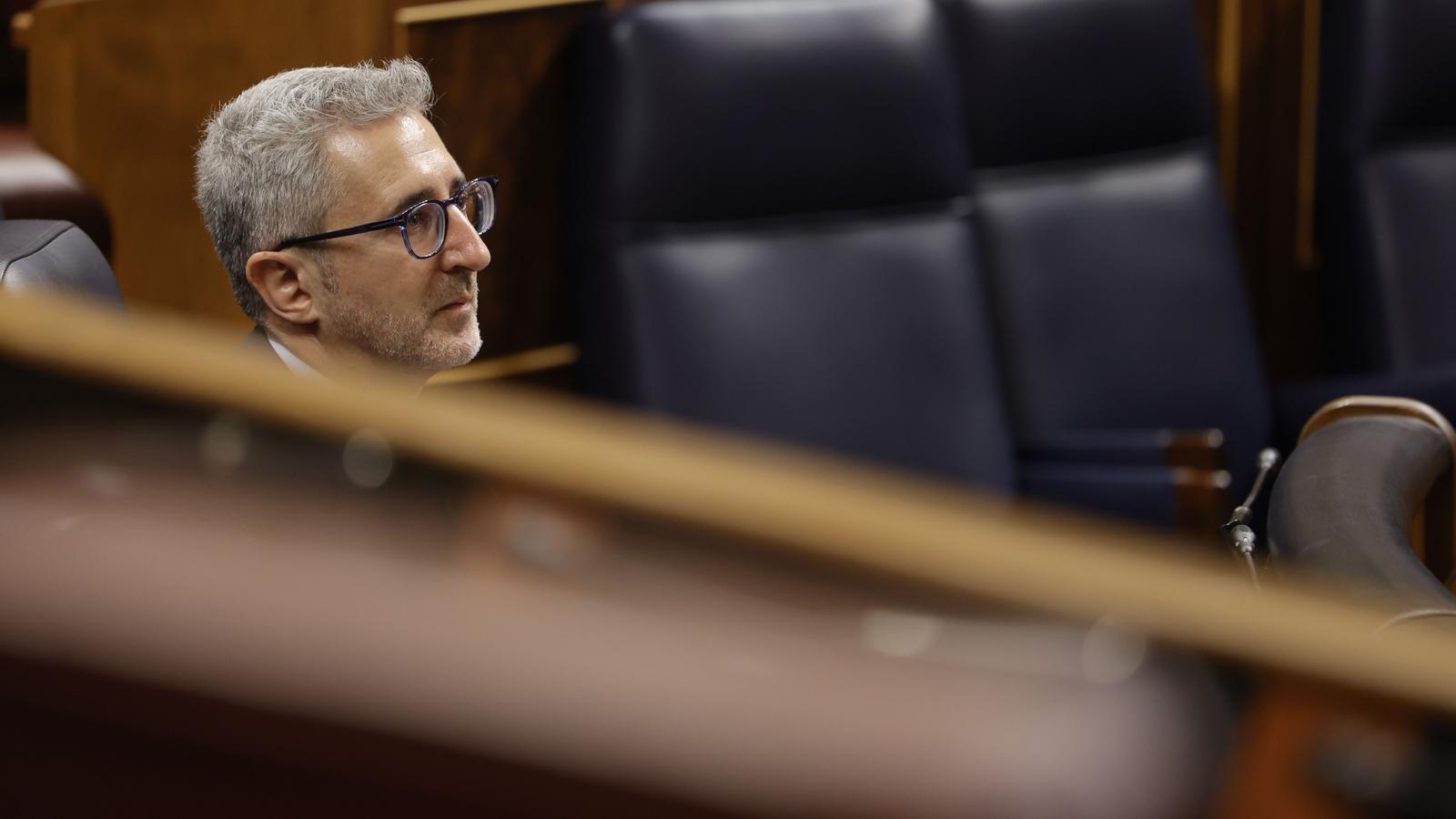
Madrid"It is difficult to explain that someone does not want their liabilities reduced." This is how the Minister of Finance, Arcadi España, defended the partial debt write-off for the autonomous communities in the face of the total amendments from the PP and Vox, which failed in Congress thanks to the votes of the plurinational majority. For Arcadi España, a breathing space is needed for a good part of the communities, which are the administrations that bear the expenses of the welfare state, but many, like Catalonia and the Valencian Community, are underfunded and still struggling from the economic crisis a decade ago.
This measure, titled a bill of exceptional measures for the financial sustainability of the communities, has been negotiated between the ministry and Esquerra, as the Generalitat is one of the main beneficiaries of this new mechanism, which must now proceed with its processing in Congress. If approved, the State would assume up to 17,104 million euros of liabilities from the Autonomous Liquidity Fund (FLA) held by Catalonia, the second highest figure after Andalusia (18,791 million).
During the parliamentary debate, the minister argued that the write-off is proposed with "transparent and objective criteria" and that it also benefits popular communities. "Seven out of every ten euros benefit communities from the PP," he said, as is the case with Andalusia. Nevertheless, he also asked them that, even if they do not agree, at least they should not block the mechanism for the governments that need it.
This, in fact, is the crux of the matter in the design of the regulation: the debt write-off must be requested and, therefore, the communities must declare that they adhere to the system. This puts the PP in a dilemma: politically it opposes it, but its autonomous communities would benefit from it and, therefore, they will have to decide whether to finally forgo the possibility of having extra money. In the Valencian Community, for example, 11,210 million euros of debt would be removed. And in the Community of Madrid, 8,644 million euros would be forgiven.
In fact, the deputy of Esquerra, Teresa Jordà, ironically addressed Juan Bravo, economic spokesperson for the PP: "It's as if they had won the lottery and said they didn't want it." The republican leader denied that the debt forgiveness is a privilege for Catalonia, but rather a "reparation" after the State pushed it into over-indebtedness during the economic crisis due to the refusal of more resource transfers. "Now every euro that will pay interest on the FLA debt cannot go to health and education," stated Jordà, and recalled that this debate is also about "model of country".
The Junts deputy, Josep Maria Cruset, also supported this, defining the FLA as a political tool devised by the PP government to "subjugate the political will" of the communities and, in particular, of Catalonia. For this reason, Junts has announced its vote against the amendments in their entirety by the PP and Vox, but also warns that during the parliamentary process they will pressure for the forgiveness to be total.

How have PP and Vox argued their opposition to the measure? The main thesis is that it rewards communities that have supposedly been fiscally more irresponsible. Bravo has considered it a "disastrous" mechanism, because it forgives debt to those who have indebted themselves the most, a principle he believes goes against fiscal responsibility. "It is political corruption," he declared, ironically: "If my income tax return results in payment, will the Treasury forgive me if I vote for Pedro Sánchez?". Vox deputy Pablo Sáez has also defended the same argument: he stated that it is forgiven to those who have been more "irresponsible", without taking into account the relationship between indebtedness and the communities most affected by the financing model.
The "km 0 of financing"
Arcadi España has defended that the measure is part of a package to improve the financial situation of the autonomies and that it must be added to the financing reform that next week must be approved by the Council of Financial Policy. "It is the km 0 of financing," the minister defended. In fact, from Catalonia, the Minister of Economy, Alícia Romero, also recalled that the write-off is a measure that must be accompanied by the new model, since underfinancing is what leads the Generalitat to incur debt.
